LOCAL NEWS THAT MATTERS, SENT TO YOU DIRECTLY. SUBSCRIBE FOR FREE!
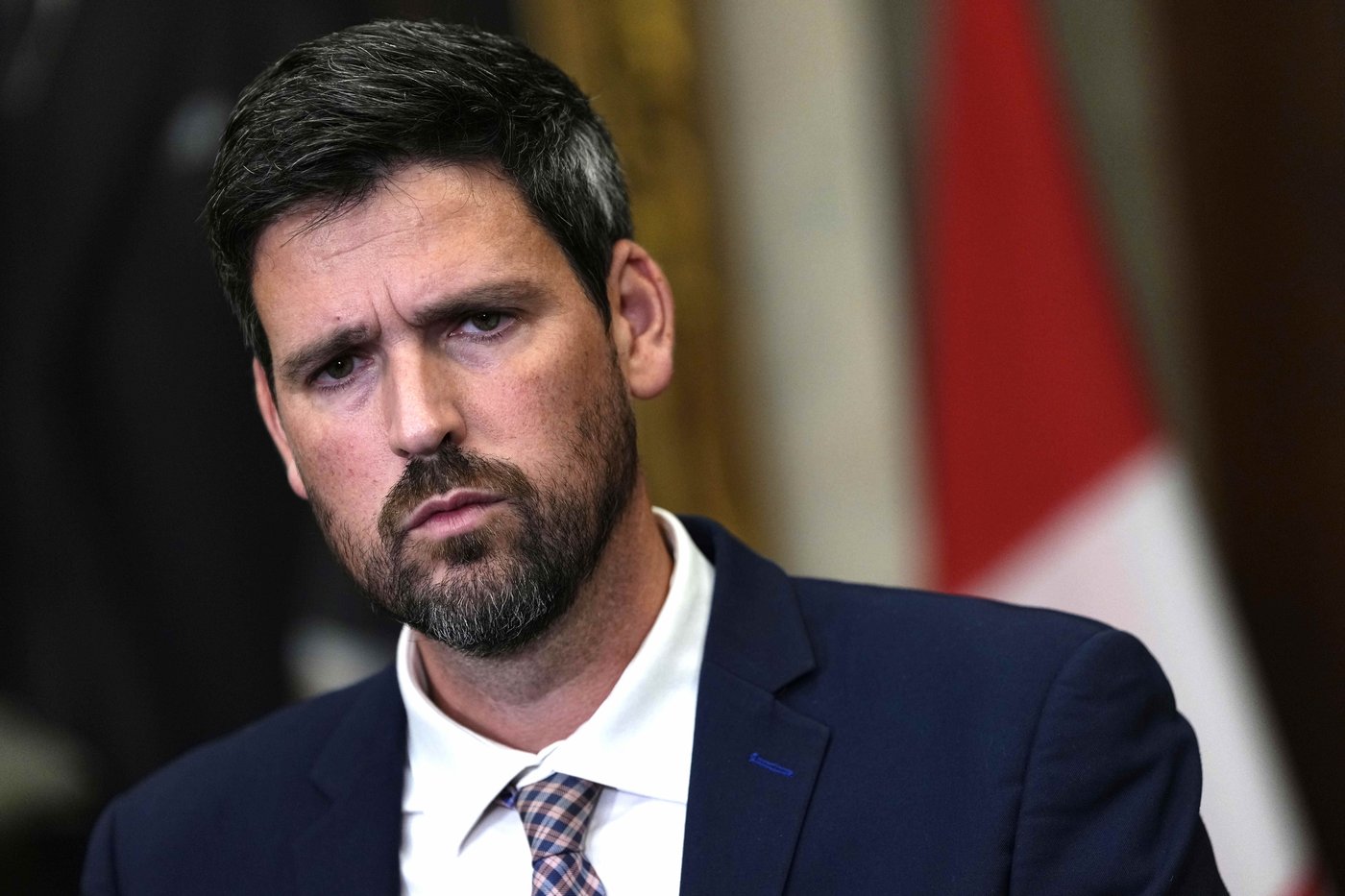
Justice Minister Sean Fraser holds a media availability to outline the government’s planned legislation on medical assistance in dying in the foyer of the House of Commons on Parliament Hill in Ottawa, on Wednesday, Oct. 7, 2026. THE CANADIAN PRESS/Justin Tang

Government to exclude people who suffer solely from mental illness from access to MAID

Oct 7, 2026 | 2:00 AM

OTTAWA — The federal government will not allow people suffering solely from a mental illness to access medical assistance in dying, but it does plan to decriminalize advance requests for people who are at risk of losing their capacity to consent.

Justice Minister Sean Fraser said the Liberal government will introduce legislation this fall to make both changes to Canada’s medical assistance in dying regime.

“Today is not based on where we believe the politics is going to land in the House of Commons or in the Senate. It’s based on what we sincerely believe is right,” Fraser said at a press conference on Wednesday.

Fraser cited the recommendation from a joint House and Senate committee, which heard evidence last spring. The committee concluded the government should indefinitely exclude people suffering solely from a mental illness from access to medical assistance in dying, known as MAID.

Following that report’s release, Fraser’s office reviewed the evidence the committee considered and sought additional opinions on the deeply divisive issue.

“When I hear that there is a lack of consensus within the medical community about the irremediable nature of certain mental illnesses, that gives me real cause for concern,” Fraser said.

He said he’s also heard concerns about a lack of access to mental health care and worries that people who aren’t able to get help might turn to MAID instead.

Health Canada has studied the issue of advance requests, which are documents that allow a person who suffers from a degenerative condition, such as dementia or ALS, to ask for an assisted death to be carried out once they no longer have the capacity to consent.

The strict eligibility criteria for MAID requires that qualifying patients be suffering from a grievous and irremediable medical condition and are able to consent at the time of the procedure.

Advocates have argued that requirement means people who know they are going to lose their capacity to consent must choose to end their lives earlier than they would want.

Fraser was emotional on Wednesday when speaking about a friend’s diagnosis with early onset Alzheimer’s disease.

“We need to create space for people to be able to provide consent when they know they’re going to lose capacity, in order to live out their remaining years rather than being put in a position where they fear they have to take that decision prematurely,” he said.

But the justice minister also said the proposed change will only affect the Criminal Code. He said it will be up to the provinces to decide whether to provide advance requests through their health care systems.

That could lead to a regulatory patchwork across the country.

Quebec already allows advance requests; the province passed legislation that instructs provincial Crown prosecutors not to prosecute health-care workers who provide MAID in those cases.

In March, the Alberta government passed legislation that bars advance consent. On Wednesday, the province said it will not change its decision.

The proposed bill will need to pass both the House of Commons and the Senate before March 17, the date on which the law states that people with a mental illness as their sole underlying condition would become eligible for MAID.

The Opposition Conservatives accused Fraser of engaging in cynical politics.

“We have a minister who is, frankly, playing politics with life and death and deliberately sowing division,” said Tory MP Michael Cooper.

The decision to tie the two changes together is drawing criticism from people on both sides of the issue.

Cardus, a Christian think-tank that opposes MAID, and the disability rights group Inclusion Canada both celebrated the fact that the planned expansion for mental illness will not go ahead. They also raised concerns about advance requests.

Both groups called on Parliament to separate the legislation to allow more study of advance requests — something Fraser has said already he does not plan to do.

“Democracy doesn’t demand unanimity,” he said.

Advocacy group Dying With Dignity Canada said it was a “profoundly disappointing day.” While the group has pushed for advance requests for years, its CEO Helen Long decried the decision to allow provinces to create their own rules.

“At best, this will create a patchwork. What’s much more likely is that it will create a situation where many, many people never have access to advance requests in their province or territory,” she said.

Dying With Dignity is leading a court challenge that argues the exclusion of people with mental illness as a sole underlying condition violates their Charter rights.

Fraser acknowledged Wednesday that the courts are going to weigh in, including on that specific case, and said the government will respect decisions from the Supreme Court of Canada.

Fraser said he held the press conference on Wednesday before introducing the legislation because it was the day the House of Commons was scheduled to vote on a Conservative private member’s bill that would exclude people with mental disorders from eligibility for MAID.

The bill was defeated at second reading, with the Bloc Québécois and most Liberals voting against it.

Marilyn Gladu, an Ontario Liberal MP who crossed the floor from the Tories last April, voted with her former caucus along with P.E.I. MP Kent MacDonald. Emmanuella Lambropoulous abstained.

The NDP’s five MPs voted with the Conservatives.

This report by The Canadian Press was first published Oct. 7, 2026.

Canadian Press health coverage receives support through a partnership with the Canadian Medical Association. CP is solely responsible for this content.

Hannah Alberga and Sarah Ritchie, The Canadian Press