LOCAL NEWS THAT MATTERS, SENT TO YOU DIRECTLY. SUBSCRIBE FOR FREE!
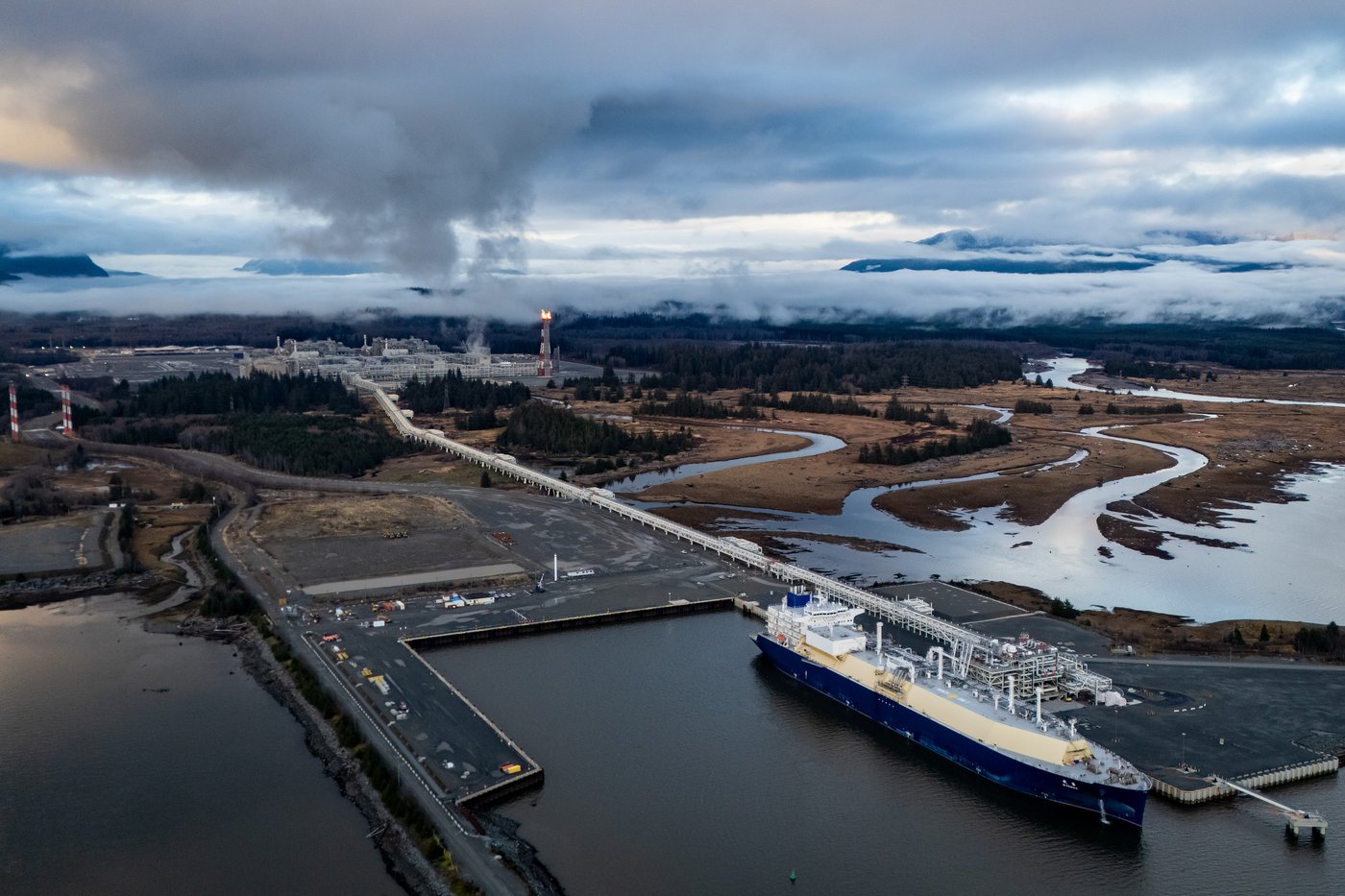
Wudang, a liquefied natural gas (LNG) tanker, fills up at an LNG Canada facility, in an aerial view, in Kitimat, B.C., on Thursday, Nov. 13, 2025. THE CANADIAN PRESS/Ethan Cairns

LNG Canada to double output from B.C. terminal as world clamours for energy

Sep 29, 2026 | 4:34 AM

The partners behind Canada’s first liquefied natural gas export terminal will proceed with a project that would double its capacity as countries around the globe clamour for reliable sources of energy.

LNG Canada announced Tuesday that it has made a final investment decision to go ahead with the Phase 2 expansion of its facility in Kitimat, B.C., which would bring its capacity to 28 million tonnes a year.

LNG Canada chief executive Chris Cooper said the project will create thousands of jobs and further strengthen Canada’s role as a trusted energy partner.

“LNG Canada Phase 2 is another nation-building investment that demonstrates Canada can build big things when governments, First Nations partners, local communities, skilled trades, contractors and investors work together with shared purpose,” Cooper said in statement.

It is one of the five initial projects that were referred to Ottawa’s major projects office last year.

The green-light comes as ongoing fighting in the Middle East disrupts LNG shipments from one of the world’s biggest producers, Qatar. Another major LNG player, Russia, has seen intensifying bombardment from Ukraine. Meanwhile, Canada has been looking to diversify its export customer base amid tensions with its one-stalwart trading partner, the United States.

“It is the perfect example of us giving ourselves more than anyone can take away. It’s the perfect example of us putting the best cards in our hand when the world is getting more volatile and dangerous. And it’s the perfect example of showing Canadians and the world that we know how to build the right way,” Tim Hodgson, the federal natural resources minister, said in an interview.

LNG Canada is a joint venture between Shell and PetroChina, Malaysia’s Petronas, Japan’s Mitsubishi Corp. and South Korea’s KOGAS.

The company exports natural gas that is piped from northwestern Alberta and northeastern British Columbia to the plant in Kitimat, where it is chilled into a liquid state and then loaded onto specialized tankers bound for Asian markets.

The expansion will build on the footprint and infrastructure from the first phase of the project, which began shipping liquefied natural gas last year.

It aims to add two additional LNG processing units, known as trains, as well as an additional LNG storage tank, condensate tank, loading berth, and expanded utility and process systems.

LNG Canada also said it is working with Coastal GasLink to expand the capacity of the existing 670-kilometre pipeline, which is operated by TC Energy Corp.

In a separate announcement following the LNG Canada decision, TC Energy said it would nearly double the existing capacity of Coastal GasLink by adding new compressor stations and upgrading facilities along the route from Dawson Creek to the LNG Canada liquefaction facility in Kitimat.

“Phase 2 will strengthen Canada’s role in supplying reliable, affordable and secure energy to global markets while creating long-term value for Indigenous and local communities, customers and shareholders,” TC Energy CEO François Poirier said in a statement.

LNG Canada will lead the expansion project construction, while Coastal GasLink will remain the owner, operator and permit holder of the pipeline and associated facilities.

The first phase of LNG Canada has been beset by equipment issues that have resulted in flaring in excess of what’s allowed under its permits. Flaring is the controlled burning of natural gas for safety reasons.

The LNG Canada partners have said it’s a normal part of project startup, but environmental and community groups have raised concerns about the health and safety impacts.

“Expanding malfunctioning LNG Canada is like betting on a concrete canoe at a sailing regatta. As the rest of the world rapidly scales up clean energy infrastructure, global gas demand destruction is underway. It’s happening regardless of the desires of the Carney government or foreign gas giants,” said Richard Brooks, climate finance director at Stand.earth.

Nichole Dusyk, who leads the Canada energy transition team at the International Institute for Sustainable Development, questioned why Ottawa is lending its support to fossil fuel projects.

“LNG Canada Phase 2 is putting Canada’s climate goals on the back burner for little public benefit and substantial taxpayer risk,” she said.

Hodgson said the federal government’s ambition is to be both a clean and conventional energy superpower at a time when allies are “screaming” for stable supplies of energy. He cited hydro, nuclear and power transmission projects that have also been referred to the major projects office.

“We’re providing energy to our allies at a time where they don’t have alternatives, where they don’t want to buy energy from (Russian President) Vladimir Putin, where they can’t buy energy from the Middle East.”

This report by The Canadian Press was first published Sept. 29, 2026.

Companies in this story: (TSX:TRP)

Lauren Krugel, The Canadian Press