LOCAL NEWS THAT MATTERS, SENT TO YOU DIRECTLY. SUBSCRIBE FOR FREE!
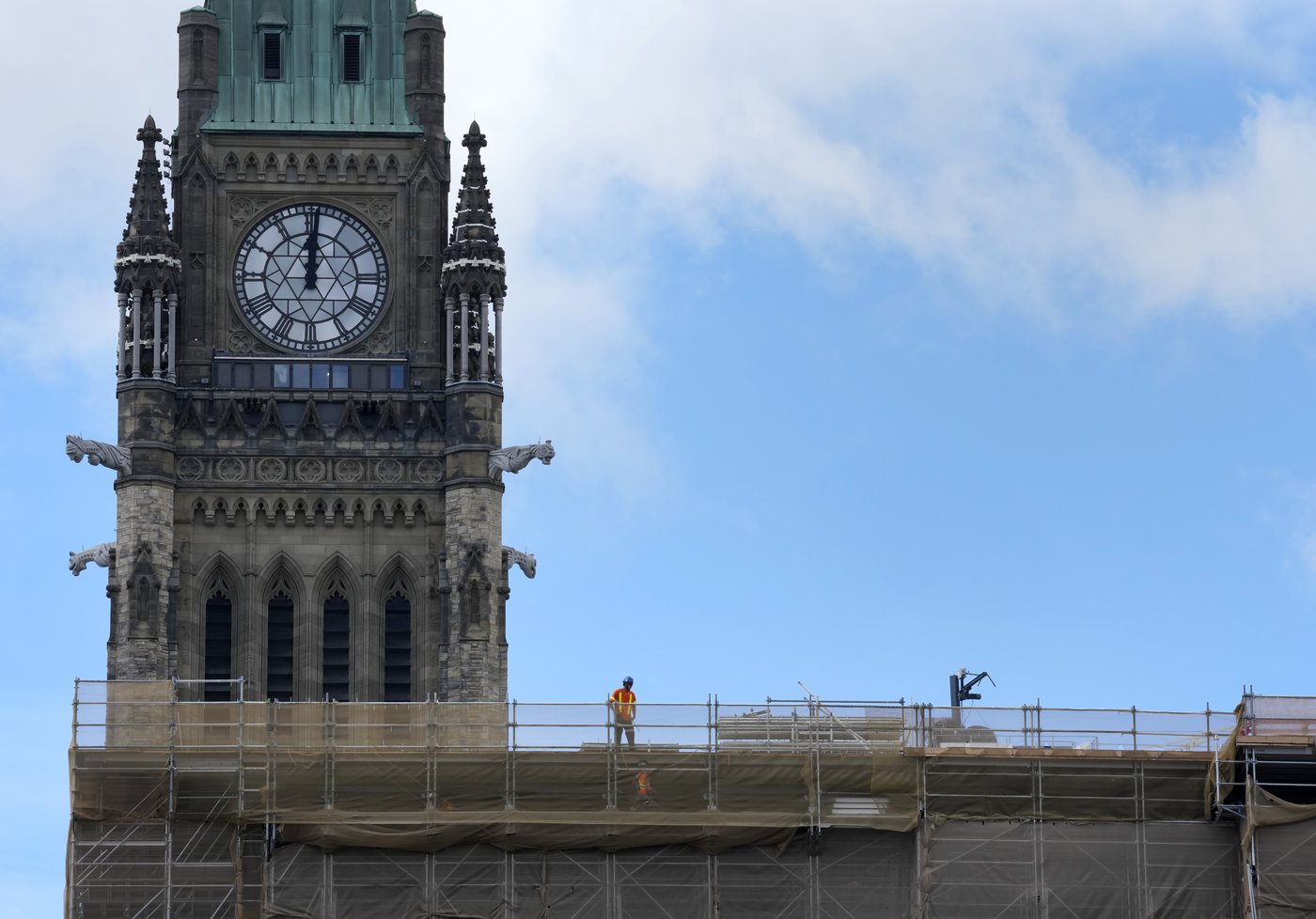
A worker stands on top of the Centre Block buildings below the Peace Tower on Parliament Hill in Ottawa on Tuesday, Sept. 8, 2026. THE CANADIAN PRESS/Adrian Wyld

Covert U.S. effort led to Canada’s acceptance of dubious postwar immigrants: study

Oct 8, 2026 | 11:12 AM

OTTAWA — Newly released passages from a landmark 1986 study say at least 35 people with apparently suspect backgrounds came to Canada after the Second World War through a covert program set up by U.S. intelligence agencies.

The previously secret details appear in a recently released version of a study on the resettlement of alleged Nazi war criminals in Canada during the Cold War era.

B’nai Brith Canada fought for years to see more of the report by researcher Alti Rodal, which was conducted for Canada’s inquiry on war criminals led by Jules Deschenes in the 1980s.

In a ruling last month, the Federal Court ordered the release of some long-concealed portions of Rodal’s study.

The Canadian Heritage Department did not appeal the decision and Library and Archives of Canada provided B’nai Brith with the latest public version of the Rodal report.

Simon Wolle, B’nai Brith Canada’s chief executive officer, called the release a historic outcome. In a statement, he added the organization is pleased the information has been made available to the public, historians, survivors of the Holocaust and their descendants.

The study says in 1954, Canadian officials discovered the existence of an “active and organized program” run by the Research and Resettlement Branch of the U.S. army.

The program, known as USAREUR, was a cover for the U.S. Central Intelligence Agency and other American intelligence agencies engaged in the resettlement of persons who had “rendered them services,” Rodal writes.

The study says a USAREUR official confided to Canada that the U.S. agency’s aim was to resettle in other safe countries defectors from Communism and former agents who had worked for the Americans.

The study says that, according to that U.S. official, a number of these people had criminal records, some arising from cases involving “moral turpitude” — a category in which Nazi collaborators were included.

The USAREUR official provided the Canadians with a list of 35 people who had already gone to Canada with the assistance of the agency, the study says. It adds that subsequent RCMP checks led to the conclusion that nearly all of these individuals would have been “rejectable” on security grounds.

Rodal said the USAREUR episode suggests that in the years following the war — and particularly during the period before the RCMP’s discovery of irregularities in USAREUR’s activities — “American Intelligence personnel could well have assisted persons with war criminal background to immigrate to Canada.”

“They were in a position to provide such persons with false documentation and to report to Canadian Visa Control Officers in the course of their routine checks that there was nothing adverse about these prospective immigrants,” the study says.

Rodal concluded it would appear that large numbers of former agents were being resettled by the Americans, “and it was perhaps the less desirable ones, for whatever reason, whom they would have wished to resettle in another country, such as Canada.”

This report by The Canadian Press was first published Oct. 8, 2026.

Jim Bronskill, The Canadian Press