LOCAL NEWS THAT MATTERS, SENT TO YOU DIRECTLY. SUBSCRIBE FOR FREE!
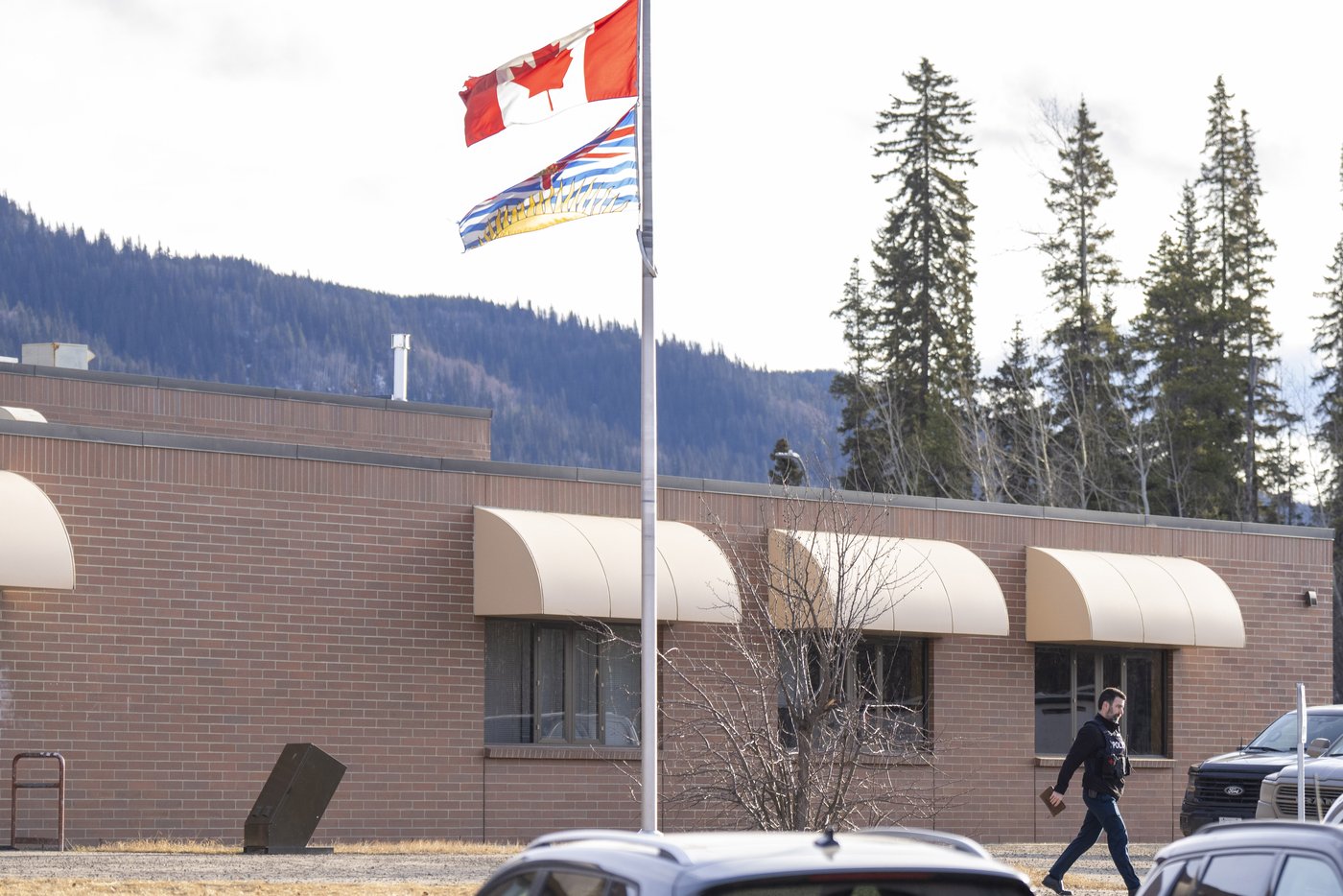
An RCMP officer walks out of the school where a mass shooting took place in Tumbler Ridge, B.C., on Thursday, Feb. 12, 2026. THE CANADIAN PRESS/Christinne Muschi

FBI documents on Tumbler Ridge murders reveal gaps in Canadian gun control: group

Oct 7, 2026 | 2:00 AM

OTTAWA — A Canadian gun control group says FBI documents filed in a Washington state court about the murders in Tumbler Ridge, B.C., reveal the gaps in federal government laws and shows what needs to be done to protect others from such mass killings.

The FBI complaint says the killer talked about having an SKS gun and a “switch,” likely referring to a machine-gun conversion device, which the group PolySeSouvient says should prompt the federal government to prohibit the gun and ban its sale immediately.

The group notes that the SKS is still legal and it’s a military-style weapon that has been used in several mass murders, as well as shootings of police officers.

It says “the Carney government cannot keep ignoring this weapon.”

The FBI complaint was filed to support a charge of conspiracy to murder in a foreign country against 30-year-old James Bryant, who’s accused of supporting and conspiring with Jesse Van Rootselaar for months as she planned then carried out the murders of eight people in February of this year.

The RCMP hasn’t said what kind of guns were used and Public Safety Minister Gary Anandasangaree told reporters in Ottawa it would be “irresponsible” to disclose the information, saying it was “absolutely not” a political decision.

Anandasangaree said an expert panel is reviewing whether to ban semi-automatic SKS weapons.

PolySeSouvient says in a news release that “additional reviews and consultations will not change what everyone can plainly see: this is a highly lethal weapon that has no place in the hands of ordinary civilians.”

The FBI complaint against Bryant includes chats in which Van Rootselaar allegedly speaks of intending to carry out her “plan” for a mass killing using an SKS that police confiscated but then returned.

The complaint includes a photo said to be the killer posing with a rifle on the day of the attack, as well as pictures of other weapons she said she intended to use.

Gun expert Frank Grosspietsch, a retired RCMP weapons officer with the national weapons enforcement support team, identified a gun shown in one set of photos in the complaint as a KRISS Vector submachine-gun, which was banned in Canada in 2024.

The photos were sent to Bryant by Van Rootselaar in 2025, the FBI documents said.

PolySeSouvient said the complaint showed the shooter knew how magazines could make guns more deadly, with Van Rootselaar quoted as telling Bryant, “I think it’d be pretty hard to escape me with my extended magazines on my vector, the recoil is so light that I really don’t think I’d miss.”

“Large-capacity magazines are easy to get. Canada’s magazine regulations are riddled with loopholes and exemptions,” the group said in its statement issued on Wednesday.

The documents said Bryant told officers that Van Rootselaar stole firearms and ammunition from her family’s gun safe and hid them in her room “in preparation for a mass shooting.”

It also said in claims not tested in court that 18-year-old Van Rootselaar told Bryant in online chats that she had convinced another person to purchase ammunition on her behalf.

The RCMP criminal investigation into the shooting is ongoing, despite Van Rootselaar having killed herself at the school.

Assistant RCMP Commissioner Elija Rain, who is acting commanding officer in B.C., said in a statement that “investigators have made substantial progress in the criminal investigation.”

Rain said the RCMP’s release of information about the case has recently been limited “because of the need to ensure our investigative theories and actions were not compromised.”

He attended a news conference in Seattle on Tuesday to discuss Bryant’s case, but he declined to answer questions about the guns, citing a publication ban in Canada.

Grosspietsch, who is a technical adviser to the Association of Firearm and Toolmark Examiners, said the KRISS Vector was designed to appeal to users who wanted the look of a military weapon.

“The firearms industry recognized that if they ‘sexied up,’ and I use that term liberally, firearms to look like military pattern-type firearms or have a bit of a mystique to it, they would sell. KRISS Vector is one of those types of firearms,” he said.

Grosspietsch said the same type of weapon could also be seen in a photo of a gun safe shared on social media by Van Rootselaar’s mother, who was killed along with Van Rootselaar’s younger brother before Van Rootselaar headed to Tumbler Ridge Secondary School and killed five students and an education assistant.

Bryant, 30, of Bellingham, Wash., allegedly told the FBI that Van Rootselaar used some of the weapons they discussed during the Tumbler Ridge shooting.

Another photo in the complaint shows a Canuck brand shotgun, decorated with a sticker in the transgender pride colours of blue, pink and white.

Van Rootselaar was trans, and the FBI said Tuesday that Bryant is also trans and identifies as female.

Bryant allegedly told Van Rootselaar: “Love the stickers … stickers would be so funny to be seen in photos of the incident.”

A photo in the Bryant complaint depicts a person the FBI says is Van Rootselaar, posing on their knees in a black miniskirt and fishnet stockings, while holding an olive-green rifle with a telescopic sight on the morning of the attack.

On the end of the barrel is what appears to be a suppressor, also decorated in blue, white and pink bands.

The claims in the FBI complaint have not been tested in court.

This report by The Canadian Press was first published Oct. 7, 2026.

— With files by Chuck Chiang in Vancouver

David Baxter, The Canadian Press