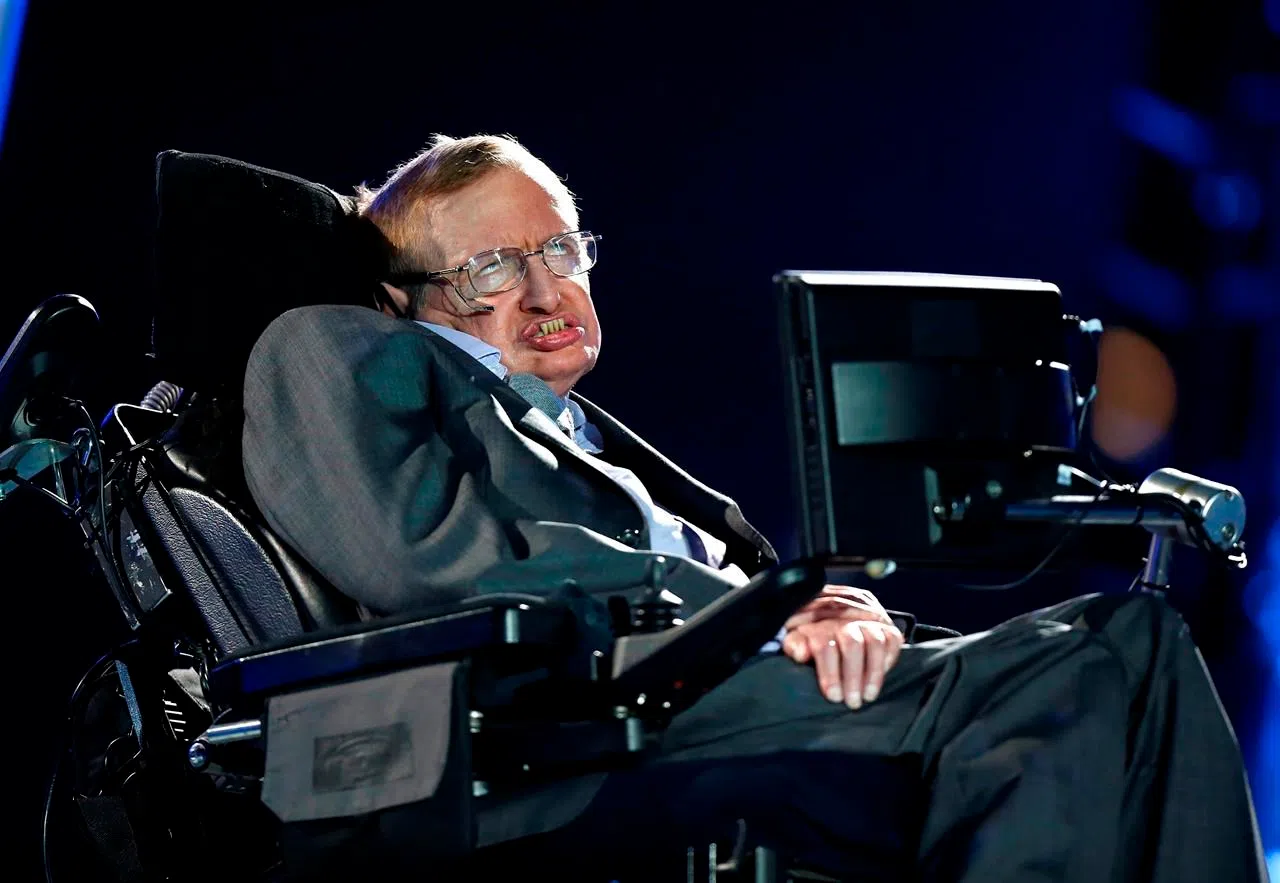
Stephen Hawking: ‘His laboratory was the universe’
-
Share on Facebook
-
Share on Bluesky
-
Share on X
- Copy Link
WASHINGTON — Everyone knew of Stephen Hawking’s cosmic brilliance, but few could comprehend it. Not even top-notch astronomers.
Hawking, who died at his home in Cambridge, England, on Wednesday at age 76, became the public face of science genius. He appeared on “Star Trek: The Next Generation” and “The Big Bang Theory,” voiced himself in “The Simpsons” cartoon series and wrote the bestseller “A Brief History of Time.” He sold 9 million copies of that book, though many readers didn’t finish it. It’s been called “the least-read bestseller ever.” Hollywood celebrated his life in the 2014 Oscar-winning biopic “The Theory of Everything.”
In some ways, Hawking was the inheritor of Albert Einstein’s mantle of the genius-as-celebrity, and he died on the 139th anniversary of Einstein’s birth.
“His contribution is to engage the public in a way that maybe hasn’t happened since Einstein,” said prominent astronomer Wendy Freedman, former director of the Carnegie Observatories. “He’s become an icon for a mind that is beyond ordinary mortals. People don’t exactly understand what he’s saying, but they know he’s brilliant. There’s perhaps a human element of his struggle that makes people stop and pay attention.”


