LOCAL NEWS THAT MATTERS, SENT TO YOU DIRECTLY. SUBSCRIBE FOR FREE!
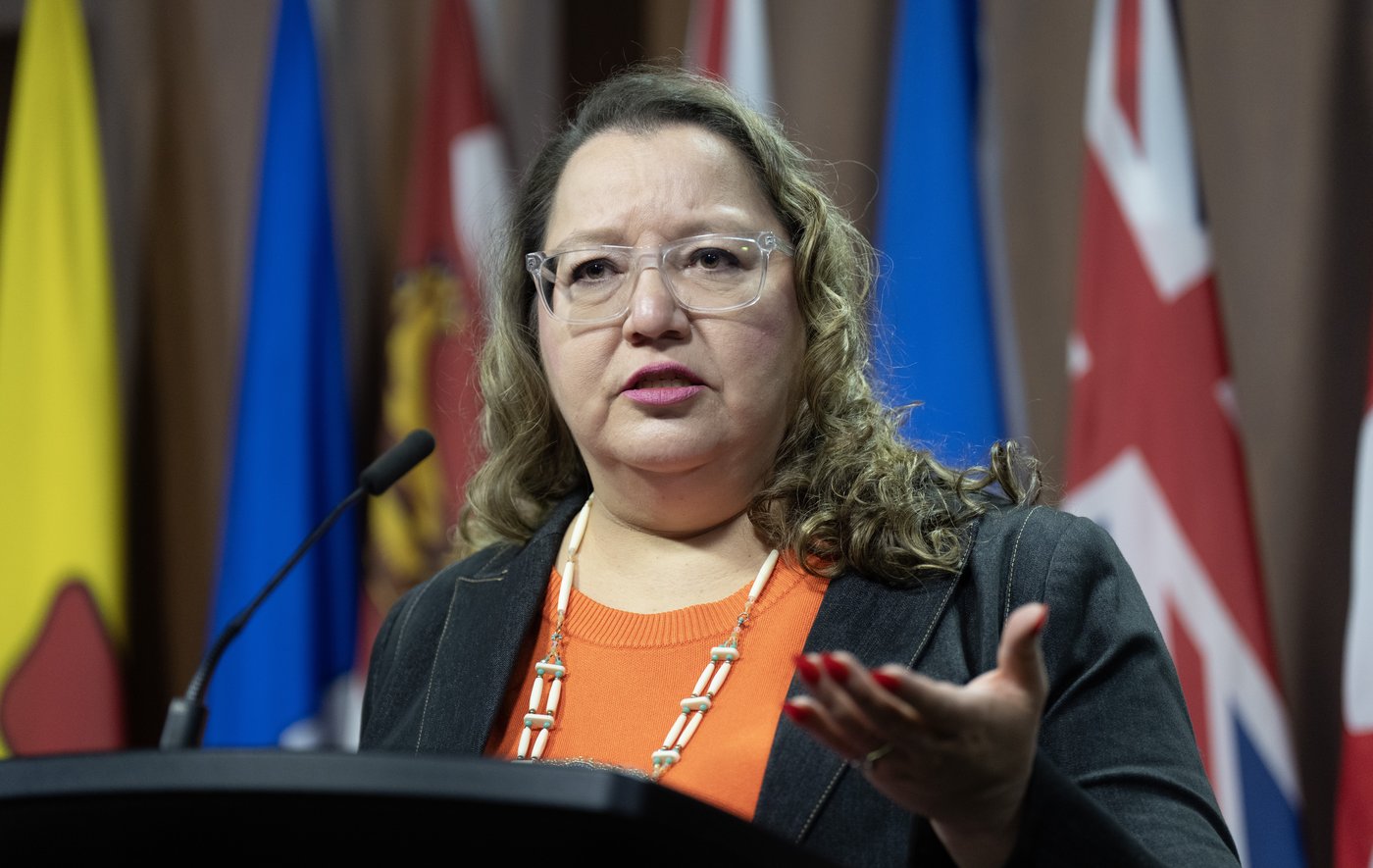
National Chief Cindy Woodhouse Nepinak responds to a reporter's question during a news conference on Parliament Hill in Ottawa on Tuesday, Sept. 22, 2026. THE CANADIAN PRESS/Adrian Wyld

AFN chief warns Carney against ‘abusing’ majority to pass major projects bill

Sep 22, 2026 | 11:48 AM

OTTAWA — The national chief of the Assembly of First Nations has warned Prime Minister Mark Carney against “abusing” his majority government powers to pass the new major projects bill, which she says could trample on First Nations’ rights.

“Yesterday we heard federal representatives describe Bill C-39 as the most consequential legislation in decades,” Cindy Woodhouse Nepinak said on Parliament Hill on Tuesday.

“If this is the case, the Assembly of First Nations expects the legislation to be matched by an equally consequential level of parliamentary consideration and public review.”

The Building Canada Strong Act, introduced in the House of Commons by the Liberals on the first sitting day of the fall sitting, shifts the responsibility for reviewing many big projects, such as pipelines and power transmission lines, from the Impact Assessment Agency of Canada to the Canada Energy Regulator. It also proposes changes to the Canada Labour Code.

Woodhouse Nepinak told reporters on Tuesday that Carney’s government risks dishonouring the Crown if it limits debate and consultations on the bill, as it did when it passed its major projects legislation in 2025.

The federal government passed that sweeping legislation in just weeks last year, to the dismay of Indigenous leaders who accused the federal government of sidestepping their rights and the Crown’s legal obligation to meaningfully consult with their communities on matters that could have adverse effects.

After months of pushback, Carney vowed to meet this fall with First Nations chiefs and the country’s premiers to discuss priorities of both camps. That meeting has been scheduled for October in Ottawa.

Proposed new “regions of national interest” outlined in Bill C-39 would afford projects within their boundaries the same treatment as projects of national interest. The legislation would require consultations before an area receives the designation and would allow special exemptions to a dozen different laws for projects within regions of national interest.

The bill also proposes removing the responsibility for reviewing many big projects, such as pipelines and power transmission lines, from the Impact Assessment Agency of Canada.

The Canada Energy Regulator would be responsible for handling reviews of international and interprovincial pipelines, transmission lines and offshore renewable energy projects. The Canadian Nuclear Safety Commission would handle reviews for nuclear and uranium projects.

Senior government officials also said the bill looks to amend the Impact Assessment Act to establish one-year federal review timelines, while timelines for small and medium projects under the Energy Regulator and Nuclear Commission would be reduced from one year to six months.

Asked if one year is long enough for First Nations to be properly consulted, Woodhouse Nepinak said there shouldn’t be a time constraint for First Nations to participate.

“I get the government’s intent,” she said, citing changing trade relationship with the United States and an increased effort to strengthen the Canadian economy in its wake.

“We all have to work together, But, at the same time, not on our rights.”

This report by The Canadian Press was first published Sept. 22, 2026.

— With files from Nick Murray

Alessia Passafiume, The Canadian Press