LOCAL NEWS THAT MATTERS, SENT TO YOU DIRECTLY. SUBSCRIBE FOR FREE!
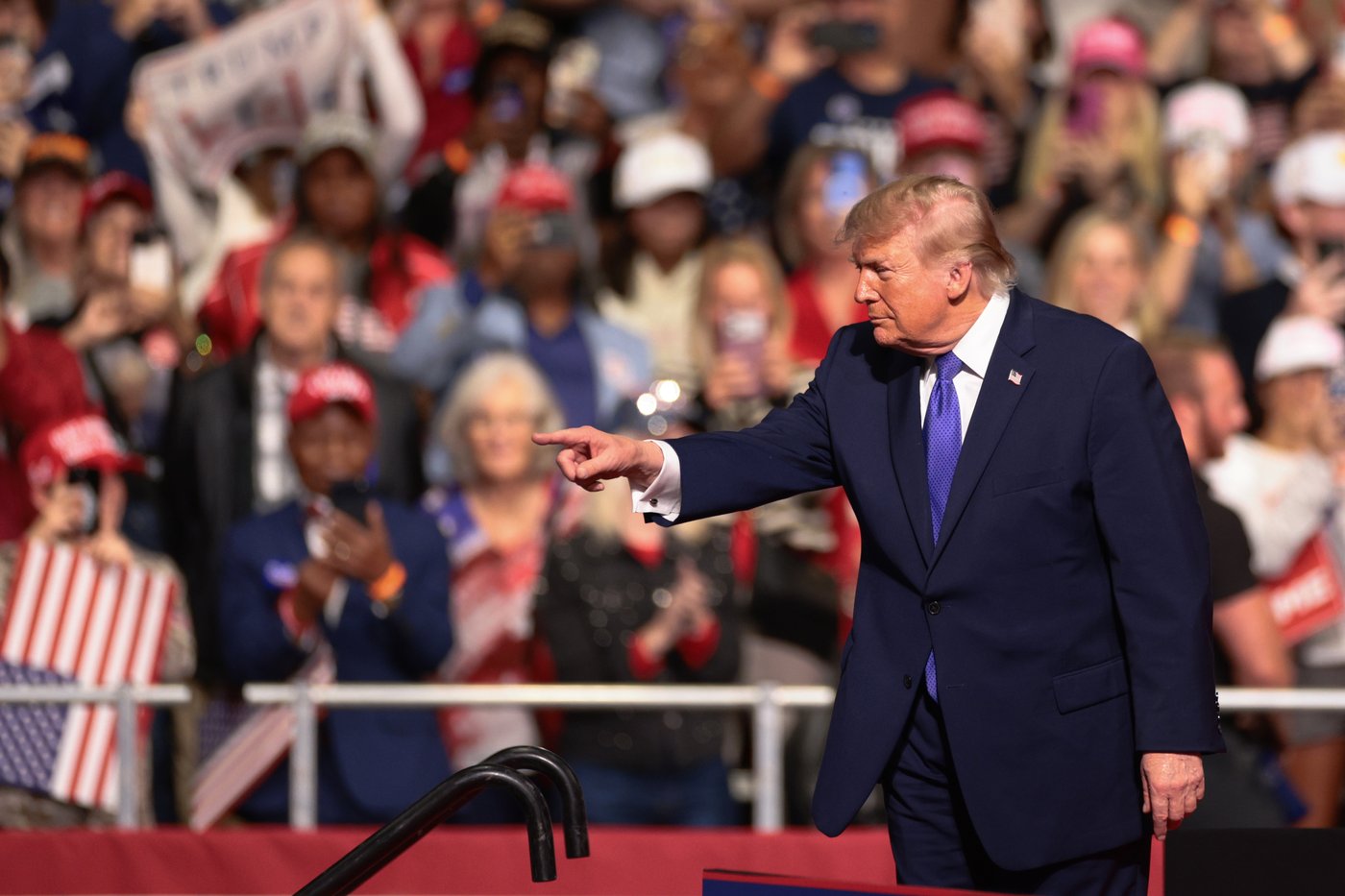
President Donald Trump reacts with supporters during a campaign rally at Rock Hill Sports and Event Center, Thursday, Oct. 29, 2026, in Rock Hill, S.C. (AP Photo/Scott Kinser)

No matter what happens in the midterms, Canada-U.S. tensions are likely to remain

Oct 31, 2026 | 4:00 AM

DETROIT — Democrats are hoping Tuesday’s midterm elections will give them the power to rein in U.S. President Donald Trump — but Canadians hoping for an outcome that stabilizes the rocky bilateral relationship may be disappointed.

Once-safe Republican seats are now in peril and control of Congress could flip. Trump’s poll numbers are plummeting thanks to his unpopular war in Iran, rising energy prices and inflation.

Polling shows Democrats are favoured to take the House, where a net gain of three seats would give them a majority.

The future of the Senate is less clear. Democrats need a net gain of four seats for a majority, and some polling shows that is within reach.

Even if Democrats gain control of both chambers, Trump will still be president, said Matthew Lebo, a political-science professor at Western University in London, Ont.

Presidents have a lot of power over foreign policy and Trump — unhappy with being seen as a lame duck in the final stretch of his term — may be even more motivated to use it.

Lebo said that could make Trump more “erratic” and “dangerous.”

“It’s not clear how much the Democratic Senate will push back on him or can push back,” Lebo said.

The size of the expected Democrat win will be an important factor, Lebo added. Numerous reports suggest Republicans are worried about bleeding seats as contests in places Trump dominated in 2024, like Kansas and Ohio, become competitive.

Congress has control over tariffs and taxes but Republican lawmakers have largely given Trump a free hand to deploy tariffs worldwide. If the midterms demonstrate that the president has lost his hold over loyal voters, GOP members may be more inclined to break with Trump, Lebo said.

But a large number of Republicans would have to join with Democrats to secure the supermajority needed to bypass presidential veto power and overturn Trump’s tariffs.

And many observers question whether Democrats are looking to return to a pre-Trump era in trade policy.

Trump’s first administration demonstrated how vulnerable Canada is to American whims when the president scrapped the North American Free Trade Agreement.

It was replaced with the Canada-U.S.-Mexico Agreement on trade, better known as CUSMA. Former Democrat vice-president Kamala Harris and current Democrat Senate minority leader Chuck Schumer were among the Democrats who voted against the trilateral agreement.

President Joe Biden brought more stability to the Canada-U.S. relationship but not much change. He kept many of Trump’s first term tariffs in place, despite promises to reverse them, and expanded other protectionist policies.

“What Canadians have learned in the last few years is we don’t trust Americans to correct course when they can in terms of the presidency,” Lebo said.

While Trump’s first term rattled the bilateral relationship, his second term blew it up. Canada was an early target of Trump’s tariffs and Canadians were shocked and appalled by the president’s repeated threats of annexation.

Tensions escalated further in August when trade talks collapsed. Trump slapped an array of Canadian goods with 50 per cent tariffs, banned imports of other Canadian products and signed an executive order to rename Lake Ontario as Lake America.

The trade war is deeply unpopular in states like Michigan and Maine, where tight Senate races ultimately could decide which party gains congressional control.

But even if Democrats emerge triumphant next week, or win the White House in 2028, it’s not clear that Trump’s tariff wall would suddenly drop.

California Gov. Gavin Newsom, who is considering a run for president, told CTV in August that he couldn’t guarantee Trump’s tariff policies would be reversed under Democratic leadership.

One factor Democrats likely are considering is how to deal with the United States’ $40-trillion debt problem. Trump has argued tariffs bring in much-needed revenue — although they have yet to make much of a dent in the U.S. balance sheet. Democrats have not said how they plan to deal with the problem.

Vermont Democrat Sen. Peter Welch, who was in Montreal this week, vowed to repeal the tariffs on Canada.

Christopher Sands, director of Johns Hopkins University’s Center for Canadian Studies, said Democrats traditionally have been more protectionist than Republicans and he could see the party maintaining a baseline tariff wall.

What that means for the future of CUSMA is not clear. The Trump administration did not renew the trilateral agreement earlier this year, triggering an annual rolling review for up to 10 years. Once that period ends, and if the partners haven’t agreed to an extension at that point, the agreement would expire.

Sands said as long as the United States doesn’t walk away from CUSMA, there’s still room to negotiate.

“You just want to hang on to that and hope that in a different environment, you can have a conversation about keeping it,” he said.

This report by The Canadian Press was first published Oct. 31, 2026.

Kelly Geraldine Malone, The Canadian Press