LOCAL NEWS THAT MATTERS, SENT TO YOU DIRECTLY. SUBSCRIBE FOR FREE!
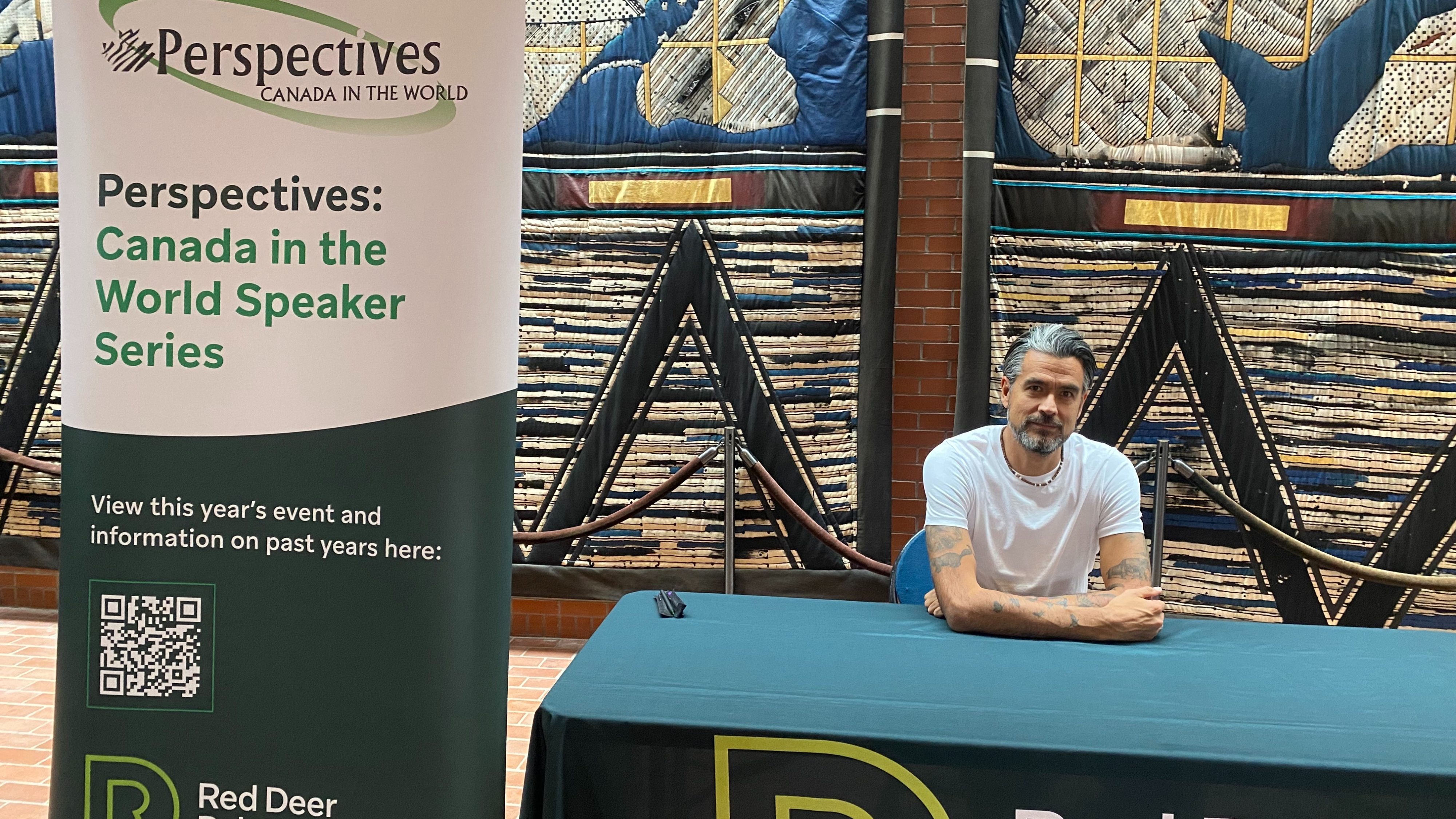
Author David A. Robertson poses for a picture at RDP on Wednesday. (Image Credit: Ian Gustafson/rdnewsNOW staff)
Perspectives series

Author David A. Robertson highlights power of storytelling, dangers of book banning at RDP

Oct 29, 2026 | 1:31 PM

Accomplished author David A. Robertson spoke about the importance of storytelling, reconciliation, the freedom to read, and book banning during a pair of speeches delivered at Red Deer Polytechnic yesterday.

Robertson, who was invited to speak at RDP as part of its Perspectives: Canada in the World annual speaker series, told rdnewsNOW his speech highlighted the power of storytelling.

“First of all, how it can be very healing and empowering, but also, when you have the inability to access literature, how it can be very harmful,” he said.

Robertson, who’s from Winnipeg, has published over 30 books on several different topics and genres such as children’s literature, graphic novels, memoirs and young adult fiction focusing on Indigenous culture and history.

He graduated from the University of Winnipeg in 1999 with a bachelor of arts degree and has written professionally for 17 years.

It wasn’t until 2014 when Robertson published his first novel called The Evolution of Alice, which explores the life of Alice, who is a single mother raising three daughters on the reservation.

He explained he’s had many instances over his career where his books have been banned both in Ontario and in Alberta.

The reasoning as to why he said has varied. One book was banned because he said, despite being a Cree author, he was told it inaccurately depicted Indigenous experiences.

He has another novel called Betty: The Helen Betty Osborne Story about missing and murdered indigenous women and girls, which was banned for implying violence.

“I think I’ve had at least four or five of my books that have been banned or challenged in Canada,” he said. “The outcome is really what comes from when you stand up and show up when these things are happening. I think under public pressure, people who are banning or challenging books never really hold up.”

Banning books, he said, has become a bigger problem as time goes by and is trickling up from the United States.

According to Robertson, book bannings have become more prevalent in religious conservative areas.

“It is happening with greater frequency, and just because you haven’t heard of it, it’s because sometimes we’re not made aware of it,” he said. “It’s always the books suffering; the children don’t suffer from an access to literature. The books need protecting.”

He added that through reconciliation, the only way we learn more about each other is through stories. He said books are mirrors in which we see ourselves reflected, windows where we can see the lives of other people, and sliding glass doors where we develop empathy for each other.

“When we talk about how we weave ourselves together as a community, it is made possible through storytelling,” he said. “When we take those books away, they start to hinder our ability to know each other better. That does a lot of harm.”

He said a lot of his work now revolves around public speaking, where he talks about reconciliation, social justice, book banning, and mental health.

He talks about his own journey through mental health after publishing a memoir called All the Little Monsters.

“I talk about my own story and, through that, the different interventions that helped me learn how to thrive with mental health struggles rather than feeling like I have to survive through them,” he said.

“Different things work for different people, but it’s about finding what works for you.”

Anah Jayne Samuelson, English instructor at RDP and organizing committee member for the Perspectives series, said they chose Robertson to speak because of what he’s accomplished as a storyteller.

However, in particular, as book banning and challenging became more common, they wanted to hear the perspective of someone who’s been through that.

“To hear from an author about what impact that has on them and what impact that has on the potential audience when we do set up barriers to get access to certain kinds of stories, in particular, he’s written a lot for children and young adults,” Samuelson said.

“We thought it would be good to talk about something on the rise in Alberta and Canada.”