LOCAL NEWS THAT MATTERS, SENT TO YOU DIRECTLY. SUBSCRIBE FOR FREE!
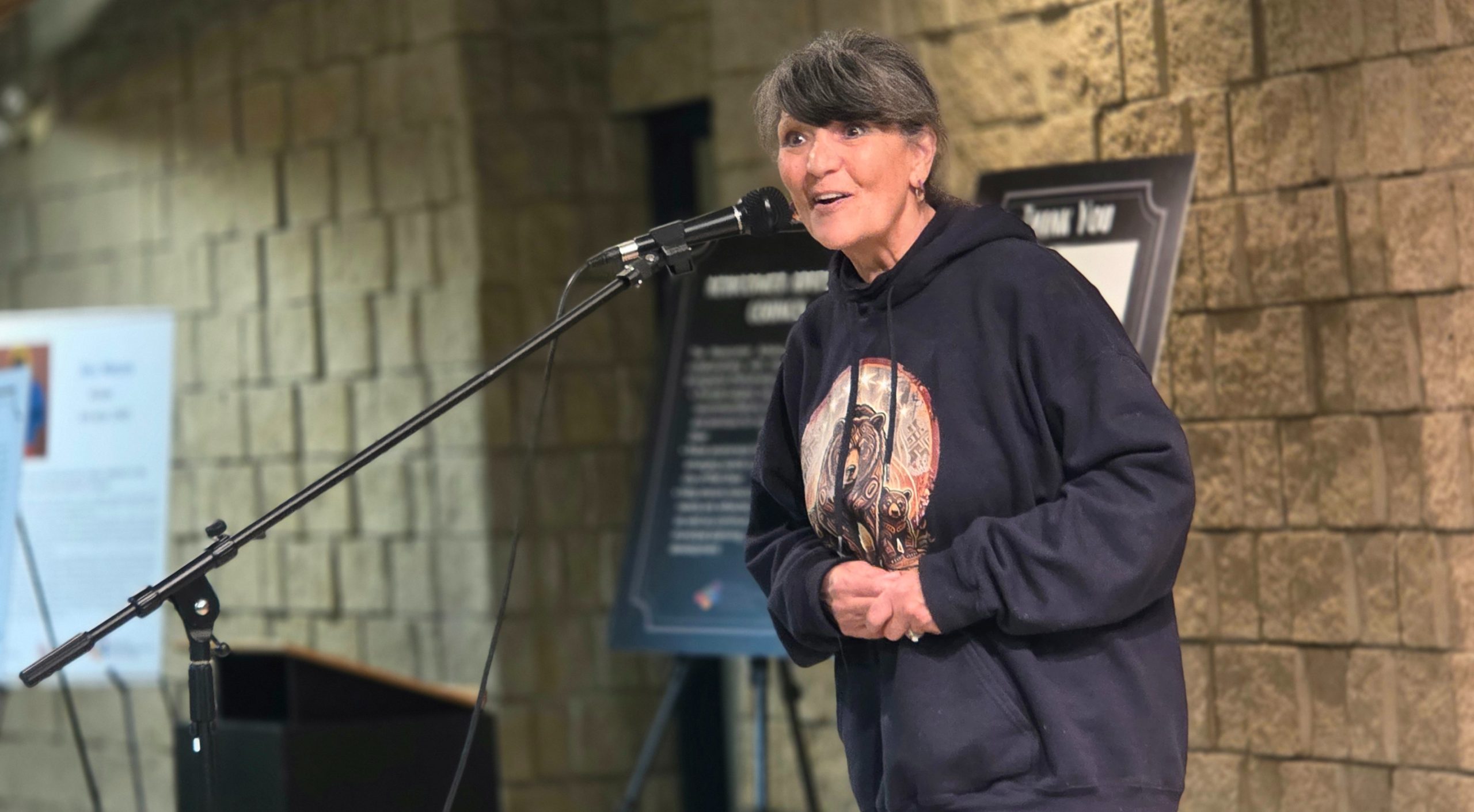
Donna Bishop is an Elder with Red Deer Native Friendship Society. (Image Credit: rdnewsNOW/Josh Hall)
welcoming 101

Red Deer Welcoming Week spotlights individuals, and how they embody the moment

Sep 15, 2026 | 12:24 PM

Oh, to be welcoming… 

That is the emphasis of 2026 Welcoming Week, an initiative locally of Red Deer Local Immigration Partnership. 

Welcoming Week takes place in many locales around the globe, and in many forms. 

In Red Deer, it started with a compelling story session and photography exhibit Friday, continued Monday with a workshop on the journey to citizenship, and will conclude Sept. 21 with a citizenship ceremony (that is open to the public) at Red Deer Polytechnic. 

Two participants in the opening event were Donna Bishop and Nieva Rosales. 

Bishop, an Indigenous Elder with Red Deer Native Friendship Society, came to Red Deer from Edmonton around 1990. As a child, she was taken during the Sixties Scoop and never knew her biological parents. 

Rosales, who is Filipino, and both a teacher and accountant by trade, arrived in Canada in 2004. She now works in Environmental Services at Red Deer Regional Hospital because Canada won’t recognize her prior qualifications. 

Despite their two very different types of unwelcoming experiences, they are each the very personification of the word ‘welcoming.’  

They also agree that their city, Red Deer, is welcoming. 

But is it as hospitable as it could be? 

Bishop quips, though in seriousness, that the art of being welcoming begins with food and a smile. 

“Red Deer is a strong community of non-profits, volunteers, and supports. That’s what makes it welcoming,” she believes. 

“Red Deer has learned to work around life situations in welcoming ways, which means we don’t pretend and pretty up the city every time the Queen comes to visit. I see we are actually doing the work to make sure the welcome is real, truthful, and that we have nothing to hide.” 

She says amplifying those things when the lights are brightest shows we are a community of “life experiences,” as she calls them, rather than just “problems.” 

“Welcoming is saying ‘Come to my house, but I’m not going to put on a show for you.’ But you still feel safe in my space.” 

For Rosales, the decision to immigrate to Canada was not easy; however, it was clear that it had to be done. 

“I had two young kids who were very sick, and the pay as a teacher in the Philippines doesn’t make you rich. We also don’t have free medication there, so that’s why I decided to work abroad,” says Rosales, who first went to Hong Kong seeking brighter prospects. 

Her first problem in Hong Kong, however, was not being allowed to bring her children, which in part led her to immigrate to Canada. 

Her children joined her here in 2006, and she later became a Canadian citizen. 

“In Hong Kong, I was abused twice by separate employers. It made me stronger and helped me decide to move to Canada.” 

Upon arrival, it was scary, she admits. But it got easier as people helped her, and she gained trust in the community. 

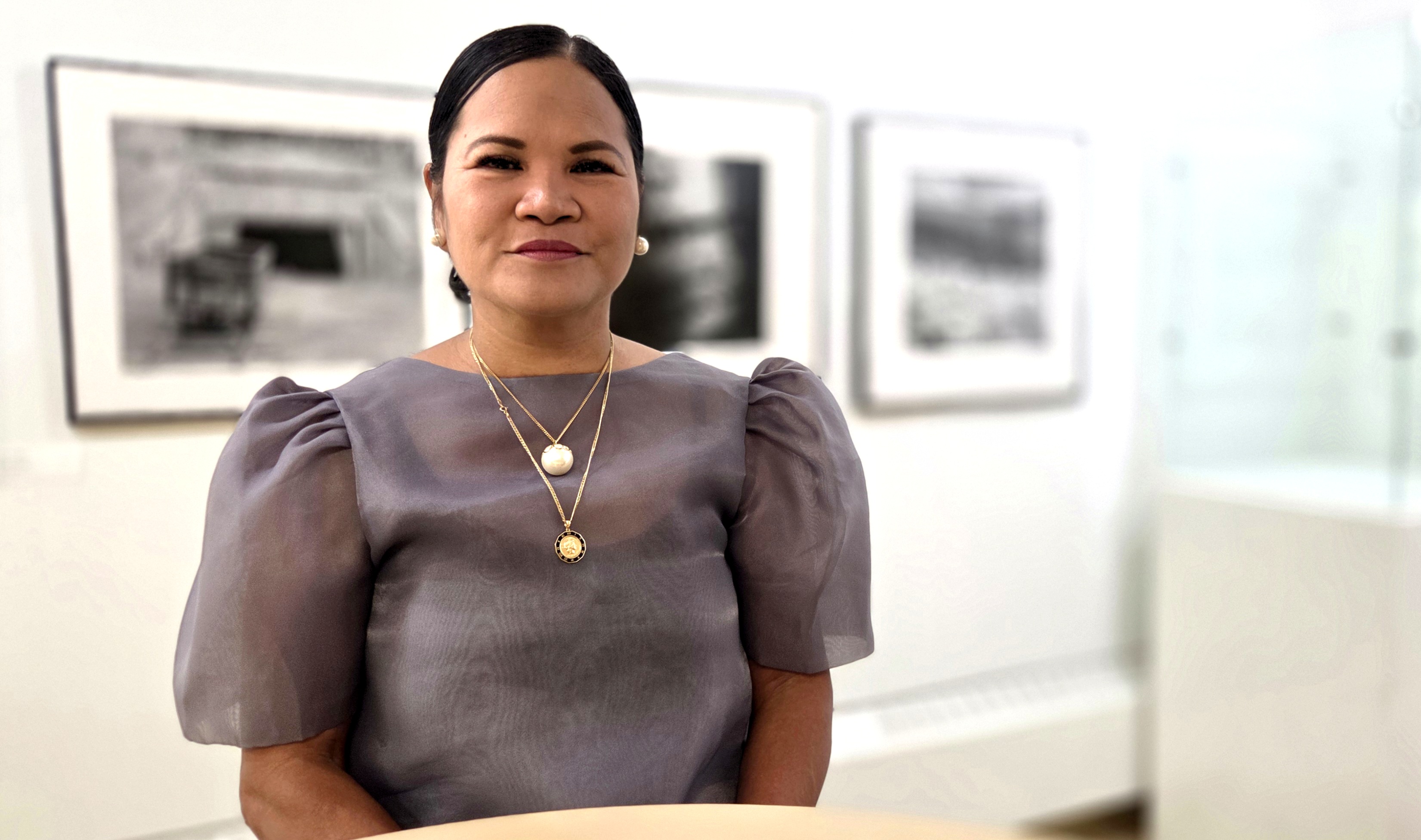
Nieva Rosales came to Canada from the Philippines in the mid 2000s.
Nieva Rosales came to Canada from the Philippines in the mid 2000s. (Image Credit: rdnewsNOW/Josh Hall)

“I had two [pieces of] luggage, $50, and my passport. I didn’t have anybody,” says Rosales. “The first thing I did was apply to work at Tim Hortons, and I worked there for eight years. Thank God for my employer there, who was amazing, and helped me bring my family. 

The question: Are Canadians sometimes too harsh towards newcomers? 

For Rosales, racism was something she could find wherever she went in the world. 

“How you’re going to deal with it is up to you, but it is a challenge. People say, ‘You’re an immigrant, you’re taking jobs from us,’ but [the truth is] I work so hard, and I’ve proven myself to not be a worry of the government and that I can manage. I worked two, sometimes three jobs, just to make sure that when my children came here, I had a house, a car, and that I could get them to school or work,” shares Rosales, who says the discrimination has waned, at least for her. 

“It’s not just Canadians; any nationality can be racist. I think people are realizing that they can be accepting of newcomers, because they are helping the community or they’re not a bother to anyone. When you go to a certain place, probably the first thing you can do is study. All I did was show I’m not going to be a burden.” 

For Bishop, the question is ‘Does she draw upon her experience as a victim of the Sixties Scoop to be welcoming today?’

“Yes, 100 per cent,” she remarks. 

After being removed from her bio parents, Bishop lived with a foster family, whom she calls “the most beautiful family.” 

She had 29 foster sisters. 

“I had the best guardian angel because every time a new girl would come in, even though I wasn’t trained to do this, I just knew what I needed to, and I would sit with them and do their intake,” says Bishop. 

Bishop was just five at the time, doing said intakes. 

“I didn’t even know I was doing an intake at the time, but I made sure they were okay, had a stuffy, wanted a blanket, and showed them where they were going,” she says. 

“I wondered where they had come from, what happened to them, and that made me welcome all these girls the best I could because I [at least] knew they were coming in with trauma. They had to have somebody.” 

That mentality, Bishop believes, is one anyone can translate to helping Red Deer fulfill its welcoming potential. 

More about international Welcoming Week is at welcomingweek.org.