Follow our top 10 countdown of the most memorable stories of the last decade, as reported by rdnewsNOW!
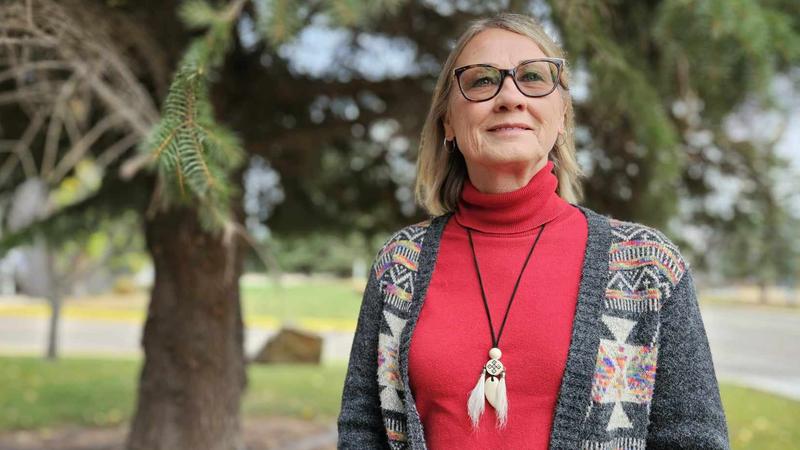
Wanda Bornn wants people to not second-guess the importance of going for regular mammograms. (rdnewsNOW/Josh Hall)
take your life into your own hands

“Love yourself enough to get a mammogram”: Red Deerian shares her and sister’s breast cancer story

Oct 24, 2023 | 11:15 AM

Red Deerian Wanda Bornn wants to pay it forward.

She’s doing that by sharing the story of her sister’s journey with breast cancer, and consequently her own, to provide encouragement to others to take steps that will extend their life.

Bornn knew what was coming — a diagnosis — in spring 2022 when the doctor asked her several days in advance to come in for an important health discussion. She’d recently had testing done on a small lump in one breast, which was detected during her 30th annual mammogram.

For Bornn, a mammogram had become a normal, routine and common-sense thing to continue doing each year, especially after her sister Eunice was diagnosed with breast cancer in 1985 and passed away in 2014, a 29-year back-and-forth battle.

That 2022 mammogram detected a lump that was thankfully still very small. Bornn underwent surgery weeks later and has been cancer-free since.

Eunice, however, was diagnosed at the young age of 24, saw the cancer repeatedly come and go, undergoing chemotherapy, and was able to live a semi-normal life that included a lot of moving around, shares Bornn.

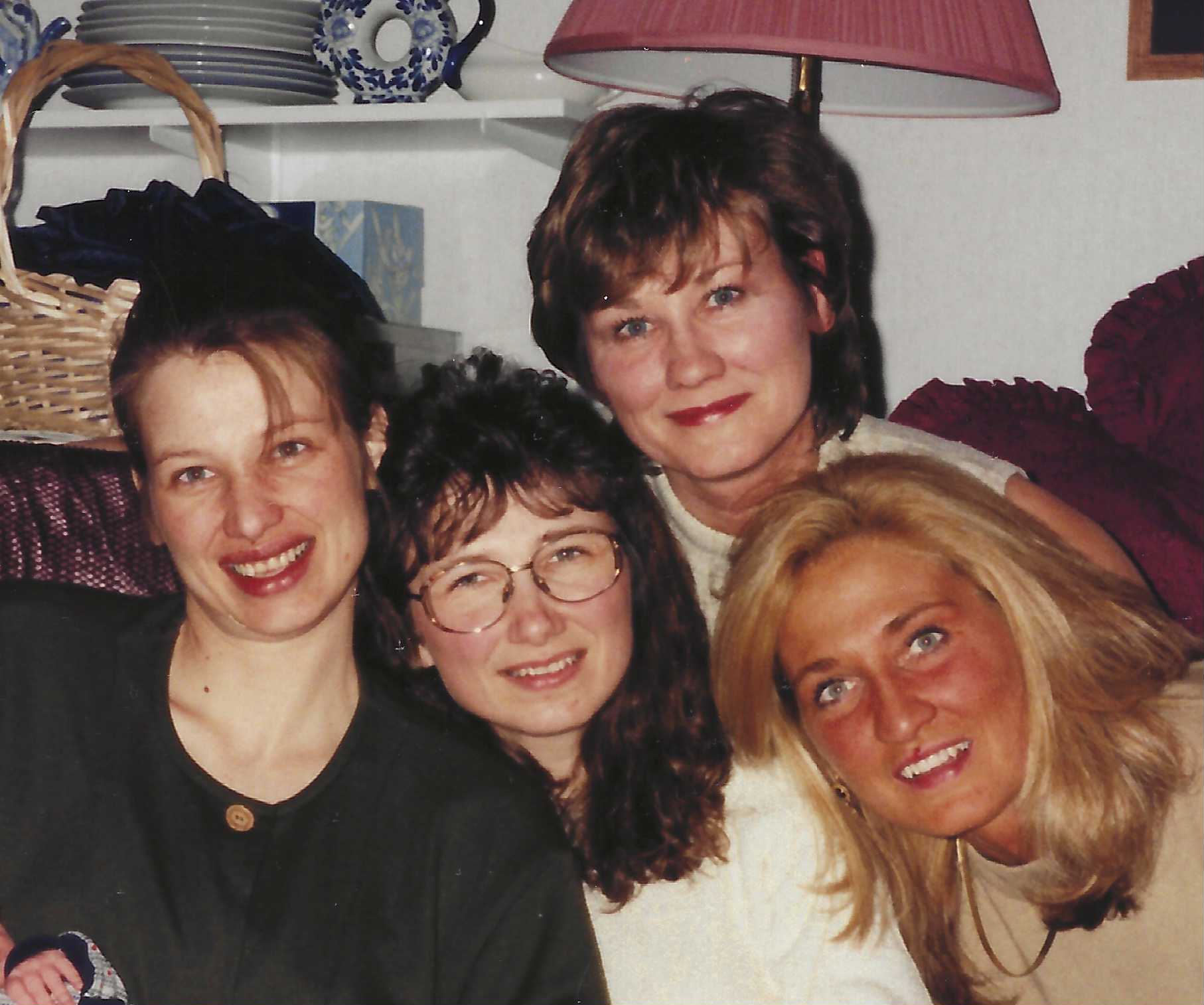
Wanda Bornn (second from right) in an older photo with her sisters, including Eunice on the right. (Supplied)

“She was 24, and had found a lump in her breast. We went to the doctor who said, ‘It’s not possible. How many people in your family have had breast cancer?’ The answer was nobody, and we have about 60 first cousins. He said she was probably good, but she insisted on a biopsy,” says Bornn, noting her first piece of advice is to advocate for yourself.

“Results came back showing that the cyst was cancerous, and it had already spread to her lymph nodes. It was about the size of her thumb, which is pretty big.”

Eunice also tested positive for a marker which means the odds for recurrence would be high.

“It would come back and then she’d get up and move like she was running away from it. She was doing well, had a couple sons, moved back to Edmonton and found herself with another recurrence,” says Bornn.

This is when Eunice had a chance meeting with an oncologist at Edmonton’s Cross Cancer Institute who asked if she’d be part of an experimental chemotherapy trial involving a drug called Herceptin, which is for those with HER2+ breast cancer.

It gave her a lengthy, albeit rocky and temporary new lease on life, allowing her to live another 19 years.

“In the lead-up to her passing, it was rough. It was tough to watch that part of her life. You never want anybody to go through that ever,” says Bornn.

“As a result of her cancer, at 35-years-old, I started getting a mammogram every single year. She also used to say you have to be your own advocate. You have to take charge of your own health. After Eunice died, my family doctor suggested I participate in a hereditary breast cancer study at the Lois Hole Hospital for Women in Edmonton,” she says.

“In the paperwork, they ask you why you want to do this. I wrote, ‘To help other women.’ It just rolled out of my pen without me even thinking about it.”

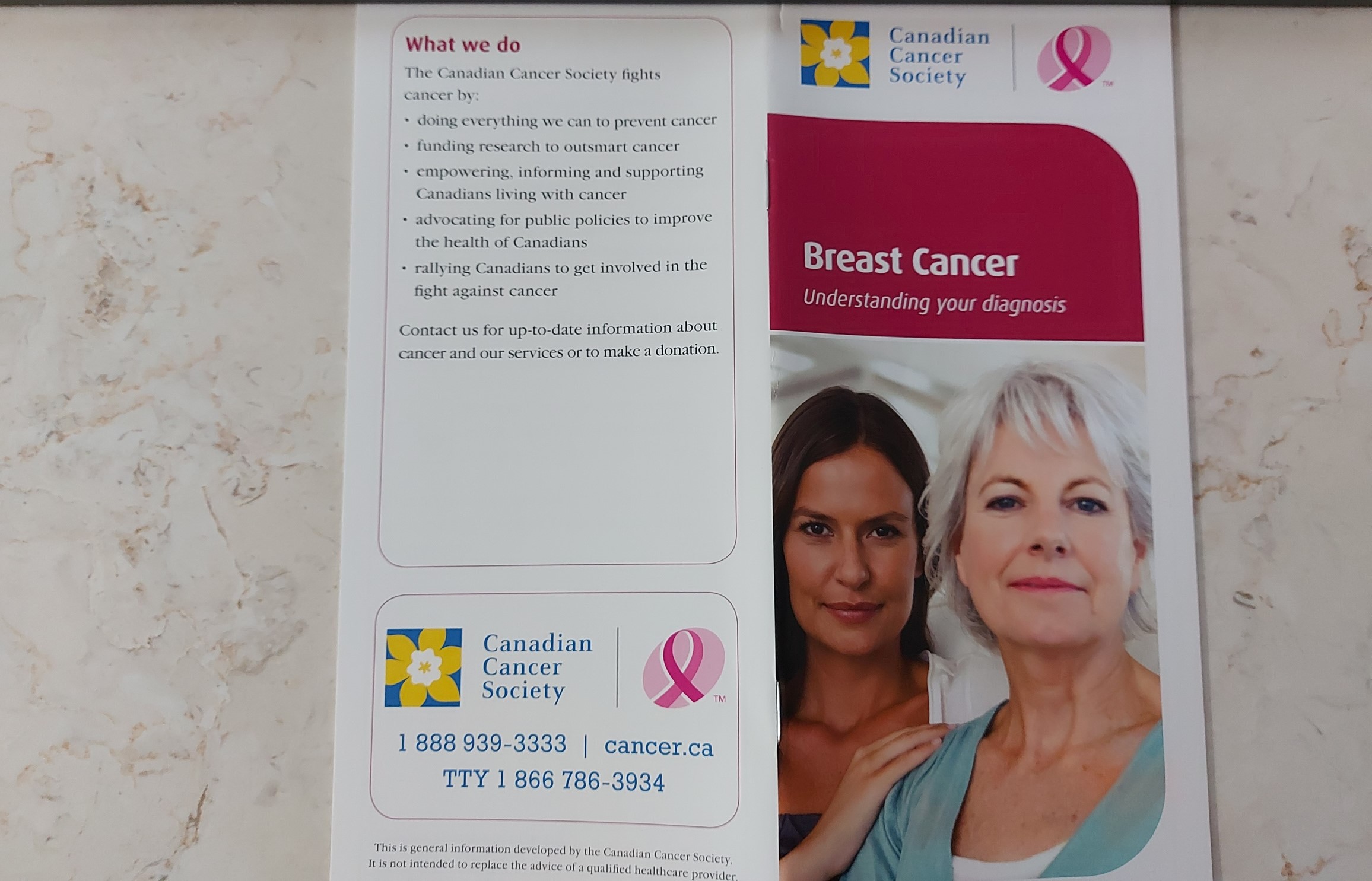
Wanda Bornn says this booklet, which can be found at the Central Alberta Cancer Centre, saved her during a depressing period after being diagnosed with breast cancer. She believes it should be put in patients’ hands at the time of diagnosis. (Supplied)

Bornn tested negative for over 30 breast cancer markers, and didn’t wind up in the study. She was instead referred to her family doctor for monitoring, and then had the mammogram that caught something.

“I’m kind of on a soapbox these days. I’d seen a story about a mobile mammography station coming to this small town, and I just wanted to stand up on that soapbox and shout at the top of my voice, ‘Go damn it. Go for a mammogram. Round up your girlfriends and go.’ I know it’s not fun but it could save your life,” she says.

“Preventative medicine like this saves our health care system, it’ll save your sanity, and you cannot tell by looking at me that I’ve had breast cancer surgery. Psychologically, that’s massive.”

Bornn’s tagline: ‘Love yourself enough to get a mammogram.’

“I’ll say it for the rest of my life.”

According to Alberta Health Services, approximately 15,000 mammograms are done monthly across the province; 95 per cent of patients with an abnormal screen who don’t need a biopsy receive results in less than five weeks.

In 2021, 70 per cent of new breast cancer cases were discovered while in stage zero or one, generally meaning it hasn’t spread.

October is Breast Cancer Awareness Month.

Mammogram information from AHS, including where to get them, how to get them, how to ask for one, what to watch for (lumps), etc.:

  • Women, transgender, gender diverse, and non-binary people with breasts of all shapes and sizes are at risk of developing breast cancer.
  • You don’t need to have any symptoms in your breasts to need a mammogram.
  • Having regular screening mammograms is the best way to find breast cancer early, before symptoms appear and when treatment may work better.
  • Mammograms are done at specific radiology clinics, some hospitals and through mobile screening clinics at Alberta Health Services’ Screen Test that travels to over 120 rural communities throughout Alberta.
  • Women, transgender, gender diverse, and non-binary Albertans between the ages of 45-74 can self refer for a screening mammogram.

To learn more about breast cancer screening, visit ScreeningForLife.ca.