LOCAL NEWS THAT MATTERS, SENT TO YOU DIRECTLY. SUBSCRIBE FOR FREE!
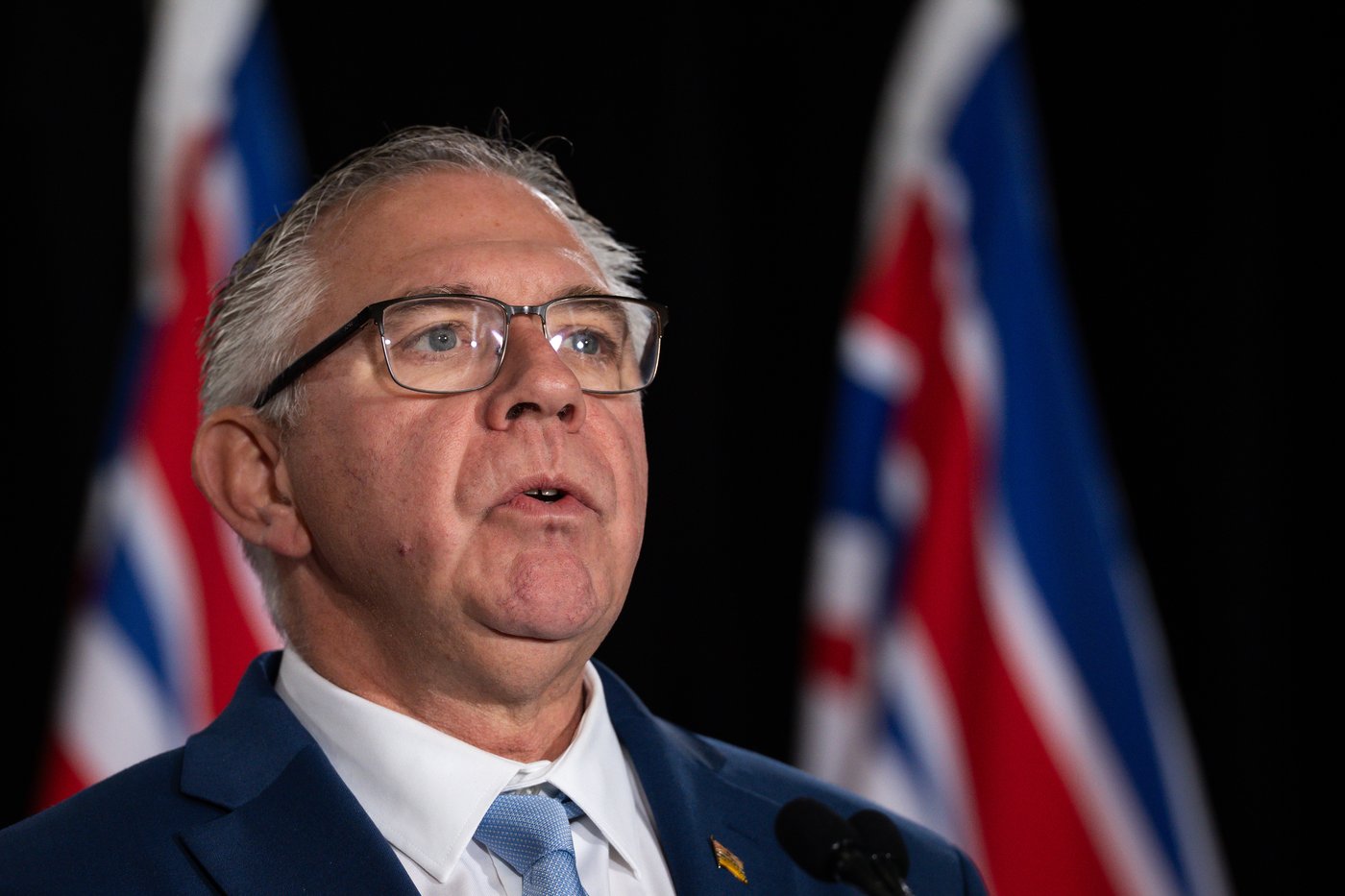
B.C. Conservative interim Leader Lorne Doerkson speaks during a provincial election campaign announcement in Surrey, B.C., on Thursday, Oct. 22, 2026. THE CANADIAN PRESS/Ethan Cairns

Doerkson pins growth hopes on getting forestry ‘back to business’ and LNG opportunity

Oct 22, 2026 | 2:00 AM

VANCOUVER — Interim British Columbia Conservative leader Lorne Doerkson is partly hanging his hopes on the province’s beleaguered forestry sector to carry his election platform’s economic growth forecasts, recalling that the sector had been a “ginormous contributor” to the province’s economy in the past.

“But here’s the thing about that forest industry,” he said in an interview on Thursday, when asked how he would achieve the growth predictions that his party says will bring in $2.6 billion in new revenue over three years.

“That infrastructure is there, it’s in place and we can absolutely get back to business in that sector almost immediately.”

He also flagged the gas sector as a source of growth, as has NDP Leader David Eby, in the provincial election campaign that reaches its climax with final voting day on Saturday.

But the Conservatives’ growth projections that reach 3.2 per cent in 2029 exceed both the NDP’s projections for the province and the Bank of Canada’s national forecasts.

The New Democrats have accused Doerkson of using unrealistic growth projections in its costed platform that says the deficit will be brought down from a forecast $14 billion to $10.8 billion by 2030.

Doerkson had little time for skepticism in a brief call after a campaign stop in Surrey, saying he doesn’t “feel anything but bullish about British Columbia right now.”

The forestry sector has been hit hard in recent years by U.S. lumber duties and fibre shortages, resulting in a series of mill closures and temporary shutdowns.

While no one from the NDP was available to comment on Doerkson’s remarks, a background document shared with media last week said Doerkson could not change U.S. softwood tariffs, now close to 35 per cent, low prices or the exhaustion of the most profitable timber stands.

Kim Haakstad, president and chief executive officer of the B.C. Council of Forest Industries, said she was not economist, when asked about the Conservatives’ growth projections.

And she cautioned that expecting the sector to resume the role it had in B.C. in the 1960s or earlier was not realistic.

But she said increasing the annual allowable cut backup to 45 million cubic metres from just under 30 million cubic metres could generate about $600 million in additional revenue.

She said that would return stability to an industry that had seen more than 20 mill closures in B.C. since 2023.

“We would love to get to a place of growth,” she said. “We absolutely believe that the forestry industry has the ability to contribute to economic growth in British Columbia and continue to support services that British Columbians need.”

The industry, she added, had idle capacity. “We want to go,” she said.

The background document shared by the NDP acknowledged the council’s $600 million estimate, but called it rosy.

Harry Nelson, a professor in the Department of Forest Resources Management at the University of B.C., said “a lot of things would have to break for British Columbia” to hit 3.2 per cent growth.

But while forestry would not likely perform as it did in the early 2000s, it could contribute to future economic growth, he said.

“Managed well, it can be a well-run, sustainable, long-term business that can do a lot of good things in a lot of communities,” Nelson said. “Arguably, we haven’t managed it that way.”

The NDP and others have broadly questioned the Conservatives’ growth figures.

NDP candidate Adrian Dix said last week that “pretending you can fund billions in new promises by ‘flipping a switch’ on resource development just isn’t believable.”

BC Green Leader Emily Lowan said of the forestry sector at the leaders’ debate last week that “we’re out of trees and we’re of runway.”

She has also previously said it is time to rethink the role of the natural resource sector, that she said accounted for only 7.2 per cent of provincial GDP and 3.1 per cent of jobs.

Haakstad has previously said the challenges facing the industry do not just stem from U.S. duties and tariffs, saying there were “also homegrown challenges” stemming from “regulatory burden.”

Doerkson said in his interview Thursday that the gas industry was also a growth opportunity that “hasn’t been capitalized on by the NDP.”

“This is a business that speaks in trillions of dollars when you talk to them,” he said.

“What we need to run our province is billions of dollars. There is a massive opportunity in the north to help us,” he said, calling the LNG sector “a bigger opportunity in British Columbia than we’ve had in a decade.”

Both major parties are betting on LNG, a relatively new industry, as well as mining, a historical industry, to get the provincial economy going again.

Whether forestry will ever resume its historical role is another question.

“I don’t think anyone believes that the forest industry is going to go back to the 1940s, 1950s, and 1960s,” Haakstad said.

“A big part of it is that we have learned a lot, and we continue to improve the ways we manage on the land base for the longer term.”

The industry, she said, is not thinking about the past, but the future.

“We think the future can include all of the mills that we have open in British Columbia today,” she said, saying there were opportunities in secondary manufacturing of modern building materials.

But she is not sure whether the mills that have closed will come back.

“Hard to predict, but I think we really need to focus on improving competitiveness,” she said.

This report by The Canadian Press was first published Oct. 22, 2026.

— With files by Nono Shen in Surrey, B.C.

Wolfgang Depner, The Canadian Press