LOCAL NEWS THAT MATTERS, SENT TO YOU DIRECTLY. SUBSCRIBE FOR FREE!
(Image Credit: ID 3227640 | Flag © Vergil Kanne | Dreamstime.com)
"an existential threat"

Around the horn: Central Alberta reaction to Canada-U.S. trade dispute

Aug 27, 2026 | 5:00 PM

Ripple effects of the super-sized trade squabble between the United States and Canada are currently making their way far and wide, north and south of the border.

Naturally, there’s plenty of reaction to what’s been happening at and away from the negotiating table, so rdnewsNOW spoke with four local people from different sides of the many-sided dice.

They include Darren Gagnon, CEO of L.A.N.D. Automotive Group, which includes Lacombe Ford; Red Deer District Chamber CEO Frank Creasey; Red Deer Mayor Cindy Jefferies; and Lorne Prins, co-owner of Gull Lake Honey Company.


Auto consumers feeling the pressure

One industry long a target of the back-and-forth, particularly as it relates to rhetoric from U.S. President Donald Trump, is the automotive sector.

Darren Gagnon says with a trade war on top of inflation, the pressure on consumers is mounting ever higher.

“Pandemic-hangover supply chain issues and U.S. tariffs have both driven up the costs of auto parts. International turmoil in the Middle East, also a U.S.-initiated problem, has driven up costs of simple motor oil, and that is going to get worse in upcoming months as supplies continue to tighten,” Gagnon explained, estimating costs for parts have increased 9-12 per cent over the last 18 months.

Darren Gagnon, CEO, L.A.N.D. Automotive Group, Lacombe Ford.

Darren Gagnon, CEO, L.A.N.D. Automotive Group, Lacombe Ford. (Image Credit: Supplied)

“On the commercial side, there’s less concern as businesses in Alberta are increasing capital investments, including [toward] work trucks, but [they are doing it] with caution and watching every nickel.”

Gagnon notes production of Ford Motor Company parts, plus tech services, and vehicle assembly still happening in Canada are seen as an offset for U.S.-imported vehicles, meaning Ford is not affected by Canadian tariffs.

He says these things are key to zero in on when addressing what Trump has said to try and coerce automotive manufacturers to relocate operations out of Canada.

While Gagnon admitted Trump’s inconsistency has caused overall insecurity in the industry, he said he’s not alone in being “proudly Canadian” to see Ford stand its ground and double down in Canada, even expanding tech centres in Ontario and making a $5 billion investment in Ford Super Duty trucks for its facilities in Oakville.

“I feel pretty good that the resilience of Canadians will weather the storm, and I truly believe consumers are paying attention to which companies are invested in giving back to their communities and investing in Canada,” he adds.

“If a dealership is partnered with a manufacturer like Ford that is proudly waving the Canadian flag with elbows up, then I hope consumers feel confident buying or servicing their vehicles at that local and engaged Ford Dealership.”

Backing the business community

Meanwhile, Red Deer District Chamber CEO Frank Creasey says his door is open if any local business owner wants to provide feedback on how they are thriving, surviving, or really hurting despite or because of the trade war.

Through that channel, he is supplying the Alberta Chambers of Commerce with information on local sentiment, which makes its way to the Canadian Chamber of Commerce.

“We can’t go from bad deal to bad deal. From a business perspective, we can’t be continuously concerned about where our markets are coming from. I think it was a good choice,” he said of Prime Minister Mark Carney’s decision to temporarily walk away from negotiations last week.

Asked what he’d do next if he was in the Prime Minister’s shoes, Creasey said he would ensure a greater focus on small and mid-sized companies.

He says the federal government’s recent announcement of $7.5 billion, that being the Regional Tariff Response Initiative (RTRI), is a smart step.

“There will be surveys coming out, both from our offices and the Alberta and Canadian Chambers of Commerce, to assist negotiating points, to assist the current government in relation to business inputs. That’s the role that we play,” he explained.

“So the more we hear from our impacted businesses, what their challenges are in the current environment, any solutions that might be forthcoming, my door is always open, and I’m happy to have any discussions that way.”

View from the mayor’s chair

This week, and for the second time in less than a month, Mayor Cindy Jefferies was at a news conference where Red Deer came away millions of dollars richer.

It wasn’t the prime minister this time around, but Treasury Board President Shafqat Ali who announced a grant of nearly $10 million towards the city’s ongoing electric meter enhancement project.

rdnewsNOW caught up with Jefferies about the trade dispute and how she sees it from Red Deer.

“I don’t think we should sell out for any agreement, so I appreciate the work being done. But it is concerning if it goes on for too long,” she said, noting she’s heard from citizens and businesses that they are concerned.

“[The personal attacks] don’t help a thing. It only makes it worse. I often talk about the importance of relationships; seeing people put in awkward positions or calling out their family doesn’t build relationships.”

Jefferies said she takes exception to any politician, of any stripe, taking shots at another person’s family.

“The saying goes: Be soft on people, but be hard on the issues. We want good people to run for office, and the more we allow politicians to be targets, people don’t want to do that job anymore. It takes away people from wanting to serve their country or their community.”

An end to this trade war would ‘bee’ nice

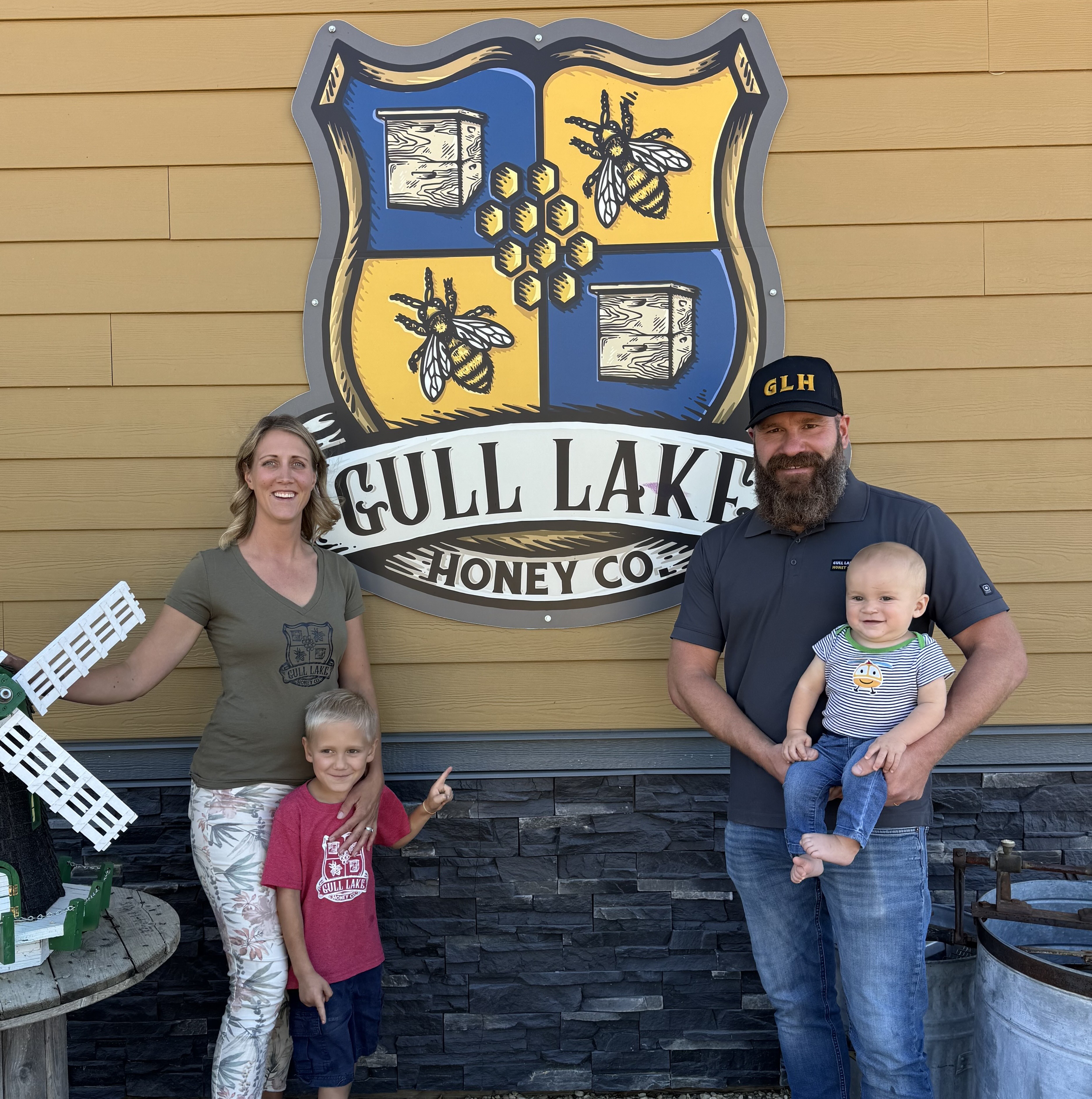
A half-hour drive northwest of Red Deer, down country roads, will take one to Gull Lake Honey Company, which has been owned and operated by Lorne and Alida Prins since 2018.

Speaking with Lorne, he said the shots fired at Canada have hit the honey industry dead-on, adding there’s a ton of concern, especially since many operations sell the majority of their honey to American customers.

Prins is also the Alberta delegate on the Canadian Honey Council (CHC) and said that group has been hard at work developing solutions and advocacy targets.

The biggest idea is one you may have heard before, and that’s the ‘Team Canada’ approach.

“This [situation] poses a major threat, like an existential threat, to some beekeeping operations,” said Prins, who had a call with the CHC Thursday morning.

The Prins family (L-R): Alida, Owen, Austin, and Lorne.

The Prins family (L-R): Alida, Owen, Austin, and Lorne. (Image Credit: Supplied)

“The solution lies within Canada because the quantity of honey we typically export to the U.S. is less than the amount of honey Canada imports from foreign sources. The market exists, but due to regional biases and buying patterns of large honey purchasers, honey imports come here from all over the world.”

Prins shared that the council has been trying for years to get companies in Ontario and Quebec to buy more Canadian honey, especially given there’s a surplus.

He believes a large company like General Mills, for example, could be a leader in this realm if they would decide to use more Canadian honey in their products, rather than buying from the U.S. and elsewhere.

“What we want is Canada to commit to purchasing Canadian honey first; meanwhile, we are ramping up community outreach and letting people know we’re here and we sell honey direct to consumer.”

That’s why at their operations at Gull Lake, which produces hundreds of thousands of pounds of honey annually from 3,000 colonies, they’re running a promotion through September that normally runs only through August. The promo allows customers to fill their own containers off the tap.

As for how much of their sales go to the U.S., Prins is hard-pressed to say because their honey, like that of other local producers, goes to the Alberta Honey Producers Co-operative, and is marketed both domestically and internationally from there.

“The demand for honey to the States sets our domestic bulk honey prices. If that stream is eliminated, then there’s no upward pressure on our domestic bulk price, and honey that’s in the drum, or the barrel, could go into a free-fall situation,” he explained.

There are other factors which go into the price of honey, but this is the worst-case scenario, he said.

“If we have tariffs for years, it would be catastrophic. If this is resolved by the midterm elections in the U.S., maybe 10 weeks from now, I think things will return to normal, but who knows? It’s speculation at this point,” Prins remarked.

For Prins, the issue is a little extra personal, given he gave up working in oil and gas to open his honey business.

“When I was in oil and gas, and pipeline construction, it would drive me absolutely crazy that Alberta had a surplus of oil, and Ontario and Quebec were importing, which they still do,” he lamented.

“Then I get into the honey industry, and it’s the same dynamic.”

READ MORE: Canada is retaliating with tariffs on these specific U.S. goods