Subscribe to the 100% free rdnewsNOW daily newsletter!
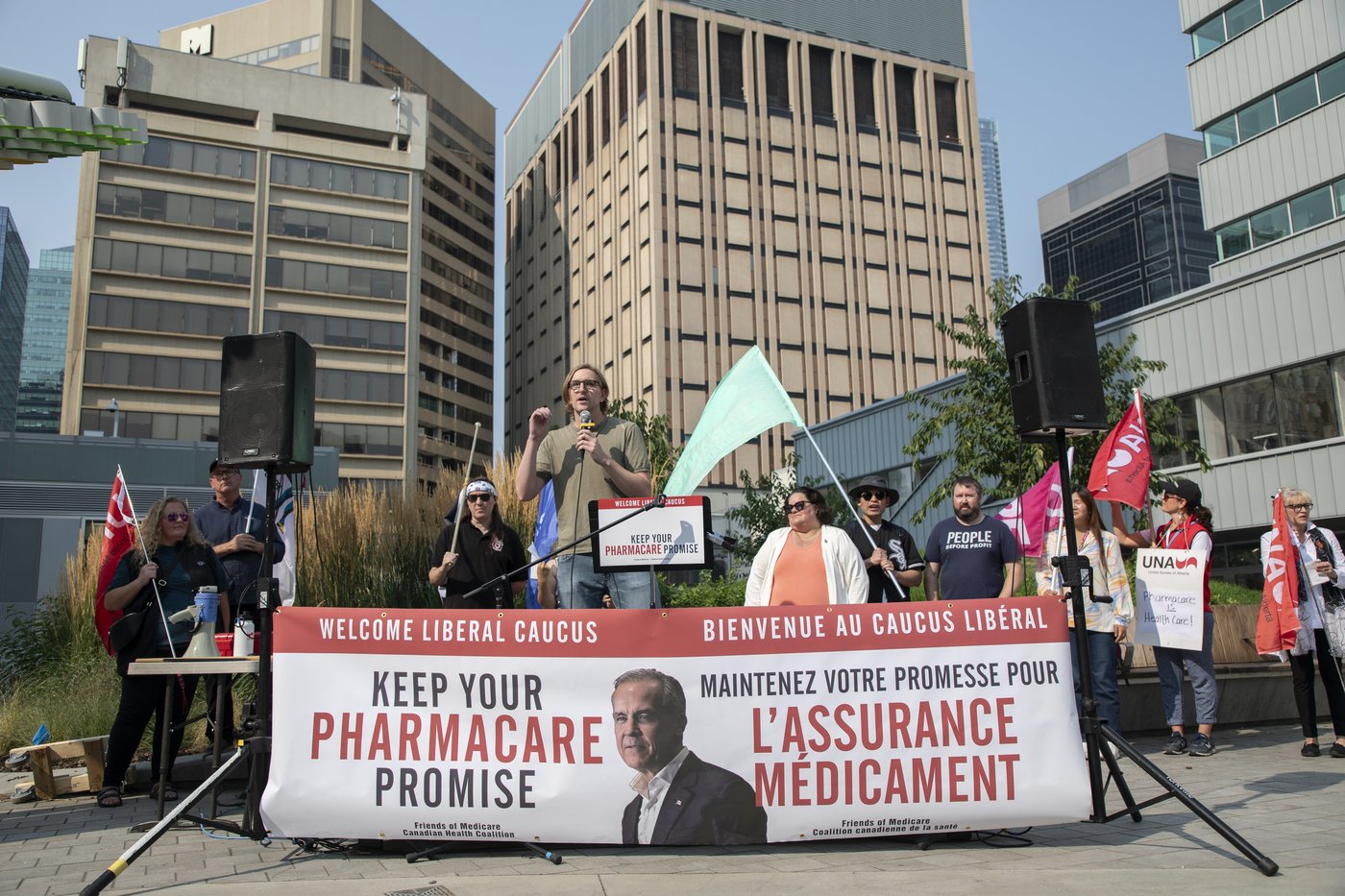
People call on Prime Minister Mark Carney to support pharmacare during a protest outside the Liberal caucus in Edmonton on Tuesday Sept. 9, 2025. THE CANADIAN PRESS/Amber Bracken

Newfoundland and Labrador health minister pushes Ottawa to negotiate pharmacare deal

Apr 28, 2026 | 9:53 AM

OTTAWA — Prime Minister Mark Carney’s government has not signed any new pharmacare agreements with the provinces and territories a year after it was first elected, and one province says that’s creating an unfair patchwork.

Newfoundland and Labrador Health Minister Lela Evans says she’s “not pleased” that the federal government has stopped negotiating and the province is still pushing for a deal.

“Newfoundland and Labrador was excluded from pharmacare, the door was closed,” Evans said at a press conference in St. John’s on Monday.

That statement comes after the province’s premier, Tony Wakeham, sent a letter to Carney in February to say the Liberals had “deferred engagement” with provinces like his. Wakeham wrote the approach “has created inequities in access to essential medications across the country.”

The premier said at the time that was the fourth such letter he had sent to Ottawa since his Progressive Conservative government came to power in October.

The first phase of pharmacare was launched in 2024 following passage of the Pharmacare Act by the former Liberal government with the support of the New Democrats.

It’s meant to cover the cost of contraceptives and some diabetes medications, meaning patients will receive the medications at no cost.

The Pharmacare Act requires Ottawa to negotiate the terms of funding agreements with provinces and territories.

The previous federal government inked deals with Manitoba, P.E.I., British Columbia and Yukon, but the current government has not added a single new deal and didn’t set aside any funding for pharmacare in its November budget.

Carney has repeatedly said his government will protect programs like pharmacare and the national dental care program.

NDP health critic Gord Johns urged the Liberals to get to the table.

“Pharmacare should be universal, equitable, and accessible in every province and territory, not a patchwork where some Canadians are covered while others are left behind,” he said in a statement.

“No one should be denied access to essential medications because of where they live.”

Health Minister Marjorie Michel’s office continues to say she’s working with colleagues in the provinces and territories.

“We are taking a collaborative approach with all provinces and territories, including Newfoundland and Labrador, to ensure that all Canadians continue to have equitable access to medically necessary care based on their medical needs, not their ability to pay,” said spokesperson Alexandre Bergeron in an email.

Premiers, however, have said there isn’t much movement on the file.

In February, New Brunswick Premier Susan Holt and Ontario Premier Doug Ford said they were interested in signing on but that Ottawa wasn’t recognizing their province’s unique needs.

At issue for many provinces is the short-term availability of the funding.

A spokesperson for Alberta Premier Danielle Smith said in a statement in February that it “(had) yet to receive details on the federal government’s long-term vision for pharmacare or how it will be financially sustained.”

P.E.I. Health Minister Cory Deagle recently made headlines after he said federal funding for the pharmacare program is set to run out in 2029 and will not be renewed.

A spokesperson for Michel’s office said it was in touch with Deagle’s office to clarify several points and said that many agreements require renewal. Michel and Deagle are set to meet in early May to discuss health funding.

Nova Scotia’s health department said in February that it was offered an agreement with Ottawa that did not allow it to separate contraceptives and diabetes medications. The province covers a wider range of diabetes medications and supplies than many others, the spokesperson said. New Brunswick has articulated similar concerns with its own diabetes coverage.

Critics including Diabetes Canada have argued the federal formulary, which only covers a limited list of diabetes medications, is not robust enough.

This report by The Canadian Press was first published April 28, 2026.

— With files from Sarah Smellie in St. John’s

Sarah Ritchie, The Canadian Press