Subscribe to the 100% free rdnewsNOW daily newsletter!
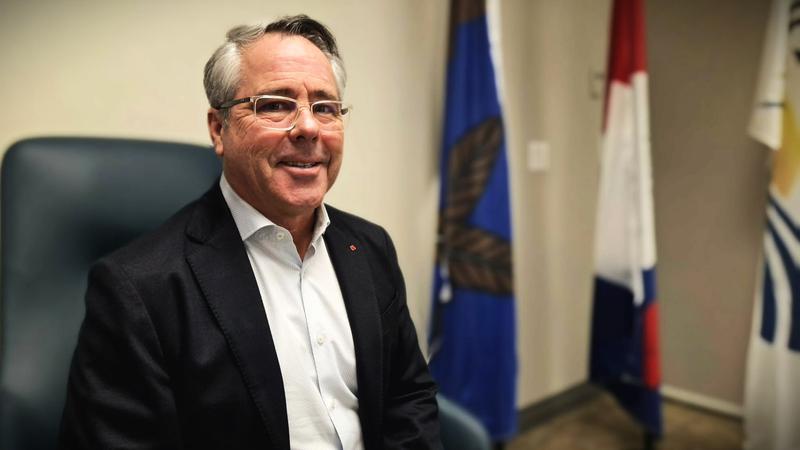
Red Deer MP Burton Bailey. (rdnewsNOW/Josh Hall)
HUMBLED TO REPRESENT RIDING

Year-in-Review: Burton Bailey reflects on first 8 months as Red Deer’s Member of Parliament

Jan 1, 2026 | 9:00 AM

He’s been on the job for eight months, and Red Deer MP Burton Bailey says it’s been a humbling experience working in the House of Commons on behalf of constituents.

Elected under the Conservative Party of Canada banner on April 28, Bailey came into the job with big shoes to fill — those of Earl Dreeshen, who’d been MP for the Red Deer area and parts south for many years.

Speaking to rdnewsNOW for a year-end interview, Bailey says what’s been particularly exciting during his time as MP is his role with The Standing Committee on Health Studies (HESA).

HESA is tasked with studying health issues that relate to Health Canada, including bills and regulations, and has oversight of four agencies, including the Canadian Food Inspection Agency and the Public Health Agency of Canada.

It’s comprised of four Conservatives, five Liberals, plus one Bloc member, and is chaired by longtime Liberal MP Hedy Fry.

Bailey says he’s been pleased with the committee’s discussions around the Canadian Health Act, and working to ensure Canadians who study abroad are able to return to Canada and practice.

He believes there are too many foreign-born people who come to Canada for medical studies, who then take their training elsewhere around the world.

There are concerns too, he says, about folks who come to Canada from abroad who have training, for example, as a surgeon, but there aren’t enough seats at Canadian universities for them to upgrade credentials once they get here. They then end up, he says, working jobs which don’t live up to their full capabilities which could benefit the Canadian health system.

“We need to limit the amount of extra seats that are training foreign doctors that will never ever practice in Canada,” he says.

He says that includes hundreds who come from Saudi Arabia annually to Canada to train, then go back.

“[On HESA], there are certain things we totally agree on,” he says, asked about what it’s like working with MPs from other parties.

“On the committee, we have five doctors, and we discuss a lot about addictions. One of the common themes is how we can make things better, and how we can quit enabling. They look at Alberta’s model and question why the federal government is funding crackpipes,” he says, referring to remarks by Health Canada’s assistant deputy minister earlier this month which indicated federal funding goes to organizations for the purchase of harm reduction supplies, which may at times include crackpipes.

“Why are we funding things that really don’t help people faced with addiction, and the actual treatment beds? Why aren’t we doing more on that? There are some common things we really, with the Bloc [agree on].”

An area where all three have found agreement is a new study on women’s health, he says.

The report talks about things such as breast cancer screening, and will be presented to the House of Commons in 2026, which is something he’s proud of, he shares.

Elsewhere, Bailey says he hopes to see movement on the housing file, especially as it pertains to Red Deer.

Asked about city council rejecting $12 million from the Housing Accelerator Fund, Bailey says it just wasn’t the right fit with the four-as-of-right requirement.

“There has to be another method for municipalities to receive CMHC money without being forced into changing our zoning. We do believe with the proper wording, the city could receive funding from CMHC, on a different grant application,” he says.

Bailey notes that the Conservatives’ shadow minister on housing, Scott Aitchison, visited Red Deer earlier this year to discuss the aforementioned $12 million passed over by council.

In another area, Bailey says Bill C-9 needs some tweaking.

Also known as the Combatting Hate Act, the bill aims to amend the Criminal Code with a focus on hate propaganda, hate crimes, and access to religious or cultural places.

He cites similar legislation changes in Scotland which have led to an overwhelming amount of complaints to law enforcement.

“They are so busy chasing people’s words on the internet. My concern for Canadians is they don’t really understand the implications of C9,” he says.

“I see a lot of our freedoms eroding around us, and this is another example, similar to firearms.”

Bailey acknowledges it’s important to tackle hate crimes, but says the bill’s wording can be interpreted in too many ways.

“A lot of these bills, there are so many moving pieces,” he says.

Lastly, Bailey talked about his experience in the Conservative caucus, and what he’s seen from party leader Pierre Poilievre, who is also MP for Battle River-Crowfoot east of Red Deer.

“We as Conservatives have been portrayed as not a cohesive group, but there could be nothing further from the truth. When we meet as a caucus, the decisions we make are team-based. We have the opportunity to speak out, especially when it comes to our beliefs. We as a team work through solutions, and I don’t see the divisiveness we read about in the media,” he says.

“I think [Pierre’s] leadership style is unique. It’s very pointed. As an issue comes up, we as a caucus vote on it. I’ve voted 59 times in this year and every time I was standing in the House of Commons, I was humbled to represent Red Deer with that vote.”