Subscribe to the 100% free rdnewsNOW daily newsletter!
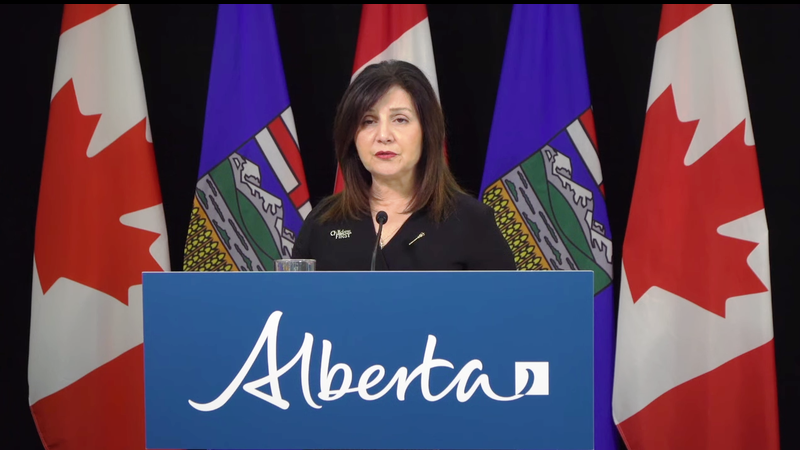
Education Minister Adriana LaGrange. (Government of Alberta)
Next Steps

Province announces K-6 curriculum advisory group members

Jan 20, 2022 | 11:42 AM

After scrutiny over the proposed K-6 curriculum, the Alberta Government is creating a new task force to help implement new educational programs.

Members have been announced for the Curriculum Implementation Advisory Group:

  • Marilyn Dennis, president, Alberta School Boards Association (ASBA)
  • Representative, Alberta School Boards Association
  • Wilco Tymensen, president, College of Alberta School Superintendents
  • Bevan Daverne, past-president, College of Alberta School Superintendents
  • David Keohane, executive director, College of Alberta School Superintendents
  • Michael McMann, superintendent, Fort Vermilion School Division
  • Robert Lessard, superintendent, Conseil scolaire Centre-Nord
  • Teacher representative, piloting elementary school
  • Teacher representative, piloting elementary school
  • Teacher representative, elementary school
  • Principal representative, Calgary Board of Education
  • Curriculum expert, Edmonton Public Schools
  • Andre Tremblay, deputy minister, Alberta Education (chair)
  • Jennifer Flaman, assistant deputy minister, Curriculum Division
  • Executive director, Early and Middle Years Curriculum
  • Executive director, Curriculum Coordination and Implementation
  • Executive director, Learning and Teaching Resources

“Alberta’s government has been listening to all input from Albertans about the draft K-6 curriculum review process,” says Education Minister Adriana LaGrange. “We are committed to taking a measured and thoughtful approach to ensure curriculum piloting and implementation timelines are manageable for teachers and students. With the expertise of the Curriculum Implementation Advisory Group, Alberta’s government will carefully consider how to address the implementation timelines and support the education system throughout the process.”

They will help to determine how the new curriculums for English Language Arts and Literature, Mathematics, and Physical Education and Wellness will be implemented in fall 2022.

This includes identifying supports that may be needed and options for providing those supports to schools.

ASBA President Marilyn Dennis says the group will also provide advice on the continuation of piloting the remaining K-6 subjects.

“ASBA appreciates participating in this advisory group to provide feedback from member school boards as the voice of their diverse communities. We look forward to a collaborative process working alongside advisory group members in the best interest of all students across the province.”

The draft K-6 curriculum was heavily criticized when it was first presented as it included math subjects that were too advanced for certain grade levels, and social studies content that Indigenous leaders say contained “errors, examples of plagiarism, and content that is not age-appropriate nor reflective of Alberta’s diversity,” among other areas of concern.

Alberta Teachers’ Association (ATA) president Jason Schilling, representing 46,000 teachers, expressed concern over today’s announcement of the membership of the curriculum implementation advisory group.

Although Schilling notes there is some teacher representation, he says this level of engagement is woefully inadequate and consists of teachers hand-picked by the minister without consulting the profession.

“At the end of the day, school boards don’t implement curriculum. Superintendents don’t implement curriculum. Teachers implement curriculum and need to be meaningfully involved in its development,” said Schilling.

Schilling reiterated the call for a suspension on curriculum implementation until the content of the curriculum is vastly improved. He claims that the government continues to change the curriculum abruptly, has not responded to teachers concerns, and is moving too quickly to implementation without an appropriate phase of piloting.

“We do not even have a final draft of the curriculum and what has been put forward does not enjoy the broad support of teachers or the public. What has been drafted has only been piloted in a small number of classrooms for just a few months—and we don’t know what the feedback from that pilot is. There are no student or teacher resources developed,” he said.

ATA specialist councils, made up of teacher volunteers who are subject specialists, have provided support for curriculum development in the past and, they allege, have been excluded from this process to date. Schilling says this is a missed opportunity.

“They’re not looking for meaningful critique, they’re looking for kudos,” he said.

Even the updated draft curriculum in December 2021 received mixed reviews from the Lethbridge School Division.

This spring, both the Lethbridge School Division and Holy Spirit Catholic School Division opted out of piloting the draft curriculum, citing significant concerns with its contents.

Thursday’s media release from the Alberta Government did not mention if the new Advisory Group would be holding any additional curriculum consultations.

NDP Critic for Education Sarah Hoffman issued the following statement regarding the UCP government’s announcement of the steps for K-6 curriculum implementation:

“A vast majority of Albertans want this draft curriculum completely scrapped.

“The UCP created a flawed process that resulted in an unacceptable curriculum and if they were listening to Albertans they would not be forcing it onto students, they’d be working with experts to create something all Albertans can be proud of.

“School districts across this province, teachers and academics at universities have been giving thoughtful feedback; they all deserve to be part of the process.

“That is why if we are elected, we commit within the first 100 days to creating an inclusive process that brings together experts from within Alberta, including parents, academics, active teachers, and Indigenous leaders.”

Schilling says funding to support implementation is also a significant concern, stating that the government is not asking about what is needed for funding, including from this new implementation advisory group.