LOCAL NEWS THAT MATTERS, SENT TO YOU DIRECTLY. SUBSCRIBE FOR FREE!
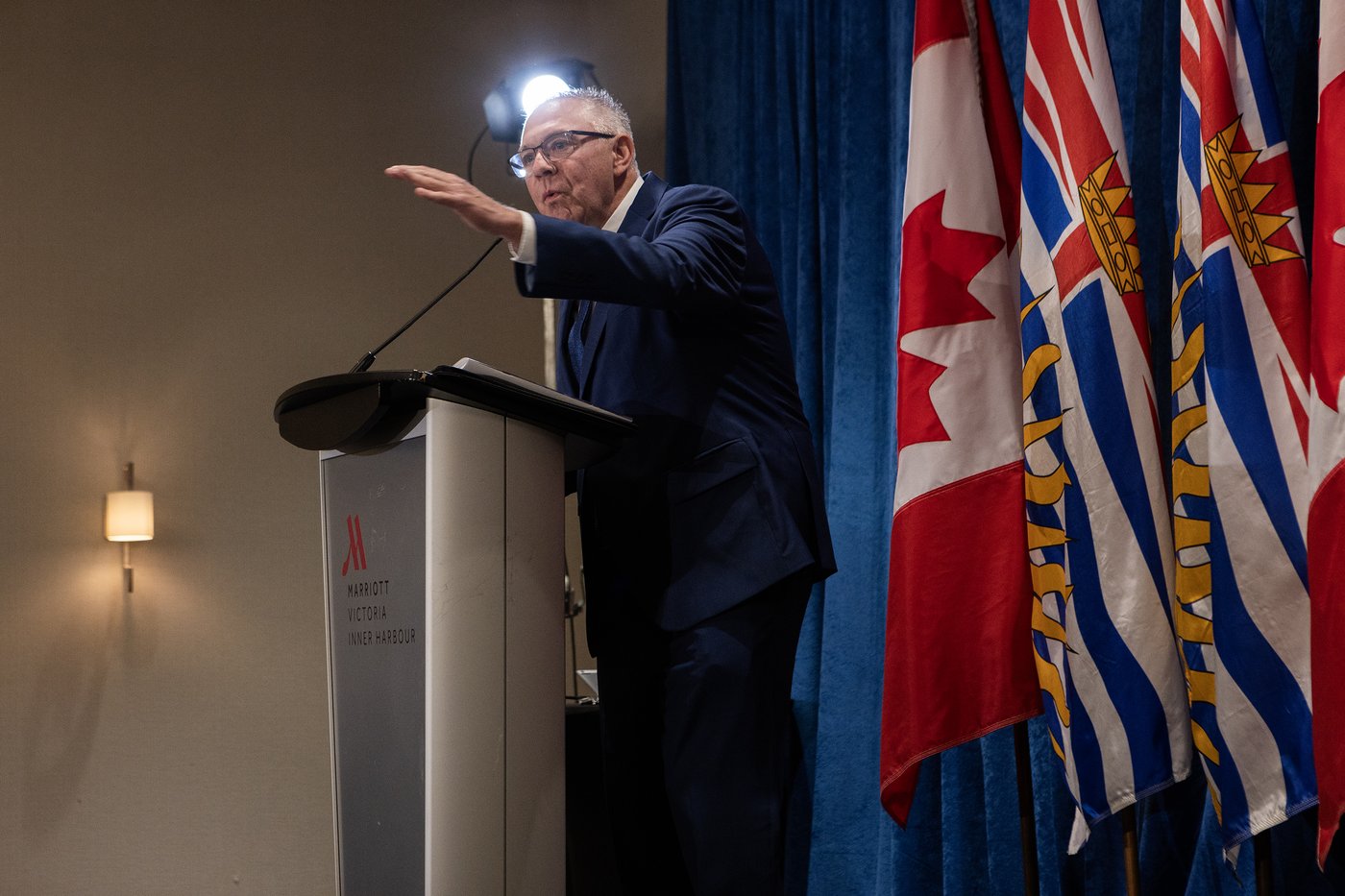
Premier-designate Lorne Doerkson delivers opening remarks to the newly elected Conservative government caucus in Victoria, on Monday, Nov. 2, 2026. THE CANADIAN PRESS/Chad Hipolito

Doerkson’s a fan of Carney’s budget, but it may not work as a template for B.C.

Nov 6, 2026 | 2:40 PM

VICTORIA — British Columbia premier-designate Lorne Doerkson is a fan of this week’s federal budget, but two economists caution that it may not be easily emulated provincially.

Marc Lee, senior economist with the Canadian Centre for Policy Alternatives, said the province is facing greater urgency than Liberal Prime Minister Mark Carney to deal with deficit problems.

Even though the federal and provincial deficit-to-GDP ratios are about the same, Lee said B.C. “can’t continue to run large deficits” year after year.

Lee said Ottawa has “a lot more room, the license to do things, partly because it is the federal government.”

The province has less room to reduce spending, he said, since it has primary responsibility for health, education and other social services, and residents would notice cuts.

Doerkson, whose Conservatives toppled the NDP government in the provincial election last month, praised Thursday’s federal budget as “encouraging and ambitious,” with a focus on resource industries and growth-oriented tax measures.

The premier-designate has said his government’s budget would likewise be “very committed” to growth.

Asked by reporters on Thursday whether the federal budget was an “approximation” of what his provincial budget would look like, Doerkson said the Conservatives are committed to growing B.C.’s economy.

“We will be looking to improve our revenue from forestry, LNG and certainly we’ll be contemplating all of that going forward.”

The Conservatives have promised to cut this year’s forecasted deficit of almost $14 billion through economic growth, without new taxes.

Yet it faces certain challenges.

Jairo Yunis, policy director at the Business Council of B.C., said the Conservatives’ ability to mitigate a fiscal situation he called “dire” will be constrained by its campaign-trail commitments, last year’s public sector wage settlements, and rising debt-servicing costs, which make up the fastest-growing budget line item.

Like Lee, Yunis said the province has more “direct program spending” than Ottawa.

But the size of B.C.’s public sector has grown by 44 per cent since 2019, compared with just three per cent for the private sector, he noted.

“So, I think there is an argument to be made about trying to have a more rigorous and more principled approach to public spending in the province.”

Yunis said Doerkson’s government must also work on regulation and permitting to stimulate economic growth and revenue.

Ottawa’s budget includes the so-called productivity mega deduction, allowing companies to immediately and fully expense eligible assets, such as machinery.

Yunis said the deduction is “arguably the most important pro-growth tax change Ottawa has made in years.”

Doerkson specifically praised the measure in his remarks on Thursday and said it would dovetail with his party’s plan to exempt some machinery, equipment and business software from the Provincial Sales Tax for three years.

“Together, they can supercharge investment in this province and create jobs right here,” he said.

Lee said the exemption would be “hugely beneficial” to the oil and gas industry, but it would push B.C. in the wrong direction when it comes to climate change.

The economist also said cuts to public services could trigger a recession, and he was not sure tax changes would create more revenue, because politicians had mostly “pushed all the buttons” around growth.

“So, I’m more skeptical about that,” he said.

Yunis was more optimistic, but acknowledged difficulties ahead for B.C.

“I don’t envy the next finance minister,” he said.

This report by The Canadian Press was first published Nov. 6, 2026.

Wolfgang Depner, The Canadian Press