LOCAL NEWS THAT MATTERS, SENT TO YOU DIRECTLY. SUBSCRIBE FOR FREE!
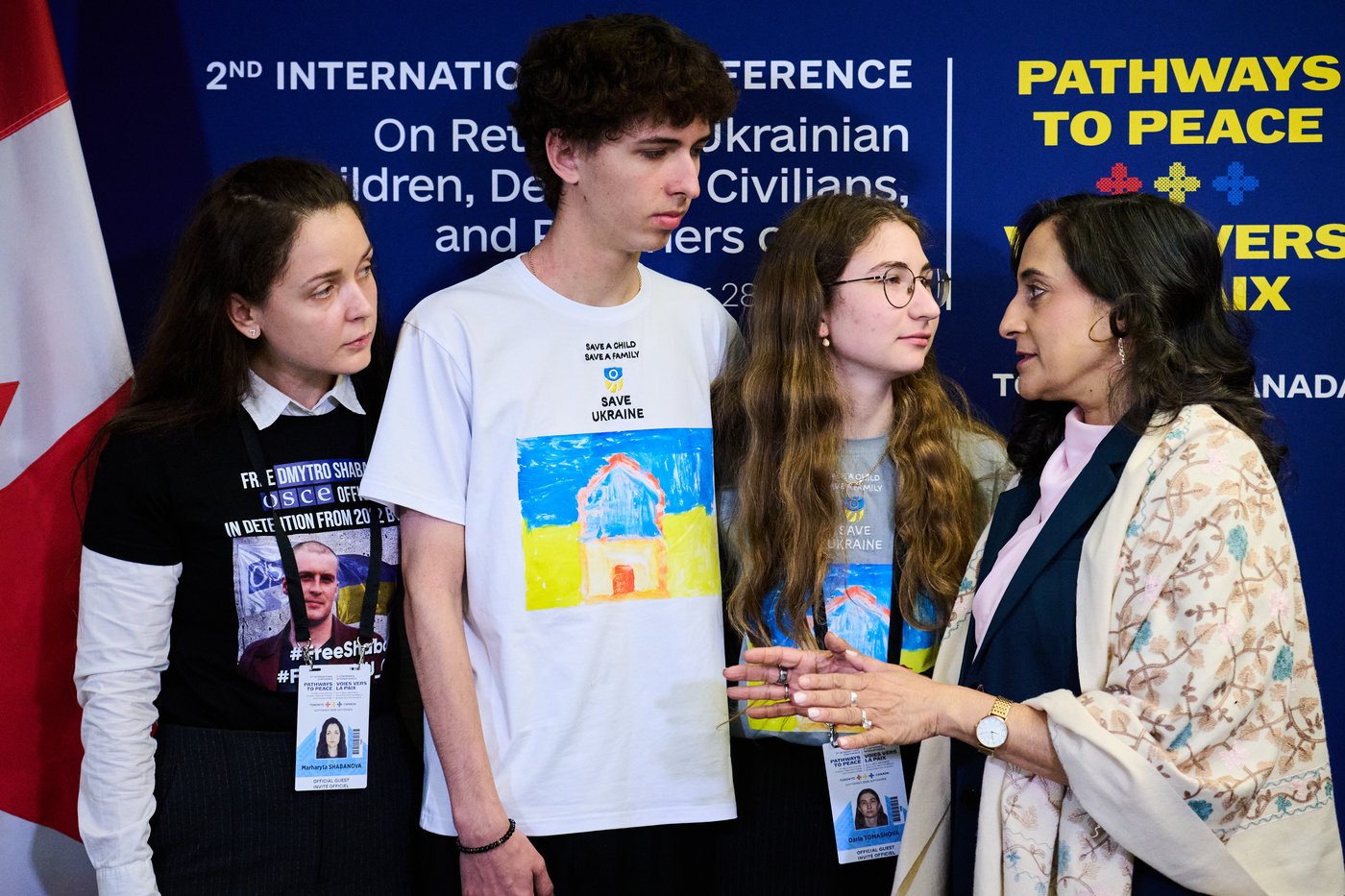
Ukrainians Margaryta Shabanova (left), Matviy Chos and Dariia Tomashova (right) speak with Minister of Foreign Affairs Anita Anand at the Pathways to Peace conference in Toronto on Tuesday, Sept. 29, 2026. THE CANADIAN PRESS/Sammy Kogan

Anand closes Toronto summit on returning Ukrainian kids from Russian captivity

Sep 29, 2026 | 9:21 AM

TORONTO — Foreign Affairs Minister Anita Anand will close a two-day conference on missing Ukrainian children Tuesday after multiple countries promised more action to bring home those abducted by Russia.

In 2024, Canada and Ukraine jointly launched an international coalition of nations committed to finding and returning Ukrainian children abducted by Russia since it began its full-scale invasion in 2022.

That work has been expanded to include efforts to return adult civilians and prisoners of war taken by Russian officials since Russia’s 2014 seizure of Crimea.

The European Union has announced a new round of sanctions on officials accused of helping to abduct Ukrainian children — something the International Criminal Court calls a war crime.

The European sanctions target a camp in North Korea where Brussels says Russia has sent abducted Ukrainian children. The Songdowon camp is not among the entities Canada has sanctioned.

Norway, which is co-hosting this week’s conference in Toronto, has promised the equivalent of $35 million to support work by UNICEF and the International Committee of the Red Cross to bring Ukrainian children home and help them reintegrate.

Officials in Ukraine say 2,600 of the 20,000 children deported to Russia have since returned.

Bring Kids Back, a coalition launched by Ukrainian President Volodymyr Zelenskyy, has said many of those children have reported being subjected to physical and sexual violence.

“Children are brainwashed. They are geared toward military service in the Russian armed forces,” coalition leader Maksym Maksymov said in a Tuesday interview.

“Ukrainian language, culture and history are removed from schools. Everything that is happening there is designed to sever the legal and emotional path back to Ukraine for these young people.”

Maksymov said a report published in July by the Organization for Security and Co-operation in Europe offers independent confirmation of what Ukraine has been saying.

The OSCE — of which Russia and Canada are both members — reported Russian officials have compelled children to change their identities, physically tortured at least 10 kids and placed many in foster families where sexual violence occurred.

“The practices of systemic indoctrination and militarization may also amount to a crime against humanity in the form of persecution, directed against Ukrainian children on discriminatory grounds, as part of a widespread and systematic attack,” the report reads.

This week’s Toronto summit builds on a similar one in May hosted in Brussels. Maksymov said 300 children have been returned to Ukraine in the four months since then.

“Canada has provided very significant practical support when it comes to tracing, when it comes to returns, when it comes to reintegration, all of the fronts,” he said.

On Monday, Anand told reporters Canada is using artificial intelligence to help identify Ukrainian children taken into Russia. She said Russian authorities have changed the names of some children, making them harder to track.

Alexandra Chyczij, head of the Ukrainian Canadian Congress, said Tuesday her understanding is that Canada is using data from cellphones owned by Ukrainian youth to establish their initial whereabouts, and using satellite imagery to identify detention centres.

Chyczij said this technology allows authorities to understand what is happening to children deported to Russia and those living in the occupied Ukrainian territories.

“The children who still remain living in occupation are absolutely as vulnerable,” she told reporters. “It really is important to keep raising awareness.”

This report by The Canadian Press was first published Sept. 29, 2026.

Dylan Robertson, The Canadian Press