Subscribe to the 100% free rdnewsNOW daily newsletter!
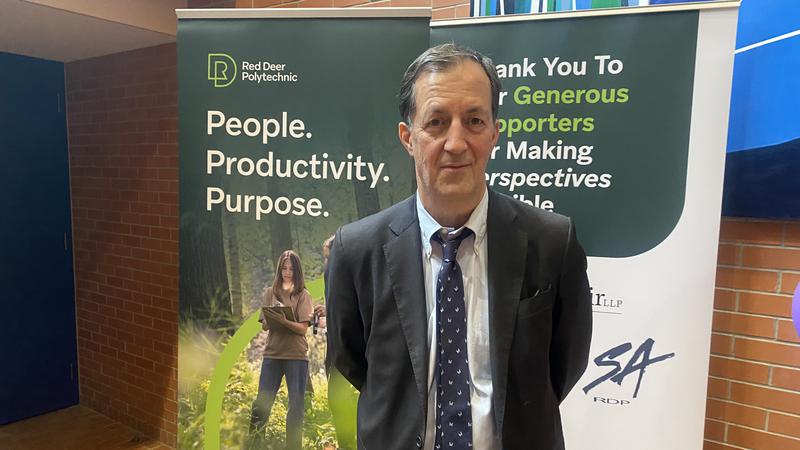
(rdnewsNOW/Ian Gustafson)
RDP featured speaker

Journalist Andrew Coyne speaks on dysfunction of Canadian political system

Oct 30, 2025 | 2:10 PM

As part of Red Deer Polytechnic’s Perspectives: Canada in the World annual series, they welcomed Canadian political journalist Andrew Coyne on Wednesday as the featured speaker.

The Globe and Mail columnist has been reporting on the political and economic landscape in Canada for over 20 years. He’s also the author of his new book, which came out earlier this year, called The Crisis of Canadian Democracy.

As the featured speaker, he held a session with students in the afternoon, followed by a public session in the evening at the main stage in the RDP Arts Centre.

While speaking with the students, he gave a preview of the book as well as a little bit about the craft of journalism.


“I tried to emphasize to them the value of humility. That people have so many other things that they can do with their time, they don’t have to read your column or anything else. And so if you’re going to persuade them to spend even three minutes it takes to read your column, you better make it worth their while,” he said.

He also heard what was on their minds, including thoughts on how we nominate candidates, such as when Pierre Poilievre ran in the federal byelection in the Battle River-Crowfoot constituency. Electors had already elected Damien Kurek as their MP, but he later stepped aside to allow Poilievre to run in his place.

He said it speaks to one of the deficiencies in our system.

“It’s so controlled by the parties. People think, well, we have competitive nomination races and may the best candidate win, but at least half of the time in recent elections, candidates have been appointed by the party leaders, averaging across all the parties,” he said.

Someone also asked about what he thinks should happen with the Canadian Broadcasting Corporation (CBC), among other topics.

He said he doesn’t think the CBC should end, but does think it should be moved off of taxpayer funding to a viewer-paid service.

“I think that would solve a lot of the dilemmas facing the CBC. Right now, it’s caught in this trap where it’s part advertising funded and part publicly funded,” he said. “If you eliminate both of those and just focus on your audience, I think that would be better for everybody.”

In the evening session, they welcomed approximately 350 members of the public to the auditorium, which holds 500 people.

Coyne talked all about the thesis of his book, which highlights some of the dysfunctions in Canada’s political system that are wide-ranging.

“One of the themes of the book is that it’s not just one area; it’s everything. None of it seems to be working in the way it should, the way it used to, or the way it does in other countries,” he said. “And try to talk about some of the possible solutions to that can maybe put us on a more democratic track.”

When asked how we fix a broken system when it seems like whoever is in power, it’s not in the politician’s best interests to make these changes, Coyne said it’s a huge dilemma.

He added, there’s a consensus between practising professors on some of the solutions, and a lot of them have to do with distributing power that is controlled by the prime minister or party leaders to caucus members or the speaker of the House of Commons.

Rather than the prime minister saying this is how it’s going to go, there could be a vote in parliament.

“I think there’s a lot of problems with the electoral system, which means you’ve got to persuade the people who were elected in the existing system to move to another system where they might not get elected. There’s no simple answer to that; it doesn’t make reform impossible because this is the dilemma facing any democratic reform… Sometimes you can get the ball rolling with one small change that can start a momentum that makes it hard for people to get in the way.”

Another aspect of the crumbling democratic system, Coyne said, is the lack of voter turnout federally, provincially, and municipally in Canada.

He explained we have very low turnout now and that it’s been falling for decades. Federally, he said, we’re down to approximately 50 to 60 per cent and in some provinces, down to 50 per cent.

This is worrisome, he said, because it indicates a lack of concern about democracy and a feeling from people that their vote doesn’t matter.

However, what’s particularly worrying is that different groups vote in different proportions, and this means we’re not getting a true sampling of what the population wants. For example, older people tend to vote more often than young people.

He suggested that mandatory voting could be a solution, such as what they have in Australia.

“If you’re trying to do government for the greatest good of the greatest number, then you want to have a true representation of the population,” he said.