Get the free daily rdnewsNOW newsletter by subscribing here!
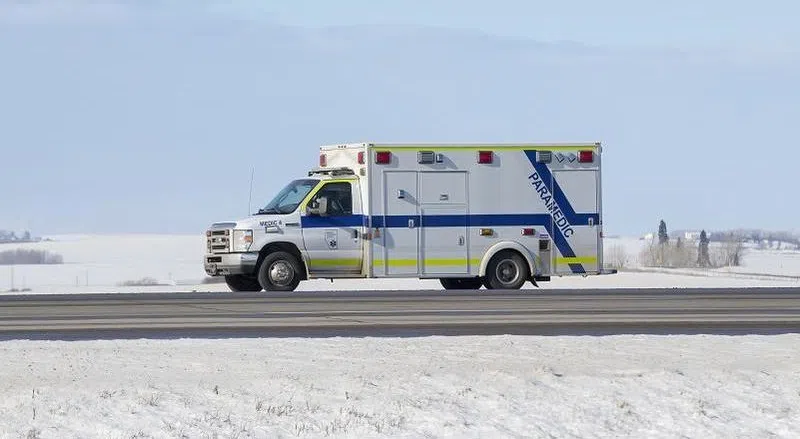
(rdnewsNOW file photo)
FOIP data

Paramedic advocates call for changes to EMS operations, AHS refutes claims

Feb 28, 2025 | 11:45 AM

The state of Emergency Medical Services (EMS) in Alberta’s medical central zone has worsened and has even reached a crisis, according to wheresmyambulance.com, a website claiming to shed light on rural communities EMS resources, and how Alberta Health Services (AHS) has allegedly mismanaged them for over a decade.

In 2023 alone, they report, there were nearly 1,800 ambulance shutdowns in AHS’ Central Zone, leaving entire communities without emergency medical coverage.

Despite this, Alberta Health Services has only hired 45 paramedics for the entire zone, with just nine of them receiving full-time positions, according to wheresmyambulance.com.

The remaining positions are casual or part-time, claims the website, meaning that a significant portion of EMS coverage depends on overtime and short-notice shifts. According to wheresmyambulance.com, over 95,000 hours of EMS coverage last year came from casual staff and overtime, highlighting a system propped up by exhausted workers rather than sustainable staffing.

Don Sharpe, a registered paramedic in Alberta and principal at wheresmyambulance.com, said this is a problem that’s been brewing for quite a long time.

“A lot of paramedics are either quitting, dropping to casual, or showing up, I think, too tired to actually do the job properly,” he explained.

“It’s exhausting these days. They’re working 12-hour days and often not getting enough rest. I think it’s a recipe for disaster. On top of that, AHS is operating on pretty much unlimited overtime. So, crews that are tired after four days are having an opportunity to make double time if they just work another couple of shifts.”

He explained that staffing is “a nightmare” for AHS because no one wants to work full-time. This, says Sharpe, raises the question of why not? He suggests it’s generally known as a high-paying job but noted it’s because those employees aren’t getting enough rest.

“Enough is enough. Paramedics, they’re burnt out, tired, exhausted, and we’re finding they don’t want to work for AHS anymore,” Sharpe said, adding he used to work for AHS in his 40 years of being a paramedic. “They’re happy to work for services that don’t run them until they drop.”

Where’s my Ambulance, an advocacy project for rural communities made up of a group of current and retired ambulance first responders a year ago, provides the public with statistics and information about their local ambulance services.

The group says they do deep dives into FOIP (Freedom of Information and Protection of Privacy Act) data they obtain from Alberta Health Services through crowd funding. The FOIP Act is meant to strike a balance between the public’s right to know and the individual’s right to privacy. To date, they believe they’ve published approximately 100 FOIP requests.

In addition, they reported that Red Deer’s EMS offload delays continue to worsen, despite AHS’s stated goal of clearing ambulances in under 45 minutes for 90 per cent of calls.

The current data shows, according to wheresmyambulance.com, that 50 per cent of emergency transports and 62 per cent of inter-facility transfers both exceed the 45 minute offload target.

They explain that because of this, ambulances from surrounding towns are being pulled into Red Deer to handle the backlog. This leaves communities without an ambulance for hours at a time, the group claims.

“The absolute three things that are wrong with AHS EMS are leadership, transparency, and accountability,” Sharpe said.

AHS refutes claims

In response, Alberta Health Services provided a statement saying a number of claims made by wheresmyambulance.com are false and ignore response times, which is a key measure of performance and safety for patients and the public.

“In fact, response times in January 2025 are at the 12-minute target, which is a major improvement from recent years and a credit to our EMS staff,” as written in the statement.

“Our EMS staff have made significant strides in improving EMS response times in Red Deer, with the 90th percentile response time dropping from the peak of 18.8 minutes in November 2022 to 11.7 minutes in January 2025—a 38 per cent improvement. This response time is now below the target of 12 minutes, which represents a significant achievement.”

AHS says they’ll continue their work in bringing response times down further and that a major factor is reducing delays in transferring patients in hospital.

“In November 2022, EMS spent six hours at Red Deer Regional Hospital Centre to transfer a patient, at 90 per cent percentile. By January 2025, that had improved to 2.2 hours —an approximate 63.3 per cent improvement. An ambulance that waited six hours in 2022 was back on the street in just two hours in January.”

This progress, they explained, follows the 2023 launch of a dedicated inter-facility service partner in Red Deer, which freed up 26,500 hours for emergency ambulances in the Central Zone.

From 2020 to 2024, AHS increased Central Zone EMS staffing by 16.2 per cent, hiring 45 new staff in 2024, including 13 full-time positions and 32 casual positions. AHS hires full-time wherever possible, but temporary full-time positions or casual staff are often used as entry points for new employees to cover various types of employee leaves.

AHS also explained that ambulance shutdowns are difficult to verify and track, as there are numerous reasons an ambulance may be out of service, such as for maintenance.

The number provided in the email from wheresmyambulance.com, they allege, is speculative and lacks proper context. AHS says it does not accurately reflect the system as a whole as the shutdown of an ambulance does not necessarily indicate that one is unavailable.

“The claims regarding the overuse of casual staff and overtime are also incorrect. In 2024, casual EMS Central Zone employees worked 55,472.64 hours, including overtime, which represents just 10.9 per cent of the total paid hours in the Central Zone. Overtime worked by EMS Central Zone staff (including casuals) accounted for 7.8 per cent of total paid hours, demonstrating that the overuse of casual staff and overtime is not a substantial issue.”

AHS also said they’re not meeting the 100 per cent target for 45-minute response times because of challenges like respiratory season.

“EMS in Alberta operates as a borderless system. Rural areas have local EMS coverage, either through direct delivery from AHS EMS or through another provider under contract to AHS EMS, the health authority said.

“When demand in one area exceeds its local capacity, resources are redeployed from other areas to support all Albertans. If an ambulance is dispatched from its base community to respond to a neighboring area, the provincial dispatch system ensures that coverage is coordinated with other available resources.”