Subscribe to the 100% free rdnewsNOW daily newsletter!
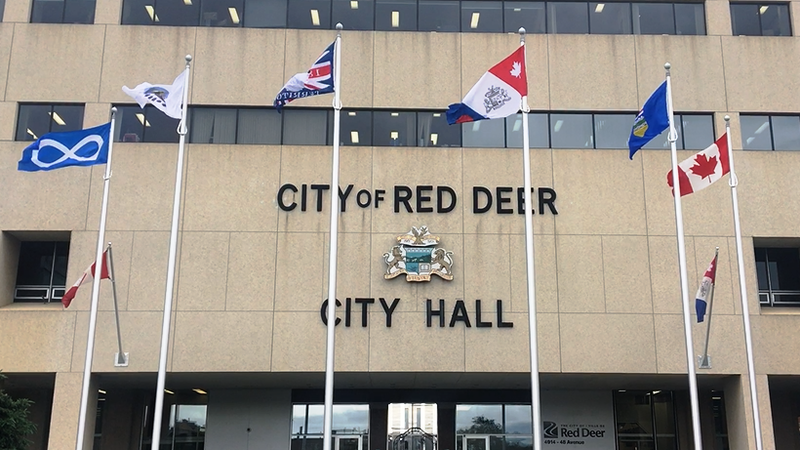
(rdnewsNOW file photo)
Approves Municipal Features Naming Policy

Red Deer city council debates policy regulating name changes of municipally-owned sites

Jun 13, 2023 | 12:39 PM

There was some disagreement amongst Red Deer city councillors on Monday regarding a section of a new policy that would direct the renaming of municipally owned buildings, sites and amenities.

At their regular meeting, council approved a new Municipal Features Naming Policy which provides direction to administration regarding naming and renaming proposals.

Previously, a council-appointed Municipal Features Naming Committee provided a formal process to evaluate proposals for the naming or renaming of buildings, parks, trails, recreation facilities and natural features. The disbandment of the committee in 2016 created a policy gap regarding expectations and procedures, which led council to direct the creation of a new policy in 2019.

The City says a policy will enable outstanding work to proceed like the naming of Intermediate School.

Originally discussed at their May 15 meeting but then tabled, Councillor Victor Doerksen proposed an amendment to the policy that would remove Section 7 “Renaming of a Municipal Feature” that states:

  • Council may consider the renaming of a Municipal Feature if:
    • a. there is a strong rationale that the existing name is discriminatory, derogatory, or conveys a negative or offensive connotation;
    • b. the views or action of the individual, family, or organization after whom the Municipal Feature is named no longer reflect Red Deer’s current community values of equity and inclusion;
    • c. there is strong support from the community impacted by the existing name;
    • d. the existing name does not comply with the naming criteria listed under s. 5 of this Policy.”

Upon questioning by Councillor Doerksen for the section’s purpose, Jesse Smith, Innovation and Partner Supports for the City, said one example includes recent naming controversies at Canadian universities.

One example includes Toronto’s Ryerson University changing their name in May 2022 to Toronto Metropolitan University after uproar from students, staff and community members over Egerton Ryerson’s history. According to the Canadian Encyclopedia, Ryerson was a main driver in the public education system by establishing free, mandatory primary and secondary schooling in Ontario; however, also influenced the residential school system by supporting the idea of Indigenous children being separated from their parents and receiving religious-based education to achieve assimilation.

Councillor Doerksen explained that the section does not recognize that values change rapidly over time. He gave the example of the “Famous Five”, a group of Albertan women who pushed forward women’s rights in Canada in various ways. However, some of their controversial views included beliefs in eugenics and forced sterilization, disproportionately of Indigenous women.

“Our history is our history; it’s not perfect, there’s lots of warts in it and people are going to look back in our day and say there’s lots of warts. In that sense, I’m trying to say, before we go down and just open the door for all kinds of possibilities, let’s keep the ability there but not encourage it without good proper thought,” he said.

Councillor Michael Dawe said he “strongly agrees” with Councillor Doerksen and listed other figures similar to Ryerson like George Washington, a Founding Father of the United States and first president, but also a slave owner.

“I am one of the people who are very much resistant to changing names. You can use education, you can use a lot of other ways of dealing with some of the issues, the allegations, against a particular name being used,” he said.

Councillor Kraymer Barnstable stated values are subjective to individuals and the times, and fault can be found in anyone.

Other councillors like Dianne Wyntjes noted that council’s decision is not specifically to change a name but to provide parameters and choice for future inquiries.

“If nothing else, it makes us more aware of our current names and whether they still hold the test of time,” said Councillor Cindy Jefferies. “Our values change, the priorities we place, the history we learn. When I think of many, many years of residential shool history not being known to many of us, we wouldn’t change names if we didn’t know those things, so there might be good reason to change it.”

“It’s important for us to remember that history will be its own record and to be viewed in its own record. What we are enabling ourselves to do is to properly address those items, those namings, and have contextual ability to be able to look at it in a fuller manner,” said Mayor Ken Johnston.

The City says the policy approval is a first step towards implementing a standardized process to facilitate municipal naming requests. Over the coming months, administration says they will work to finalize supplementary corporate procedures to ensure naming responses are transparent, consistent and clear, including:

  • types of features deemed appropriate for naming
  • criteria that suggested names must meet
  • guidance on when a municipal feature may be renamed.

“Naming community facilities and other municipal assets plays an important role in identification of location and wayfinding within the city. Naming is also an opportunity to recognize and commemorate individuals and families who have contributed to the city, local and Indigenous histories, and the natural features of our community,” said Sarah Tittemore, General Manager, Community Services.

The City says application processes are expected to be available for the public by fall 2023.