Get the free daily rdnewsNOW newsletter by subscribing here!
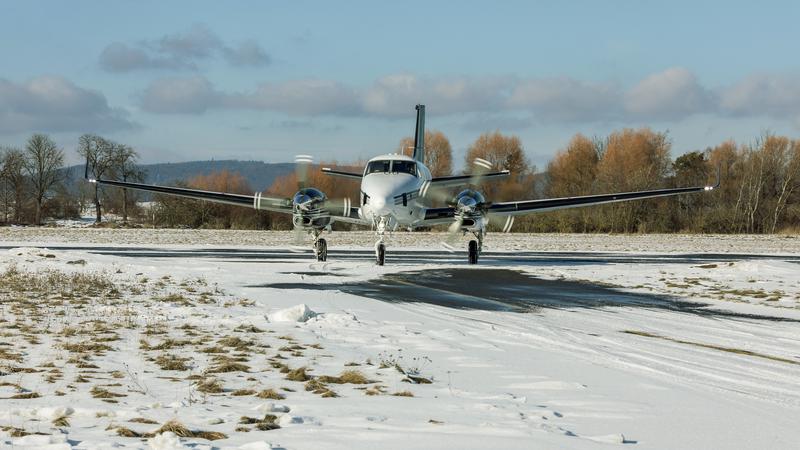
Twin-prop King Aircraft in Czech Republic (Photo 208756543 © Nadezda Murmakova | Dreamstime.com)
"Seat at the table"

Town of Ponoka demands more consultation after airport shut down to winter air ambulance

Apr 1, 2023 | 4:00 PM

The Town of Ponoka sounded the alarm at this week’s Alberta Municipalities (AM) meeting after their airport was closed to winter air ambulance without notice.

The Town is claiming there is a lack of consultation between Alberta Health Services (AHS), the provincial government and municipalities.

The AM’s 2023 Spring Municipal Leaders’ Caucus from March 30-31 in Edmonton brings government leaders and municipalities together from across the province to discuss various important topics in their communities.

The Town submitted a Request for Decision (RFD) that the AM Board advocate for municipalities to be included in the decision-making process when it comes to health care issues concerning their communities.


“Decisions are being made by both AHS and the province with a ‘one size band-aid fits all’ kind of mindset. We all have our unique needs and our unique situations,” says Mayor Kevin Ferguson. “We need a seat at the table so that when decisions are being made, we have input.”

The RFD stemmed from a decision in early November 2022. The mayor says that, with no advance notice or consultation, AHS placed the Ponoka Airport on a no-fly winter status, meaning that all air ambulances or twin prop medivac flights were prohibited from landing. AHS confirms that STARS Air Ambulance is still able to use the airport.

He says council was only notified by AHS of the decision on November 22, 2022, three weeks after the decision was made.

Ferguson says meetings were then arranged with Lacombe-Ponoka MLA Ron Orr, Parliamentary Secretary of EMS Reform RJ Sigurdson, AHS, EMS/Air Ambulance Authority, and Ponoka County, where the airport is located. He says they were informed that there were “fixed wing safety concerns” and varying degrees of experience of pilots which, after a risk assessment, identified hazards on landing the King Aircraft on the existing runway during winter months. The airport was permitted to continue operations in the summer, however.

ALBERTA HEALTH SERVICES

While the airport’s length, at 3,089 feet, meets the minimum requirement of 3,000 feet, AHS says they were notified by Canwest and Alberta Central Airways, their fixed wing air ambulance aircraft providers and air operations partners, that pilots had identified the Ponoka Airport as too risky for winter operations and recommended suspending air ambulance flights during winter months. At that time of year, they said, is when ice patches occur, there are snow berms, and emergencies such as aborted take-offs or landings can happen.

“The narrow width of the runway does not allow for sufficient room for aircraft landing or take-off needs during cross winds. The taxiway and ramp area do not allow for turnaround opportunities under normal conditions. Winter conditions puts the aircraft props and wings over snow windrows and may prevent the aircraft from leaving the runway,” AHS says in a statement.

Regarding the risk assessment, they say pilots flying into Ponoka Airport identified the risks. They also say aviation risk assessments are usually completed when the flight crew raises a safety concern, where there has been a change in practice, process or condition, or where the safety reporting system has flagged a number of hazards, close calls or incidents.

“The safety of our patients, staff and physicians during air ambulance operations is our highest priority. Winter operations change the level of risk to flying aircraft, so this could not be postponed,” they said, confirming that flights can resume at the Ponoka Airport now that the runway is consistently bare and dry.

OTHER AIRPORTS FROM SMALL MUNICIPALITIES

Ferguson said the same lack of consultation occurred with Two Hills and Spirit River, as their airports were also closed without prior consultation. He says he worries for other small municipalities that have runways not much longer than theirs.

“AHS has apologized for not informing the Town sooner,” said AHS in a statement, adding that once they themselves were notified of the recommendation, they told the Ponoka Flying Club first.

The Mayor says that with the centralization of health care into zones, he believes the decision-makers, who are predominately from larger cities, don’t understand the needs of smaller municipalities.

While the town of Ponoka has a population of roughly 7,300 people, the mayor says the Ponoka Hospital and Care Centre serves a catchment area of nearly 50,000 people including the county and nearby towns. He says their Emergency Department sees roughly 70 patients per day. The hospital also does not have a functioning helipad as it was suspended a few years ago for being too small for the increasing size of helicopters.

The airport also brings patients from across the province to Ponoka’s Centennial Centre for Mental Health and Brain Injury containing 330 hospital beds. He notes out of the 101 medivac flights that came into Ponoka in 2022, 87 patients were delivered to the Centennial Centre.

Patients requiring air ambulance are now being transported to the Wetaskiwin Airport and then by ground ambulance to the Ponoka hospitals, roughly 30 minutes away. If needing to land in Red Deer, ground ambulance would take even longer, he says.

Ferguson believes the decision regarding the crucial service places added stress to an already over-taxed ambulance system that many communities are facing.

He described a situation in November 2022, confirmed to rdnewsNOW by RCMP, where a pedestrian was hit by a vehicle in Ponoka and due to ambulance delays, had to be transported to the Care Centre by firefighters.

“For a mayor in a first world country, there are a lot of nights I go to bed worried about whether or not we’re properly covered in our community. I’m sure there are a number of mayors out there that are doing the same thing,” he said.

AHS says that there are a variety of regularly occurring reasons that may limit a fixed-wing air ambulance’s ability to land at any airport.

“When an air ambulance aircraft cannot access an airport, alternate transport methods are determined and can include ground transport or rendezvous at a nearby airport such as Red Deer or Wetaskiwin. Air ambulance is a part of the EMS transport system to support long distance transports. Fixed-wing Air Ambulance always relies on a component of ground EMS support, regardless of the airport used,” they said.

FUNDING

In the RFD, Mayor Ferguson also requests that the AM Board advocate for the provincial government to ensure funding is made available to airports that currently, or who may soon find themselves, in the position of needing upgrades to comply with both new AHS and provincial standards.

“I’m pretty sure no mayor in central Alberta would disagree with me; we’re chronically underfunded. To go after fixing an airport or putting more money into a runway, for most small towns, that takes a lot out of their budget,” he said.

“If the lion’s share of the use for the airport in Ponoka is to service the provincial hospital, then I have to wonder why it would be totally put upon the municipality.”

The mayor says he has organized a meeting on April 18 with various mayors in central Alberta to discuss the matter further.

Red Deer City Mayor Ken Johnston, who will be present at the meeting, said that at the AM caucus, roughly 90 per cent of those in attendance supported the decision to bring a formal resolution to the AM Board in September for this advocacy.

“This issue affects us all in the Central Zone,” he said. “We’re sitting down and coming up with really a central Alberta strategy around some of these issues that really do affect especially the small towns. If it’s about central Alberta, Red Deer wants to be a part of it. We’re not an island; we want to help.”