Subscribe to the 100% free rdnewsNOW daily newsletter!
CIRO team in Kharkiv, Ukraine for second round. (Supplied)
Canadian International Rescue Organization (CIRO)

Red Deer-lead rescue team share journey back from second round in Ukraine

Aug 2, 2022 | 5:31 PM

A group of Red Deerians who completed two trips to Ukraine are reminding others that the war is far from over.

“I think the problem right now is there’s that ‘because it’s no longer the top story of the day that nobody is talking about it anymore’. But it is going on there every day, every minute,” said Marcel Schur, Team Lead for the Canadian International Rescue Organization (CIRO).

CIRO is a Canadian-based Technical Rescue Team and non-profit organization made of volunteers responding to global disasters through search and rescue services, training and consulting with a motto of “anytime, anywhere”.

Beginning in 2008, it is the international side of the local Central Zone Search and Rescue (CZSAR), previously named Red Deer Search and Rescue (RDSAR).

CIRO team on their second round to Ukraine in Kharkiv. (Supplied)

Schur, now 62 years old, created the RDSAR 26 years ago after serving in the army for 20 years in the artillery.

Today a semi-retired safety and rescue consultant, he says there are 25 volunteer members on the local team, working in related safety and rescue fields, as City employees, oilfield workers, or are self-employed.

Their first trip to the Ukraine consisted of eight members to Kyiv, the country’s capital, throughout the month of March when the war first began. Other members from Red Deer included William Arsenault and Adam Beverly.

It was there, Schur states, that the team saved a man’s life after the Retroville shopping centre collapsed from a Russian bomb strike on March 20, 2022. He says that man is still alive today.

“There was no time to stop and think because there’s still more people that were in there. So, we quickly passed him off to the local authorities and we just went right back to work and carried on and we did not find anyone else alive,” he said.

Schur says during that trip, the members also stabilized structures that had been hit by explosions and participated in search missions to help gather evidence for Crown prosecutors in war crimes trials.

Their second trip was during the month of June in Kharkiv, northeast near Russia, consisting of six members, with Arsenault, Guy Tymochko and Oleksandr Foida from Red Deer and two others from Calgary.

He says the voyage began with their smuggling to enter safely into the country.

Flying out of Calgary and into Kraków, Poland, he says Ukrainian firefighters greeted the CIRO team at the border, taking an 18-hour hidden route to dodge Russian troops, even passing through Romania.

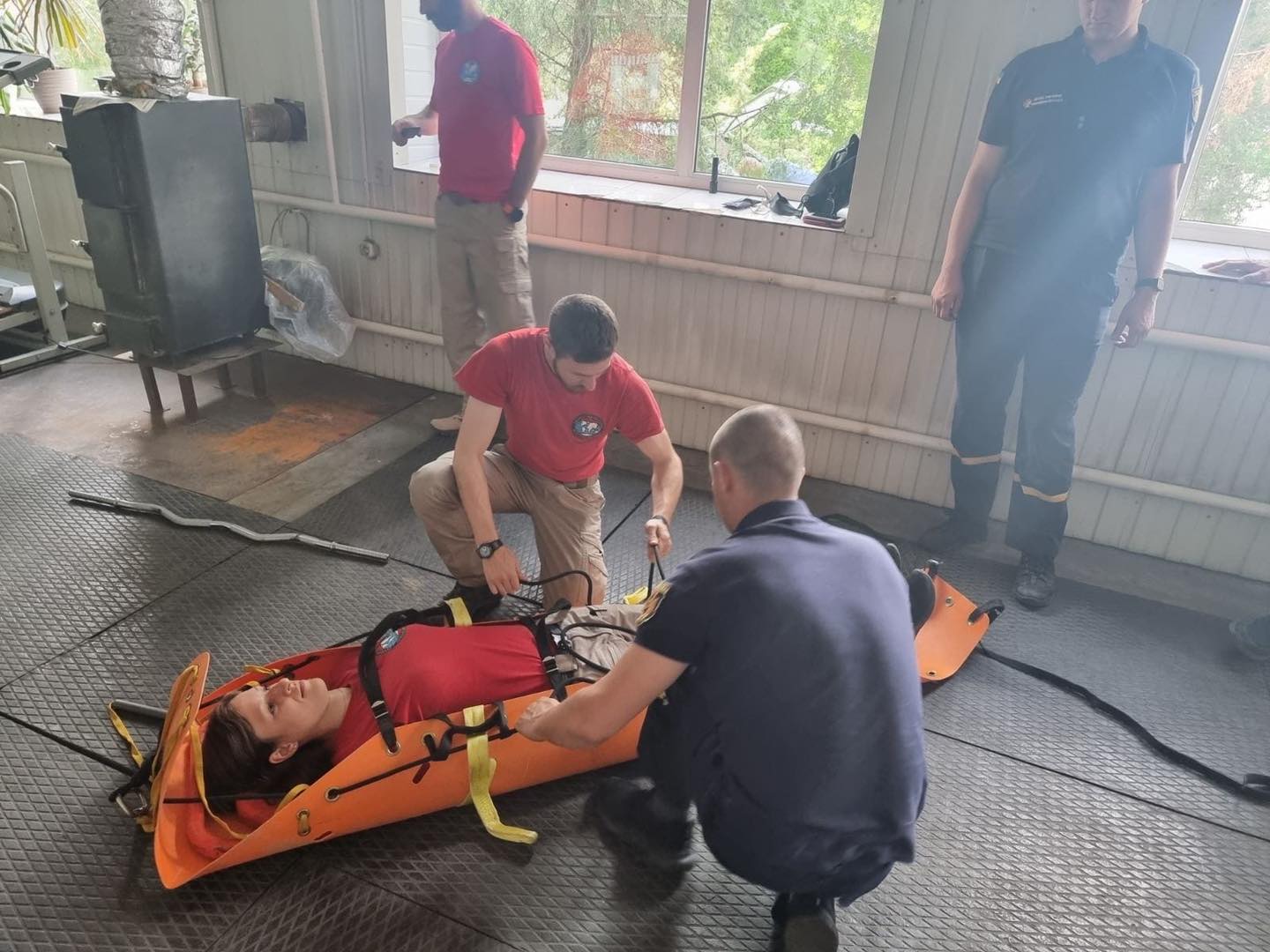
Staying at the local fire department’s station, Schur states their focus this round was to teach search and rescue techniques to locals while the team’s medic taught nearly 200 civilians about combat medical skills.

CIRO medic teaching combat medical skills (Supplied)

Now back at home, the team took a few weeks for some much needed rehabilitation, with some members seeking therapy due to the overwhelming sights of war, explosions and bombings.

However, Schur says the team is already asking when they can head back.

“It’s just an opportunity to help people out. We do the same for earthquakes, floods; we go into these zones. It’s what we do,” he said. “Help out, serve your community and serve your fellow man.”

Schur says while CIRO won’t be heading back to Ukraine this summer, partly due to the difficulties of working in heat waves, he predicts they will return in the fall depending on the needs of Ukrainians.

“The Ukrainian people aren’t going to give up so if he [Russian President Vladimir Putin] thinks he’s just going to walk in and take over, he’s wrong,” said Schur.

He states they will use this time to train some new members that have signed up, and continue to put the call out for others.

Schur confirms CIRO is run solely off donations with expenses adding up to $5,000 per person for each trip. As well, the equipment left behind for Ukrainians, including seismic detection systems, search camera systems, rations, medical supplies, body armor, and ballistic helmets, must then be replaced in Canada.

Those looking to donate to CIRO, can do so through canadahelps.org or through ATB Financial who has committed to matching each donation by 20 per cent.