Subscribe to the 100% free rdnewsNOW daily newsletter!
(rdnewsNOW/Sheldon Spackman)
Conditions As Of June 27, 2022

Central Alberta crop conditions in good shape

Jun 30, 2022 | 1:59 PM

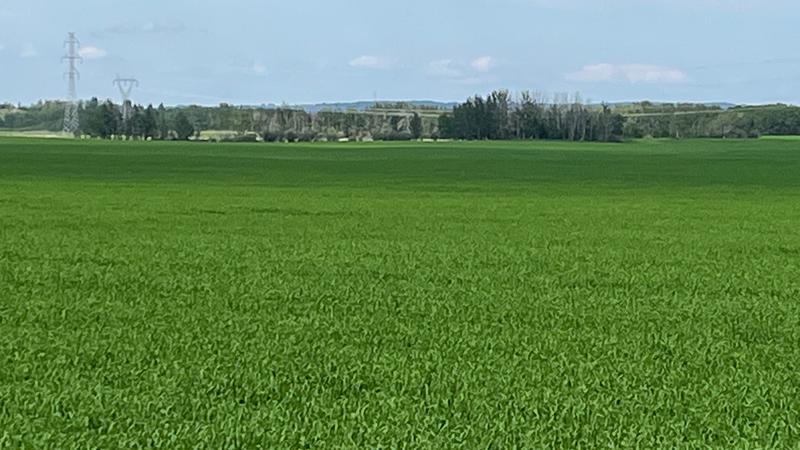
Crop quality is reported mostly as good to excellent on all major crops throughout central Alberta.

According to the latest Crop Report, officials with Alberta Agriculture, Forestry and Rural Economic Development, as well as Agriculture Financial Services Corporation (AFSC) say lentils, chickpeas, and mustard, however, are significantly lower in quality compared to all other crops in the region.

Gophers are the main pest reported at eight per cent over threshold with some marginal flea beetle reports. Pasture weed growth is reported at eight per cent moderate to heavy.

Surface soil moisture conditions (sub-surface shown in brackets) are rated as two (three) per cent poor, 16 (19) per cent fair, 40 (35) per cent good, 32 (31) per cent excellent, and 11 (11) excessive.

Two highlight stories for this week’s crop report are increasingly aggressive crop development after early June rains and also the significant year-over-year improvement in soil moisture levels across the province. This week, 75 per cent of all crops in the province are rated in good or excellent condition, only marginally behind both the five-year and 10-year averages (74 and 73 per cent respectively).

Mustard, durum wheat, and potatoes are the lowest rated crops qualitatively, whereas chickpeas, spring wheat, oats and flax are rated in the best condition. Other major crops like barley, canola, and dry peas are relatively in line with long-term provincial averages for this time in the growing season.

However, growth and development staging is in general still, modestly behind long-term averages. Notably though, these delays in growth and development compared to long-term normal are said to be narrowing as the season progresses.

During the first two weeks of June, significant areas of the province received from 40-125 mm of rain and crop reporters are now able to start telling the story of the impact of those rain events.

Prior to the rains and as at the May 31 crop report, province-wide emergence was at 55 per cent and behind the five-year average of 61 per cent. Now, 57 percent of all crops are in the rosette or 7-12 node stage and closer to the five-year average of 60 per cent. Officials say the early June rains seem to have given crops the opportunity to advance and catch up closer to long-term average for development and growth.

Additionally, as at the May 31, 2022 crop report and prior to the rains, surface soil moisture across the province was rated as 57 per cent poor or fair and 43 per cent good or excellent. Officials say these qualitative surface moisture conditions have now drastically improved to only 19 per cent poor or fair and 76 per cent good to excellent and five per cent excessive.

It is also worth noting, add officials, the year-over-year change in soil moisture. At this time last year on the June 28, 2021 crop report, soil moisture was rated as 62 per cent as poor or fair and only 38 per cent as good or excellent. Now, soil moisture is rated as 19 per cent poor or fair, 76 per cent as good or excellent, and five per cent excessive.

Subsoil moisture (below six inches) ratings have also improved. As at May 31, 2022, and prior to the rains, Alberta’s sub soil moisture was rated 63 per cent poor or fair and 37 per cent good or excellent. After early June rainfall those numbers for deeper soil moisture have now improved to 33 per cent poor or fair, 61 per cent good or excellent, and three per cent excessive.

Specifically in the south, just three weeks ago, sub soil moisture was rated as 91 per cent poor or fair. This week that number has dropped to 67 per cent as more acreage moves in to good qualitative ranking for subsoil moisture. While an improvement and major relief, timely precipitation throughout the growing season will still be needed in the south, say officials.

On the pest reports, flea beetle is the most significant pest showing up at beyond threshold levels. Gopher populations are also beyond threshold levels in South, Central and North East regions

While regional forage challenges are still described as significant, the provincial feed supply qualitative rankings for both pasture and tame hay are improved from this time last year. While still rated lower than long-term averages, 62 per cent of tame hay is now good to excellent, compared to only 44 per cent this time last year.

Pastures are reporting similar year-over-year improvements but with significant increases in weed pressure, especially in the South, North West, and Peace.