Subscribe to the 100% free rdnewsNOW daily newsletter!
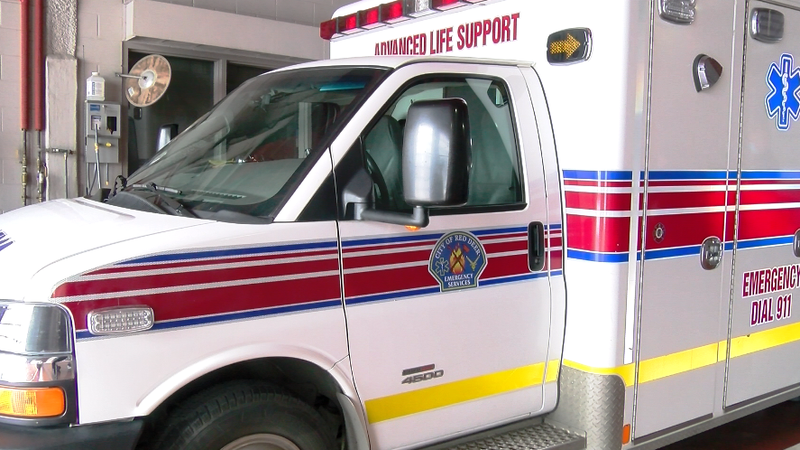
(rdnewsNOW file photo)
Central Alberta Affected

HSAA concerned over ambulance availability

Sep 9, 2021 | 4:59 PM

The president of the Health Sciences Association of Alberta (HSAA) is expressing strong concerns regarding the current state of ambulance availability throughout the province, including in central Alberta.

Since Labour Day long weekend, the organization has posted on its Facebook page of situations where ambulances have been dropped from schedules and shut down due to short-staffing, long response times due to greater travel distances, or ‘Red Alerts’ being issued due to no EMS being available to respond to emergencies.

Affected communities listed in the posts have included Red Deer, Rimbey and Three Hills, among others.

Mike Parker, President, HSAA, says the long weekend was a great example of what everyday life has been like in central Alberta for roughly a decade now, from their perspective.

“We have a situation now where the call volume well-exceeds the available resources of paramedics on the street,” he explains. “Time and again as they flex and re-deploy our paramedics to ensure there is substantial or significant coverage within a community, we leave others exposed. On the long weekend, specifically, we found places like Red Deer, Calgary, Medicine Hat or Edmonton, with zero ambulances for an extended period of time, meaning there was no one to respond to 911 calls.”

Parker says Alberta Health Services (AHS) does the dispatching but can’t do a lot if there are no vehicles to dispatch, suggesting the organization is underfunded and under-resourced.

“They are now in a position where they’re stacking multiple calls, waiting for available ambulances to clear and be reassigned,” explains Parker. “We need to look significantly at the current management structure of AHS and specifically to the Government of Alberta for this. When AHS says the closest ambulance is on its way, it doesn’t mean that it’s close. It means that the last resource in the entire city or region is being dispatched to your emergency and it could take a significant amount of time.”

He says the current staffing model, unfortunately, is based on just casual employees.

“As we look this week with a vacancy of 250 plus shifts in the province, we don’t have the people for 250 shifts this week in Alberta,” he admits. “We also sit with 150 vacant positions, as in, we could hire 150 more people if they were out there, but they’re not. So what we’ve done is failed to manage and failed to grow the EMS structure and the system.”

Tyler Pelke, Acting Chief for Red Deer Emergency Services, acknowledges that Red Deer’s five ambulances under contract are always busy.

“The city sees ambulances from the surrounding zone flex in and out on calls depending on unit availability,” explains Pelke. “There are times where our fire units are filling in because of delays in an ambulance becoming available because of system-wide pressures. But the MFR (Medical First Response) program that we have where our firetrucks also respond to emergency medical incidents, we’ve run that in the municipality for many years, as do many other municipalities.”

Meanwhile, officials with AHS say the province’s EMS system is in constant fluctuation as ambulances respond to calls, arrive at hospitals, clear from calls, or as staff come on or go off shift, suggesting it is inaccurate to take a snapshot and use it to assess an entire hour or full day.

“EMS continues to see an unprecedented increase in emergency calls due to several combined factors, including the COVID-19 pandemic, opioid concerns, and emergency calls related to people returning to regular levels of activity,” reads a statement from Heather Kipling, Communications Director, Central Zone, for AHS.

“All call types have increased, and staff illness and fatigue are also contributing to challenges in the EMS system,” she explains.

“Anyone who needs EMS care will receive it. We are ensuring that the most critical patients are prioritized for receiving immediate care. EMS monitors ambulance availability in real time and ensures resources are available to respond to emergencies.”

Kipling says system adjustments are made minute-by-minute to make the best use of the existing resources.

“EMS has brought on additional staff and ambulances and is filling 100 paramedic positions across the province. EMS is deploying supervisors, delaying some non-urgent transfers, and also working closely with hospital teams to ensure timely flow through our emergency departments. EMS is also offering overtime to staff who are willing,” she points out.

“EMS staff are working extremely hard to provide timely care to Alberta patients and we thank them for their tireless service.”