Margriet Adriana Johanna Bekker-Hogue
Posted Sep 26, 2026 | 9:36 AM
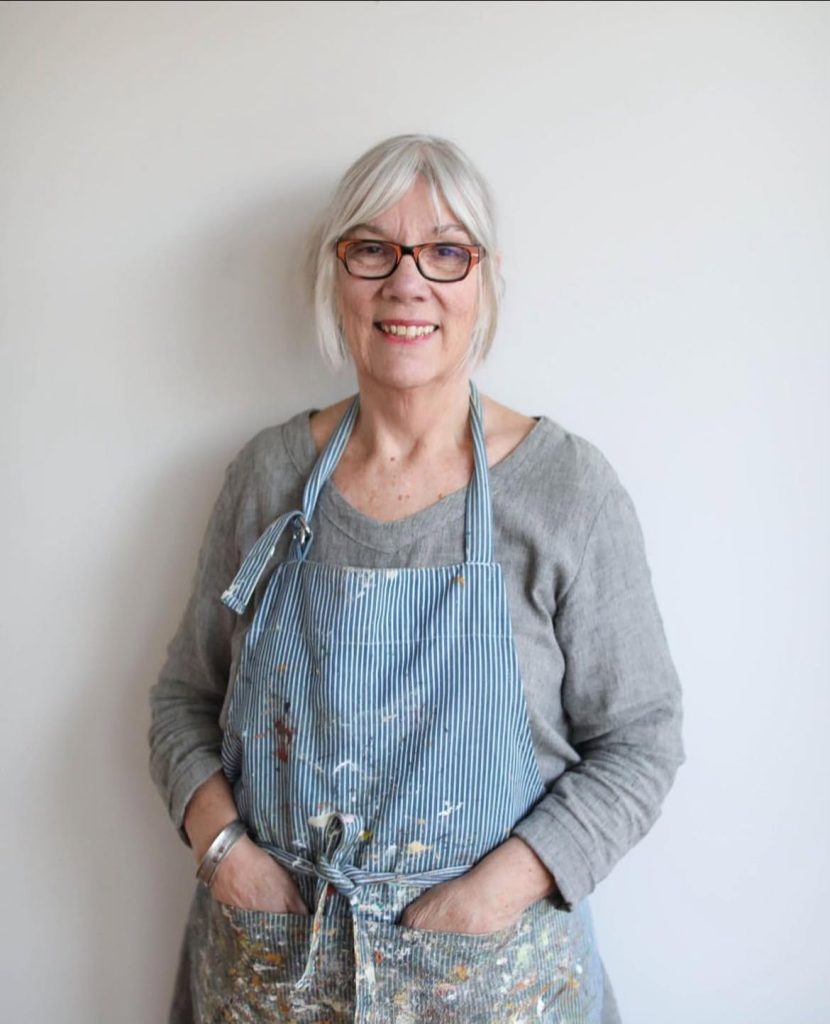
Fall was Margriet’s favourite season, but she didn’t love the cold, so it feels fitting that she passed just as summer’s warmth had begun to fade and the geese were flying south.
Margriet was an amazing mom and Oma, a daughter and granddaughter, a sister and sister-friend, an auntie, niece and cousin. She was an artist and an entrepreneur; an early adopter of the internet yet somehow never tech-savvy in any way; an expert on sixteenth- and seventeenth-century samplers and one of the leading reproduction artists in the needle-arts world; a lover of Gouda and tulips; and a very practical Dutch woman with an unyielding positive outlook.
Born in Deventer, the Netherlands, on November 27, 1951, to Peter and Jantje Bekker, Margriet spent her formative years in Venezuela and the Netherlands before immigrating to Canada with her family as a teenager. They lived first on the East Coast and later moved west to Alberta.
Margriet’s mother introduced her to textile and needle arts, beginning a creative life that would continue to evolve for more than seven decades. Margriet studied fashion and design at Olds College, graduating in 1975, and later studied weaving at the Banff School of Fine Arts. She bought her first loom while she was a student and used her weaving to help put herself through college—an early example of the combination of artistry, determination and practicality that defined her life.
In 1980, Margriet moved into the Red Deer house that would remain her home for the rest of her life. It was the family home where her children, Sean and Tarah, grew up, and later became both her studio and the home of The Essamplaire. Over the next forty-six years, her neighbours and the wider Red Deer community became part of the life she built there. That she was able to die in the home that held so much of her life feels deeply significant.
Margriet encouraged her children to live as she did: to follow their passions and go out into the world. Sean and Tarah are deeply grateful for the freedom and confidence she gave them to choose their own paths. She also made sure that Tarah remained connected to the Métis family, culture and ancestry she inherited through her father.
In 1989, Margriet founded The Essamplaire. Through the business, she researched historic samplers held in museums and private collections throughout Europe and North America, then created faithful reproduction charts and kits so contemporary stitchers could encounter and preserve the work of the girls and women who had made them. She examined samplers front and back, recorded their measurements and materials, consulted with curators, and stitched models herself. Margriet was exacting enough to reproduce every stitch—and even every original mistake—in an antique sampler.
She taught workshops throughout North America and eventually brought her teaching online. Long before internet businesses were commonplace, she understood that the internet could connect a highly specialized enterprise in Red Deer with people who shared her passion everywhere—even if using the technology itself never became one of her particular gifts. Around The Essamplaire grew a loyal community, including The Essamplaire Stitchers group on Facebook.
The Essamplaire did more than find an international audience; it brought people into Margriet’s life. Some first knew her as a teacher, researcher, fellow stitcher or artist and became dear friends. Although Red Deer was home, people she loved—and who loved her—lived across North America and around the world.
The exacting work of sampler reproduction occupied Margriet for decades, but it did not exhaust her curiosity as an artist. Painting offered something different from the weaving and needlework that had shaped her creative life. In 2013, she took a painting workshop in Red Deer that sparked a new pursuit. Over the next thirteen years, she threw herself into it wholeheartedly—taking courses and workshops, seeking out artists whose work interested her, travelling, experimenting and continually learning. She developed an accomplished abstract painting practice grounded in intuition, material exploration and colour.
Margriet built surfaces from paper and paint, sometimes incorporating linen and found materials, then sanded, gouged and scraped into them, responding to the colours and forms that emerged from underneath. The contours of the land, worn surfaces, changing weather and the colours of different seasons found their way into her work. Her textile and painting practices were very different, but they were never opposites: both grew from close attention, deep material knowledge and a willingness to stay with the work until it revealed itself. She never stopped learning, making or beginning again.
Her solo exhibition, Serendipity, is on view at Viewpoint Gallery in Red Deer from September 3 through October 28, 2026. It brings the long arc of her creative life together, placing recent abstract paintings alongside woven textiles she made more than forty years ago—a conversation across her own lifetime of making.
Margriet was predeceased by her parents, Pieter and Jantje Bekker. She is survived by her son, Sean Peter Hogue, his wife, Jane, and their children, Leo Dean and Annabel; her daughter, Tarah Hogue, and her husband, Ryan Lundy; her brother, Piet Bekker, his wife, and their children Ian, Eric and Elizabeth, and their families; as well as a large extended family in the Netherlands.
Margriet’s family in Red Deer extended beyond blood. The Vermeulen sisters—Cornelia “Cori” Hall, who predeceased her, Jane Donald and Anne Vermeulen—were her sister-friends. Anne’s sons, Cody and Eric Hemmingsen, their wives and children, and their father, Bruce Hemmingsen, were also part of Margriet’s extended family.
- Date : 2026-09-14
- Location : Simple Choice Cremation Red Deer