Subscribe to the 100% free rdnewsNOW daily newsletter!

Quebec auto board lied about cost overruns for online platform, inquiry finds

Feb 16, 2026 | 10:46 AM

QUÉBEC — Quebec’s automobile insurance board lied to the provincial government to conceal exploding costs in the creation of the agency’s online platform, says a public inquiry into the cost-overrun scandal.

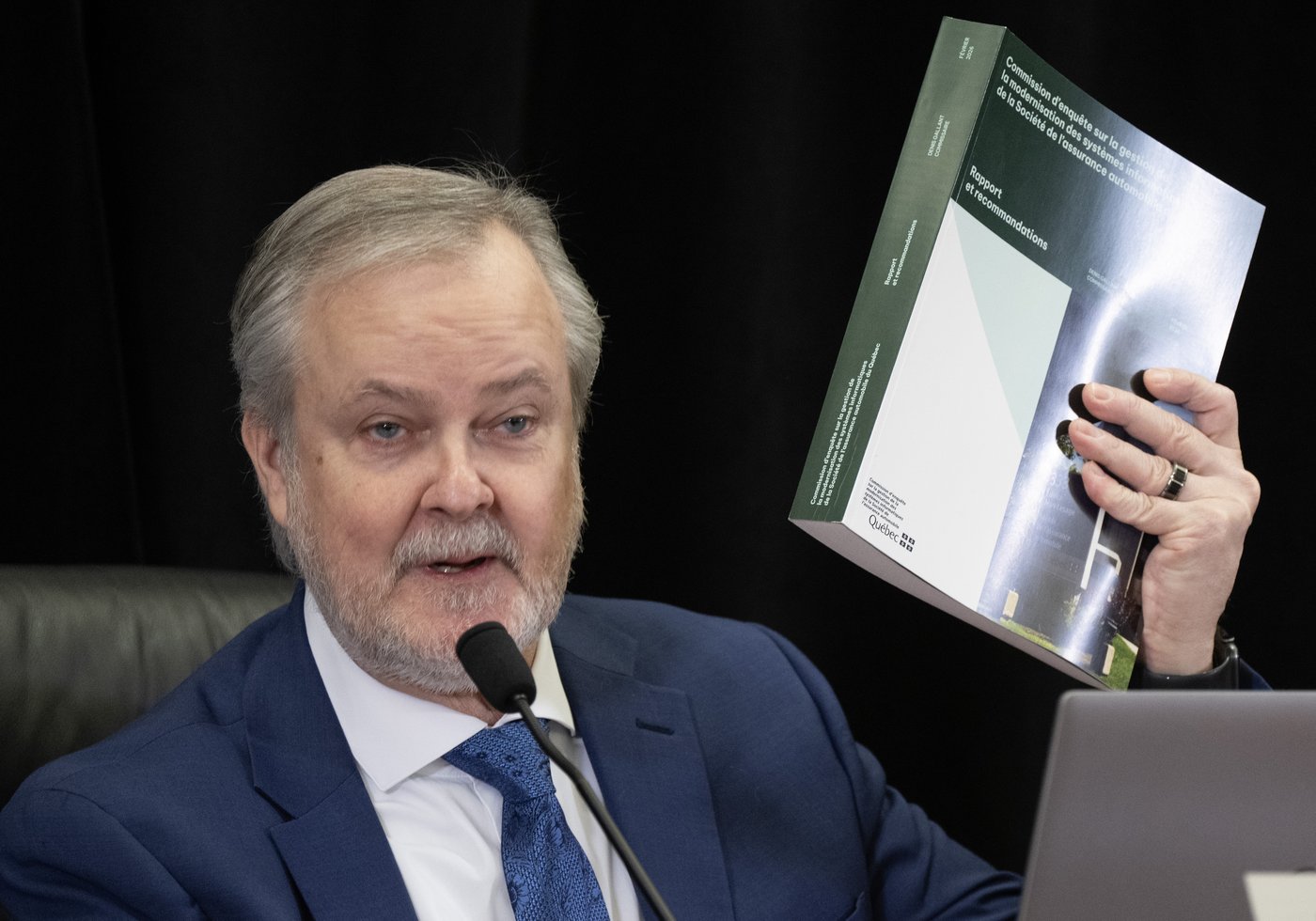
Overseen by Judge Denis Gallant, the inquiry’s final report says officials at the auto insurance board — Société de l’assurance automobile du Québec — undertook a conscious effort to mislead the public about the total cost of the project.

“The commission concludes, based on particularly significant evidence, that the deceptive information disseminated by the (auto board) was not the result of careless errors, but rather a conscious action aimed at hiding the total cost of the program from parliamentarians and the government — and therefore from the public,” reads an excerpt from Gallant’s report published Monday.

In February 2025, Quebec’s auditor general reported that the new platform was expected to cost taxpayers at least $1.1 billion by 2027 — $500 million more than originally planned. The auditor’s report followed the botched rollout in February 2023 of the platform, which led to major delays and long lineups at insurance board branches, where Quebecers take road tests, register vehicles and access other services.

In response to the auditor general, Quebec Premier François Legault launched the inquiry last year led by Gallant, a Montreal municipal court judge. The judge’s role was not to determine guilt, but rather to draw conclusions and make recommendations. His report says the online platform project was “too vast, too ambitious, and had to be implemented too quickly.”

Speaking to reporters Monday, Gallant said, “People deliberately lied throughout this whole affair. We can ask ourselves, ‘What can we recommend in a case like this?’ It’s difficult to recommend transparency and honesty, since that should be the absolute standard for those working in the public administration.”

Among those named repeatedly in the report was Karl Malenfant, the former vice-president of information technology at the auto board. Malenfant held a news conference last week suggesting he was being scapegoated for the problem-plagued platform. He said he had nothing to reproach himself for and that the project he led is not a fiasco.

Gallant said that despite the agency’s actions, members of the government and certain public servants did, at various times, obtain reliable information about the problems at the auto board.

The judge noted that in June 2023, Éric Ducharme, then president and CEO of the board, met with Geneviève Guilbault, the transport minister at the time, to discuss the status of the contract with the consortium of three private firms that were building the platform. During that meeting Ducharme had also told her about the auto board’s intention to increase the value of the contract for a second time, the report said.

However, Guilbault, who is now municipal affairs minister, has always maintained — including during testimony before the Gallant inquiry — that she only became aware of the cost overruns in February 2025. She stood by that testimony on Monday, noting in a statement that her focus in 2023 was getting services back to normal and that she didn’t have any specific recollection of that meeting with Ducharme involving project costs.

Gallant’s report adds that Dominique Savoie, the secretary-general of the government, was informed in March 2023 that costs were increasing, as was Legault’s director of communications. The report says one of Legault’s political advisers was also told about rising costs as early as August 2023.

“In short, several government representatives were informed in 2023 of the (auto board’s) decision to increase the value of the contract,” Gallant wrote, specifying that those amendments did not provide “a complete history of the cost evolution.”

Legault told a Montreal news conference on Monday the results of the inquiry confirm that his government was never told the project had reached $1.1 billion until the auditor general’s February 2025 report.

“I’m not saying the government was perfect, we could perhaps have been more suspicious, we could have asked more questions,” Legault said, adding, “the truth is important — that the (auto board) management lied to our government for years about the revised cost of the … project.”

Legault said he will look into potential legal recourse against auto board directors who lied, adding that the province’s anti-corruption police unit, known as UPAC, is investigating the scandal.

Gallant’s report includes 26 recommendations, including that the government create a centralized entity specialized in IT transformation projects. It said the government’s Cybersecurity Department — which includes a unit designed to accelerate IT projects — lacks “structural influence on decisions.” The new entity, he said, should have stable, predictable funding, and public bodies should be required to use it for any digital transformation projects. He also recommends tightening the governance rules for state-owned corporations and promoting transparency and access to reliable information.

“Learning from failures can only be based on one categorical imperative: the honesty of all public actors,” Gallant wrote. “Every government official must make a conscious choice to be frank.”

This report by The Canadian Press was first published Feb. 16, 2026.

– with files from Sidhartha Banerjee in Montreal

Caroline Plante, The Canadian Press