Get the free daily rdnewsNOW newsletter by subscribing here!
(rdnewsNOW/ Ian Gustafson)
Removing barriers

Efficiency at top of mind in new provincial MoA that cuts red tape for oil rig operators

Jun 5, 2025 | 1:14 PM

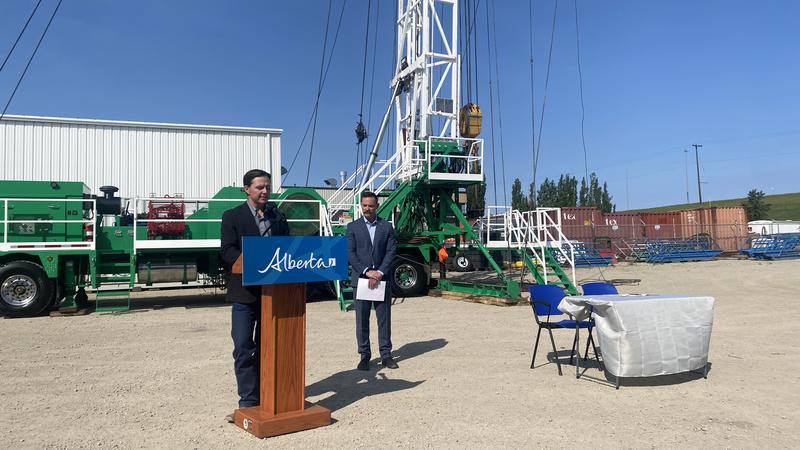
The Government of Alberta and the Canadian Association of Energy Contractors (CAOEC) have signed a Memorandum of Agreement (MoA) to allow oil rig operators to spend more time working in the field and less time at vehicle inspection stations.

They made the announcement at Treeline Well Services LP in Red Deer on Thursday, which will allow oilfield service rig’s moving from site-to-site to bypass vehicle inspection stations and other repeated stops.

These rigs travel in convoys that include essential support vehicles like a carrier, pump truck, doghouse, equipment truck, and crew vehicles. Before this agreement, they had to stop at every inspection station.

Devin Dreeshen, Minister of Transportation and Economic Corridors, said this move will not only cut red tape but strengthen the industry.

He added, this has been a longstanding industry concern of always having to stop at weigh stations where the drivers themselves will be able to say what the actual truck is going to weigh because they’ve done it so often.

“This will really not just help everyone in the convoy be able to get to their next service rig but it’ll just help the efficiency of oil rigs across the province,” he said, adding they’ll work with Saskatchewan and Manitoba to harmonize with their regulations. “This is just a big common sense win for Alberta’s energy sector.”

As a result, CAOEC members will now be entered into the government’s Drivewyze preclear program. This will allow members who subscribe to Drivewyze and meet safety benchmarks to be exempt from routine stops at Vehicle Inspection Stations.

The province and the Canadian Association of Energy Contractors have a longstanding partnership but the MoA recognizes the unique transportation requirements this industry needs, according to Mark A. Scholz, President & CEO CAOEC. It also allows them to have the proper safety protocols in place on public roads.

“It’s recognizing a very unique industry, the importance of this industry, and ultimately insuring that this piece of equipment can do what it does best, stay in the field, producing the most sustainable energy anywhere on planet earth right here in Alberta,” Scholz said.