Get the free daily rdnewsNOW newsletter by subscribing here!
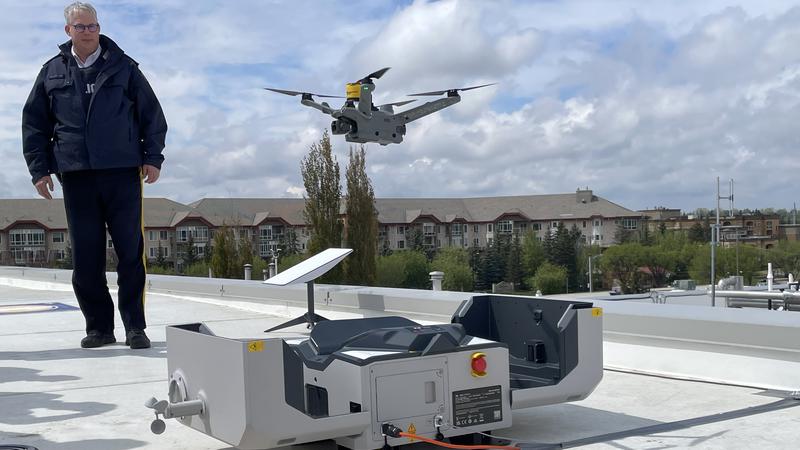
Chief Superintendent Kevin Kunetzki, deputy criminal operations officer with Alberta RCMP, oversees a demonstration launch at the Red Deer RCMP detachment on May 23. (rdnewsNOW/Ashley Lavallee-Koenig)
TWO-MINUTE RESPONSE TIMES

Drone as First Responder program takes trial flight in Red Deer

May 24, 2024 | 2:22 PM

The Red Deer RCMP detachment is trialing the Drone as First Responder (DFR) program to evaluate applications of more advanced remotely piloted air systems (RPAS).

During a staged demonstration of the new technology this week, the detachment explained that it is receiving access to DFR through trial partnerships with multiple manufacturers.

Drone pilots used the device to search for, locate, and observe a suspect on the ground while a K-9 unit tracked them for arrest, all from the comfy confines of the detachment in downtown Red Deer.

Switching between the colour and thermal cameras, the drone pilot demonstrated that they could warn ground units of weapons in a suspect’s hand, whether any other individuals were hiding in the same area, and even if certain pieces of evidence were left behind.

“The biggest thing I see is it gets you information faster. When you’re responding to police calls, you never have enough information and you never have it fast enough, so anything you can do to get that information faster is useful,” said Barry Kelly, a civilian drone pilot and RCMP employee.

Red Deer RCMP have been using drones in their work for a decade for things like locating break and enter suspects or missing children, however the nature of the deployment has room for improvement. The current model used, a Mavic 3T, needs to be requested and gets driven to the scene and then launched by one of the nine officers licensed to pilot it.

With docking stations located on the RCMP detachment’s roof, the drones being trialed can reach the south side of Red Deer in just two minutes after a 35-second takeoff, explained Chief Superintendent Kevin Kunetzki, deputy criminal operations officer of the Alberta RCMP. This response time would be a “game-changer” for the industry he said, allowing police to get eyes on an emergent situation and scale their response up or down accordingly, which cuts down on wasted resources.

“We’re partnered with the U of A who’s doing lots of the stats gathering, so they’ve given us a survey where after every operational flight we fill out a survey so they can quantify, ‘Does this save money, is it a good use of resources,’ all those good questions,” said Kelly

The trials began in May and will continue through June. Red Deer was one of three communities chosen for testing along with Lac La Biche, and the Stony Nakoda First Nation.

“I want to recognize that the RCMP polices very diverse environments. I wanted an Indigenous community, I wanted a medium-sized community, and I wanted a large municipality. Red Deer fits into that large municipality category and is very similar to what we’re seeing in the research we’ve done on the United States, where they’ve had this program operating for a couple years now,” said Kunetzki.

He sees applications for the DFR program far beyond law enforcement and said there is great potential to partner with other emergency services to assist with locating bush fires, monitoring structure fire temperatures, aiding in search and rescue missions, and more.

When the trials are done, the organizations will need to put together a business proposal to field to city council, who will then need to decide if and how they want to integrate the updated technology within the municipal budget.

Subscribe to our FREE newsletter, and download the rdnewsNOW mobile app on Google Play and the Apple App Store for all the latest updates on this and other stories.