Subscribe to the 100% free rdnewsNOW daily newsletter!
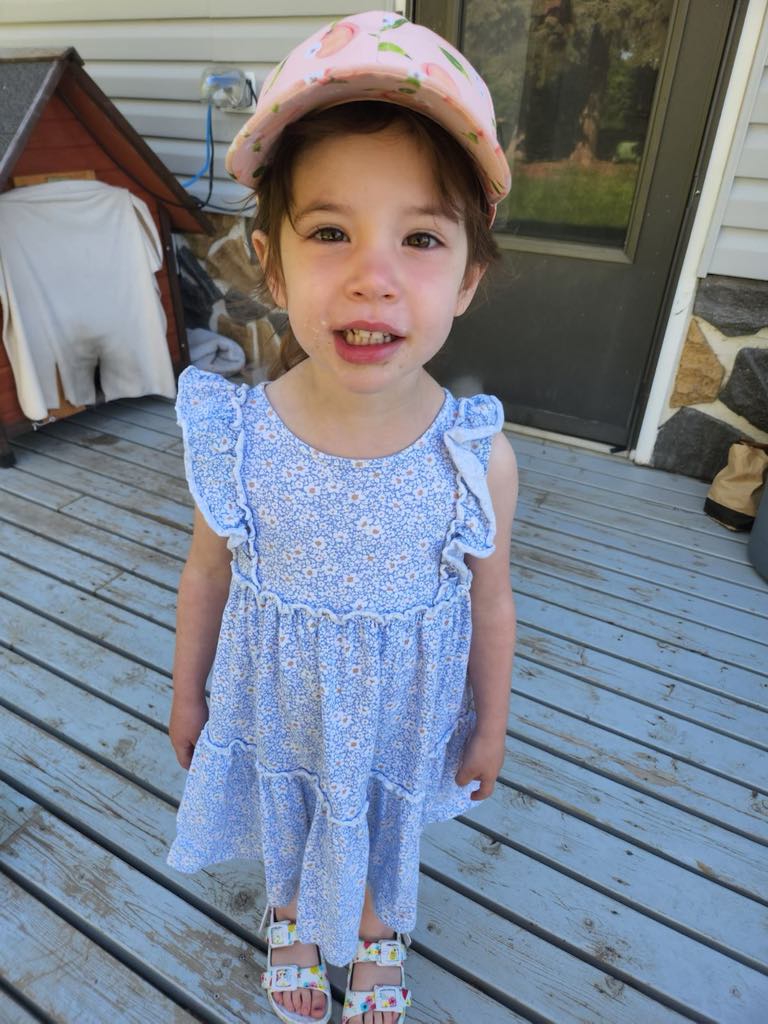
Three-year-old Stella Quinn Crawford from Eckville was killed in an impaired driving incident in April 2023.  (Supplied)
Authorized by Earl Dreeshen

Central Albertan attracts hundreds of signatures in petition to tighten impaired driving sentences

Jan 14, 2024 | 8:00 AM

The family of a three-year-old victim of impaired driving from Didsbury is petitioning for stricter sentencing laws in Canada, to prevent any other family from experiencing a similar pain.

On a Saturday night in April 2023, Dakota Milburn and Jesse Crawford drove home to their acreage outside Eckville after a day of playing at a Red Deer dog park with their two children, three-year-old twins Stella and Felix. Turning at an intersection, a drunk driver T-boned their car, with Dakota and Stella on the impacted side.

Stella was pronounced dead at the scene, 12 days before her fourth birthday, and Dakota faced extensive back injuries.

READ: Lasting impacts: Impaired driving incident takes life of local three-year-old

On Sept. 18, 2023, Miller received a five-year prison sentence for the death of Stella and two years for bodily harm to Dakota. However, the sentences were allowed to be served concurrently.

While the family was disappointed in this fact, Falon Milburn, Stella’s aunt, said there was some solace knowing the driver would also receive a seven-year driving ban following his release.

Until Miller’s lawyer stated the driving ban was also allowed to be served concurrently.

Falon says she’ll never forget that day, hearing that the driver could also potentially be released after just two and a half years for good behaviour, and knew she had to do something.

‘LAWS TOO LENIENT’

Falon says laws against impaired drivers are too lenient in Canada and send a message to the public that, “the life he took doesn’t necessarily matter as much as it should” and “that you can kill a three-year-old and you can serve likely less time in jail than she walked this earth for”.

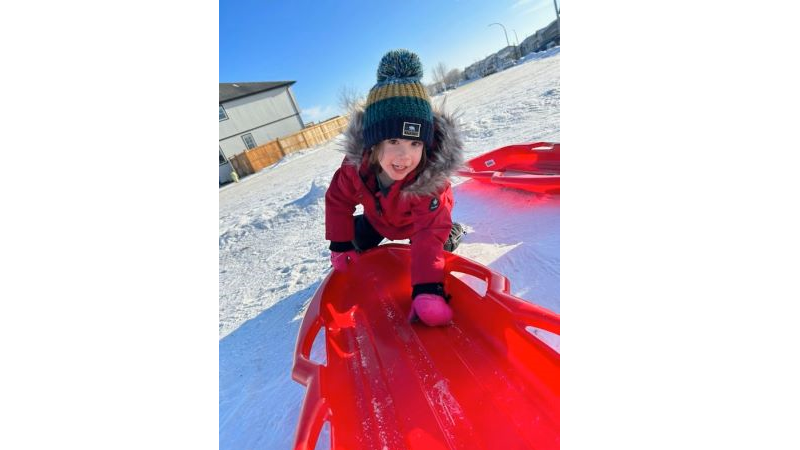
Stella Quinn Crawford (Supplied)

She believes harsher penalties would make people think twice about getting behind the wheel.

According to the federal government, impaired driving is the leading criminal cause of death and injury in Canada, with the majority of impaired drivers as repeat offenders.

The Mothers Against Drunk Driving (MADD) organization states that every hour in Canada, an average of 10 federal criminal charges and provincial short-term license suspensions are laid for alcohol and drug-impaired driving. They add that every day, an average of four Canadians are killed and 175 are injured in impairment-related crashes.

In Alberta, drivers suspected of being impaired are subject to a 24-hour driver’s license suspension. Those with a blood alcohol concentration between 0.05 and 0.079 or who fail the sobriety tests have various license suspensions based on number of occurrences, and those over 0.08 have further penalties.

“We protect the criminals rather than protecting the victim. Driving in Canada is a privilege, it’s not a right. If you kill somebody, in my opinion, while you’re driving impaired, I think you should have your license taken away for life. I don’t think you should ever be allowed on the road. If you make that decision one time and you kill somebody, what’s going to stop you from doing it again and again,” she said.

IMPACTS

Falon says people never imagine an incident like this will happen to their family, until it does.

She says she thinks about the day Stella died every day and it has impacted every aspect of her life, like the inability to drive, particularly on New Years Eve, without crippling fear and anxiety of who may be on the road.

Experiencing the ‘firsts’ have been difficult for her family, she adds, as they try to remain strong for Felix. His first day of elementary school, their first Christmas, and his first birthday without Stella.

“That’s the hardest. It’s the milestones where you still celebrate them because the other half of her is still here but at the same time it’s a double-edged sword because it’s really difficult to go to a four-year-old’s birthday party when you know you should be bringing a pink and a blue gift. It changes everything,” she said.

Stella Quinn Crawford (Supplied)

THE PETITION

Falon began emailing as many Canadian senators as possible to create her petition.

The main point of the petition, she says, is to amend the Criminal Code of Canada to:

  1. Require individuals convicted of multiple impaired driving charges for the same incident to serve prison sentences consecutively, not concurrently.
  2. To impose driving bans equal to or greater than the prison sentence received for individuals convicted of impaired driving causing death or impaired driving causing bodily harm.
  3. Ensure the driving ban is served consecutively with prison sentences, not concurrently.

While senators could not authorize the petition, Members of Parliament were allowed, and so she began sending out emails once again.

She particularly noted the overwhelming amount of support from politicians in Alberta, who guided her on the process, including MP for Red Deer—Mountain View Earl Dreeshen and his executive assistant.

Dreeshen authorized the petition, which was posted on the House of Commons website in early December.

Steve Sullivan, Chief Executive Officer of MADD Canada, says that while consecutive sentencing for impaired driving is contemplated in the criminal code, including life sentences for causing death and 10 years for bodily harm, these are rarely given.

As a result, victims and families may feel let down and that impaired drivers are not being held accountable in the justice system.

“Sentencing is a really complicated and challenging thing for victims and survivors of impaired driving. People will often feel that the sentences don’t reflect the harm that’s been caused,” he said.

Sullivan says he has seen sentences incrementally rise and taken more seriously over the past decade, remembering a case where one impaired driver who caused death received just house arrest.

He claims that Canada has good federal laws on the books, noting recent changes in 2018 allowing mandatory alcohol screening by police officers at lawful traffic stops, oral fluid devices for impaired drug screening, and increased police training for detection.

Sullivan says it is rare to see petitions change laws on their own and are just one factor in a larger equation. However, he states petitions are a great way for the public to voice their concerns to government and increase awareness on the dangers of impaired driving. MADD Canada recently submitting their own, asking the federal government to require installation of anti-impaired driving technology in all new vehicles by 2027, as being discussed in the United States.

With a deadline of April 3, 2024, the petition already has 650 signatures, coming from each Canadian province.

Falon said she was so pleased to see the petition got over 300 signatures in the first week as they shared the word on social media and through family members in Ontario.

She says she hopes to get as many signatures as possible for Dreeshen to present it as a Private Member’s Bill to Parliament. If petitions are presented in house by an MP, the government must provide a written response.

For more information on the petition, click here.

—–

Download the rdnewsNOW mobile app on Google Play and the Apple App Store for all the latest updates on this and other stories.