Subscribe to the 100% free rdnewsNOW daily newsletter!
looking at historic and contemporary inequities

Landscape of social work becoming more diverse: RDP professor

Feb 16, 2023 | 6:00 AM

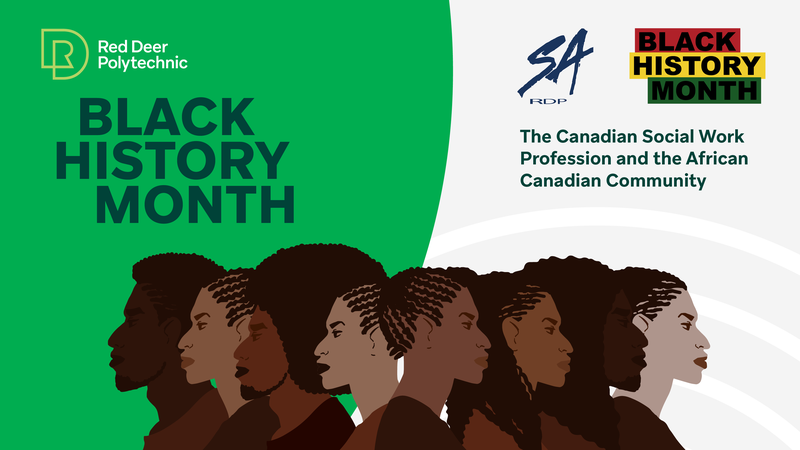
The landscape of social work is changing, says a Red Deer Polytechnic (RDP) professor who’s putting the spotlight on historic inequities in the field this Black History Month.

Rosemary Ignacio, who holds a Master’s Degree from the University of Calgary (U of C), notes the profession is historically white female-dominated, but that’s steadily becoming a fact of the past. She says too that what social work students are learning is helping meld new expectations for how, as professionals, they’ll interact with racialized clients.

Ignacio’s RDP social work department hosted a virtual talk Feb. 7, attended by 80+ people, and which featured Dr. David Este, a professor, retired after 28 years at the U of C.

“The first thing we can do is acknowledge that Black people have historically contributed to this profession. The textbooks and history, as it’s told, focus mostly on white people, but there are numerous examples of Black people contributing,” says Ignacio.

“I think of the Coloured Women’s Club of Montreal which did a lot of community work, and other organizations in Nova Scotia and Alberta. In Edmonton, there’s a park named after Mary Burlie who was a Black social worker, but she isn’t recorded really anywhere in the history books, textbooks or social work education.”

Ignacio calls this type of acknowledgment “African-Canadian Truth-Telling.”

Travelling back to 1977 in Montreal, that city saw the formation of the Association of Black Social Workers (ABSW), which started with just four members, but has grown significantly.

This province has the Alberta Association of Black Social Workers (AABSW), which originally met in 2018.

According to the AABSW’s website, the impetus for initially gathering was concern, “for lack social workers practicing in isolation, working conditions, barriers to advancement, the future of social work as a profession, and the issues impacting Black communities in Alberta.”

That group has grown rapidly from just five to over 130 social workers since formally launching last fall.

“With respect to having an association, it’s not just about Black social workers’ contributions to the profession, but also to the country. It’s time to start speaking that truth,” says Ignacio.

“When the dominant voice has been the white voice, representation matters. There’s something comforting about seeing yourself represented, about being in a space of people who look like you and have the same values. It’s also important for students coming up in the profession to see themselves represented.”

At RDP, the number of non-white students is increasing; it’s a slow shift, as Ignacio describes, and there are two reasons this is important.

“It’s vital the profession represents the people it’s serving. It’s also key for students they have access to wider perspectives on all things social work,” she explains. “This includes looking at the history and lived experiences of Black social workers. If it isn’t in the textbook and there isn’t anyone to push that information, students will never learn it. We’re training our students to ask questions that go beyond what the norm is now.”

One such student is second-year Kalisha Mendonsa, who is white, and sees the importance of such a shift.

“It comes down to recognizing social work is, historically and contemporarily, an oppressive profession. We all work in a lot of oppressive systems, from justice to children’s services to mental health — all of these are systemically not equitable for people of colour,” she says.

Take a person requiring social work for an issue such as poverty, she says, and throw racism on top — things get compounded and very difficult on that person.

“There has to be an awareness of those intersectionalities. If there isn’t, you can’t address the root issues somebody’s facing,” Mendonsa adds. “One also needs to be aware of how they’re engaging in oppressive systems, because if you’re maintaining the status quo, you aren’t tackling the systemic barriers facing people.”

Dr. Este says this discussion necessitates talking about the role of reparations.

Reparations, often thought of as monetary payback, is the concept of making up for — to a degree — first the enslavement of people of African descent in the U.S. and Canada, and second the ongoing racial injustices faced even after slavery was abolished (1834 in Canada; 1865 in the U.S.).

Este says reparations doesn’t have to mean straight cash.

“It can be conceptualized as public apologies, land deeds, especially in the case of Nova Scotians, or as it relates to social work, more bursaries and scholarships for Black students,” he says.

“The key role for social workers and anyone is the action piece of making the case for reparations. First, have a good understanding of why that demand exists. Anti-Black racism is alive and well, no matter where you go and in every aspect of Canadian society.”

Professor Ignacio elaborates on why, historically, there have been so few Black people involved in social work.

“The first reason is because in most instances, they may have been the clients; just like with Indigenous people, they lived to see social workers. Another big reason is education which comes down to a lack of access to scholarships and lack of generational wealth,” she says.

“That being said, Black people have been community social workers long before social work was a thing. In terms of how they have their communities, and how they’ve supported families, taken in struggling neighbours, offered food, clothing and shelter; while they aren’t acknowledged as social workers in a professional sense, the sense of community historically fostered in the Black community is in fact social work.”

RDP is hosting other things, including a library display, a residence kitchen event, and a draw for a curated box of items from local Black-owned businesses, to close out Black History Month. More information is at rdpolytech.ca.