Get the free daily rdnewsNOW newsletter by subscribing here!
summer solstice

National Indigenous Peoples Day and annual pow wow mark important week for Red Deerians and local Indigenous community

Jun 18, 2022 | 4:44 PM

The week upcoming will be one of both celebration and grieving for Red Deer’s Indigenous community, plus the rest of the public who decides to partake in events taking place.

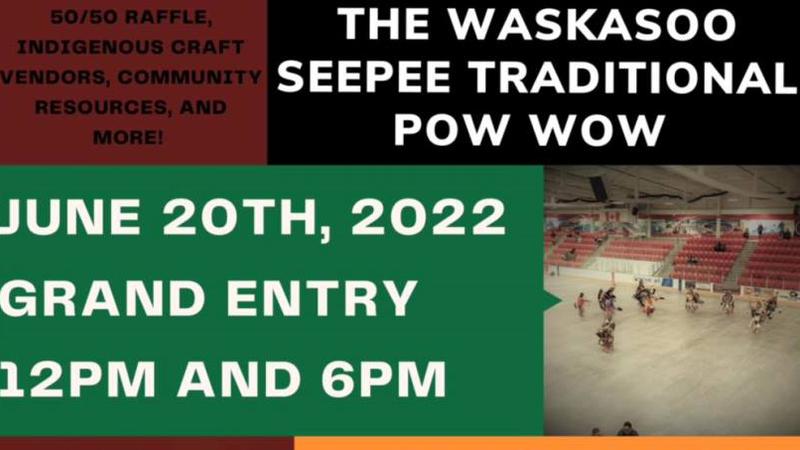
On Monday, the Waskasoo Seepee Traditional Pow Wow runs from 12 to into the evening at Servus Arena. Hosted by the Red Deer Native Friendship Society (RDNFS), Grand Entries take place at 12 and 6 p.m. The theme is Remembering the Children, with Red Deer-based Remembering the Children Society to be on-hand.

There will be a 50/50, Indigenous craft vendors, other community resources, and plenty of song and dance, with donations being taken for the Red Deer Food Bank. There is no admission fee.

On June 21, for National Indigenous Peoples Day, Shining Mountains Living Community Services is hosting a community BBQ.

Monday, June 20

The third annual pow wow is the first to be held post-pandemic, says Nadine Szakacs, Nanâtawihowin Program Assistant, RDNFS.

She explains Remembering the Children is being highlighted to draw attention back to the bodies continually being found at former residential school sites across the continent.

“It seems to have lost a bit of the sway and significance in people’s minds, and it shouldnt,” says Szakacs, who can’t emphasize enough the impact of intergenerational trauma.

“Weigh in the fact it isn’t just children who attended that were affected; it’s their families, generations on. They’re trying to find help that hasn’t been readily available, and now those resources are finally becoming available to help people start healing. When you have a parent who is traumatized, that gets ingrained into the child. So until we get our people healed, we can’t expect the children of them to be functional. They’re going to have issues because they’ve been raised with trauma.”

Szakacs explains how pow wow is part of healing.

“With traditional pow wow, the dancing is about prayer. Every dancer out there is praying, and when you get into Indigenous culture, you’ll learn prayer is a crucial part of the healing process,” she says. “Speaking with Creator, speaking their truth, whether they’re asking for help to heal themselves, or their parent, or someone else, that is the main focus.”

Lyle Keewatin Richards, who helms the Remembering the Children Society, tells rdnewsNOW there is no official word yet on the results of ground-penetrating radar work done at the former site of the Red Deer Industrial School.

Even without for now, other work must continue, he says.

“I’m honoured to have National Indigenous Peoples Day, but the proof is in what people do in the long run,” says Keewatin Richards.

“Are people going to show up in July and say sorry again? If they do, good, but what is happening elsewhere? Are they going to prosecute more priests, are they going to continue supporting the search for unmarked graves? Money isn’t really the be all, end all, but what we need are the same resources they put in to take our culture away, to put the culture back.”

Keewatin Richards continues, noting the intergenerational trauma, and the seven generations it is said to take for true healing to occur.

“Don’t expect people to be better overnight. It is a challenge to celebrate. The question I ask is ‘What do I do with my rage?’ How do I process what has happened? You can think about forgiving someone, and that’s fine, but how do you actually do that when people are still giving the boots to you?” he says.

“For example, how do we condone how the RCMP treated the Wetʼsuwetʼen people at the blockades in B.C. when the idea of it all is supposed to be compassion and reconciliation?”

READ MORE: Ground-penetrating radar work begins at former Red Deer industrial school site

Tuesday, June 21

Tuesday’s event at Shining Mountains (4925 46 Street) will begin with an opening prayer at about 11:30, and then a proclamation from Mayor Ken Johnston. Cake, BBQ and cultural activities will occur in the afternoon.

Raye St. Denys is executive director at Shining Mountains, an organization which provides services to Indigenous folks on a status-blind basis, with the aim of building physical, mental, emotional and spiritual health capacity, particularly for marginalized populations.

“June 21 is the longest day of the year, and that’s why it has so much meaning for our people. Many of them are now our ancestors, but our people fought really hard decades ago for this day,” says St. Denys. “It’s a day where in some places the sun doesn’t set at all, so it’s viewed as a day of light, and eons back, it was seen as a day of gift.”

It has gone by other names, but calls for a national holiday to recognize the Indigenous people of this land began in the early 1980s.

It was then declared in 1996, with the summer solstice specifically mentioned.

St. Denys says there is a time for all things, with June 21 being, in her mind, primarily for celebration.

“September 30 (Orange Shirt Day) is more so for remembrance and grieving, but no matter how someone chooses to observe it, I hope the sun shines on us all on June 21. Even if it doesn’t, we’ll celebrate who we are and recognize the day. Rain is a good thing anyway. It nourishes the crops and is something to wash Mother Earth clean,” she says.

“The sun may not shine over our corner of the world, but it is shining somewhere, and we are still here.”

The Metis Nation of Alberta is also a partner with this event.

Additional information

How is the province marking National Indigenous Peoples Day?

Statement by Minister of Indigenous Relations Rick Wilson

Alberta Metis Fest