Subscribe to the 100% free rdnewsNOW daily newsletter!
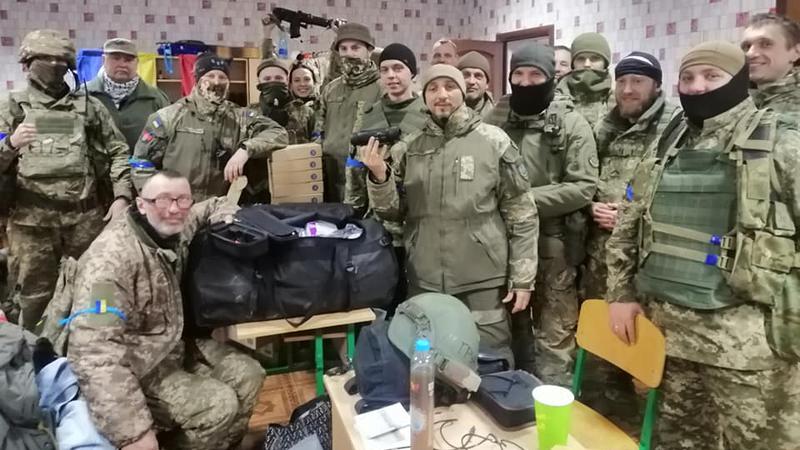
Local Oleksandr Fedorenko's cousin, Vitaliy Sokur, seen with his group of Ukrainian militia in the small town of Obukhiv. Sokur is holding a infrared camera in front of a package of medical supplies sent from Red Deer. (Supplied)
Obukhiv, Ukraine

Fighting inside: Red Deerian recounts cousin’s experience in Ukranian militia

Mar 28, 2022 | 9:20 AM

Alex packs his bag in the morning for his two week hitch at the oil rig: clothes, cell phone charger, a few snacks for the road, and kisses his wife and two girls goodbye in Red Deer. At the same time, his cousin in Ukraine is packing another kind of bag: his helmet, camouflage jacket, and a few bullets.

Oleksandr Fedorenko, better known as Alex, moved to Red Deer in 2013 from Obukhiv, Ukraine, just 45 km south of the capital city of Kyiv. The now 42-year-old, came on an immigration program for oil and gas workers. He worked for nearly two years before his wife and two daughters were able to move from the small town of 33,000 to Red Deer with him.
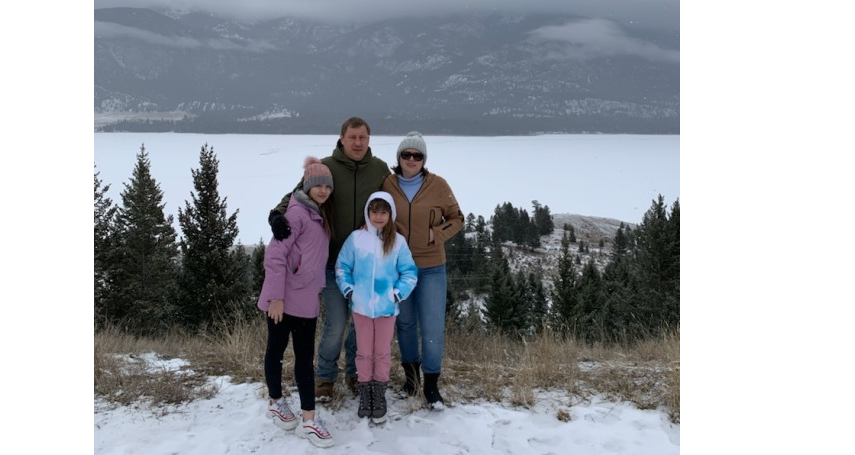
Oleksandr Fedorenko with his wife Elena Talalayeva and two daughters, Stefaniya and Sasha (left to right). (Supplied)

His cousin, Vitaliy Sokur, who he refers to as brother, is still in Obukhiv along with the rest of his family. Now 44, Sokur was a photojournalist for a local newspaper with a wife and two sons.

However, about one year ago, Sokur’s life changed completely when he joined the militia, a military force made up of civilians to aid the army in an emergency. Fedorenko says the Ukrainian government created a special forces for small towns, sending an army trained instructor to train the militia for a few months. He says they learned how to fight with automatic weapons and how to maneuver strategically around the terrain, while being provided with camouflage clothing, equipment, helmets, thermal imaging devices and air drones.

Fedorenko believes the threat of Russia’s current invasion stems from when talks began of Ukraine joining the North Atlantic Treaty Organization (NATO), an international military alliance. He says it was then that Ukraine would officially be seen as an independent country rather than a territory of Russia in President Vladimir Putin’s eyes.

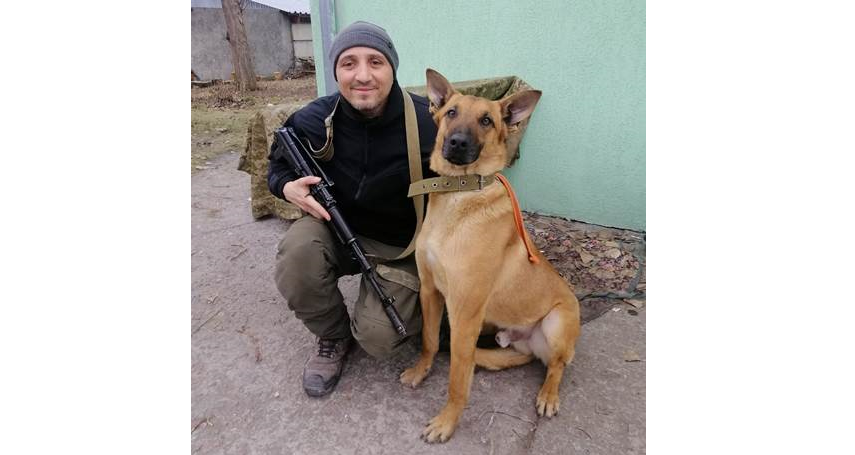
Vitaliy Sokur patrolling the city of Obukhiv with what he calls their “fighting dog”. (Supplied)

“Russians came into Ukraine to destroy it, I guess. We created our own style of life. We don’t want to be like Russian style, we want to be Ukrainian. We want to be like other democratic countries,” said Fedorenko.

Speaking to his cousin almost every day on the messaging app Viber, Sokur recounts his daily missions: patrolling the roads and forests in search of Russian soldiers who may be trying to attack their base.

“There’s no active war there but it’s not too far from Kyiv. Kyiv is being bombed with rockets and bombs so there are a lot of flying jets. They are preparing,” he said.

At first, Fedorenko worried for his cousin’s safety as militia, fighting against the Russian army, deemed the second strongest in the world. But seeing his country putting up a strong fight, he says is starting to feel hope. Just Thursday, the Ukrainian military, ranked 22nd in the world, claimed the attack and destroying of the Russian warship “Orsk” in the occupied port of Berdyansk.

“The Russians were planning to spend two days for the occupation of almost all the territory of Ukraine but it’s already almost a month,” said Fedorenko, as Mar. 24th marked one month of war in the country.

When the war began, Fedorenko considered going back to Ukraine himself, having prior military training from university. Attending the National University of Life and Environmental Sciences of Ukraine, then called the National Agricultural University, in Kyiv roughly 20 years ago, he graduated in agronomy.

When the Soviet Union fell in 1991, he says the school added a three-year military program. Completing his training to be a Tank Commander, he says he called the Ukrainian government asking if they needed his help but was advised it would be better for him to stay in Canada due to his lack of experience and his limited ability to only command a small fleet of four tanks at a time.

Upon further reflection, Fedorenko thought about his wife and children here and what that would mean for them if he were to leave.

“I’m not a soldier. I don’t want to kill and I don’t want to die,” he said, expressing his cousin felt similarly.

He decided to help in different ways from Red Deer, by working hard to send money and necessary supplies for his cousin’s militia. Already, he and his wife Elena Talalayeva have sent three kilograms of medical aid products with the help of local Iness Kojlo, who also pioneered Ukrainian efforts in the city.

READ: Red Deer woman brings province together for Ukraine

“In Red Deer, we have a big community here,” he said, noting he is on multiple Facebook group chats with other local Ukrainians.

But while Fedorenko may not be fighting in the Ukrainian militia, he says he is fighting in different ways.

“Unfortunately I can’t stop watching videos and reading the news,” he said. “I can’t sleep very well.”

“I am fighting too. I am fighting in my head. I try to live a normal life. I can’t explain; it’s hard.”