Subscribe to the 100% free rdnewsNOW daily newsletter!
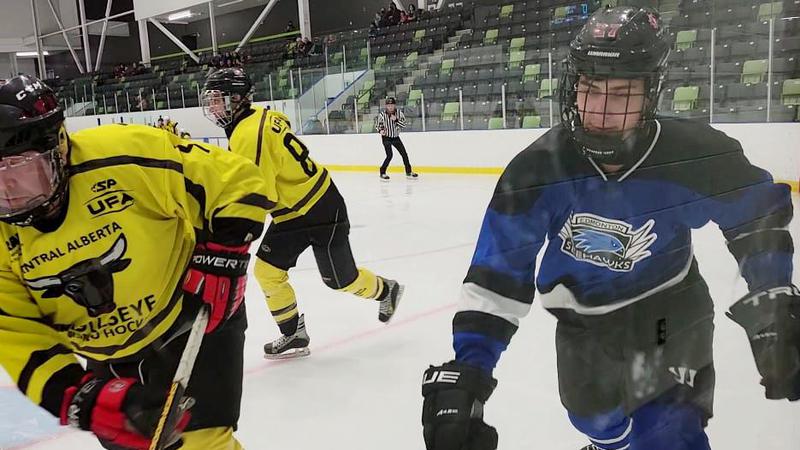
Players with the Central Alberta Bullseyes and Edmonton SeeHawks play a game of blind hockey at the Gary W. Harris Canada Games Centre on Saturday, Feb. 19, 2022. (rdnewsNOW/Josh Hall)
high hopes for sport

Blind hockey squads take the ice in Red Deer

Feb 19, 2022 | 3:54 PM

Red Deer played host to a unique hockey game on Saturday, and one that players hope is a pre-cursor to seeing their sport on a much brighter stage.

The Alberta Blind Hockey Challenge took place at the Gary W. Harris Canada Games Centre, with the Edmonton SeeHawks playing against the Central Alberta Bullseyes. A few members of the Calgary Seeing Ice Dogs joined in as well to expand the lineups.

Blind hockey features a few wrinkles from your standard hockey game. For one, the puck is three times larger and made out of thin sheet metal, with a hollow inside containing ball bearings which rattle. The noise and larger size allow players to track the puck.

The game also features the “Pass Rule,” meaning the attacking team must complete a clear pass inside the opposition’s zone before an attempt on goal. Once the referee determines a clear pass has been made, they blow an electronic whistle that emits a high-pitch sound notifying players a shot is allowed.

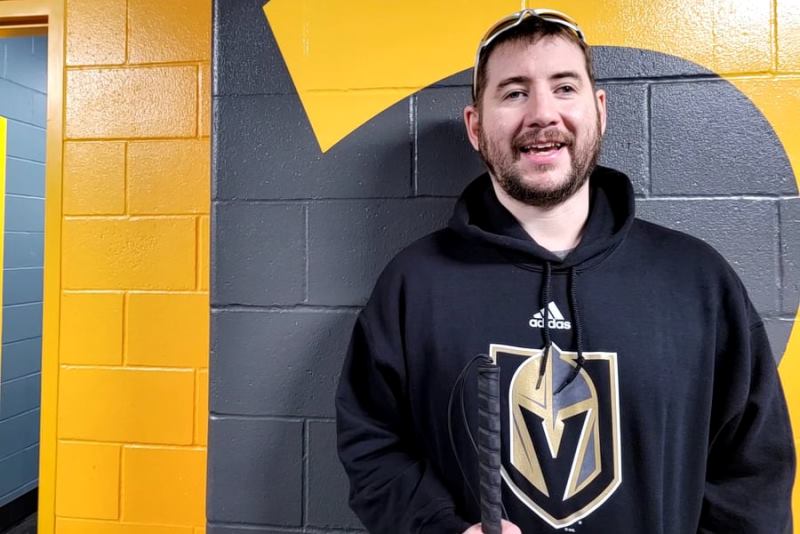
Cory Gaskin, goalie for the Bullseyes, says growing up, he never thought he’d able to play any sports.

“I have what’s called Cone-rod Dystrophy, which is a genetic disability. Three years ago, Dustin, the organizer, asked me if I’d want to come out and give blind hockey a try and I though why not give it a shot? I started playing goalie just last year,” he shares.

“It does mean a lot to do this. We have so many visually impaired people, and it’s a tight community. Plus, it just gives us something to do.”

Cory Gaskin, 36, is a goalie for the Central Alberta Bullseyes blind hockey team. (rdnewsNOW/Josh Hall)

No matter how much vision a goalie has or doesn’t have, they must be blindfolded during the game.

“I use my ears to stop pucks,” the 36-year-old from Red Deer explains. “I wouldn’t say my vision loss means my hearing is heightened, as in when people think it’s some type of super power, but they are more attuned. We adapt and use our other senses better.”

Another adaption in blind hockey is three-feet tall nets, as opposed to the traditional height of four-feet. When using a regular hockey net, a special canvass is tied over the top portion to lower its height. No other player is allowed to step in the crease during play.

After the game, teams held a lunch and auction with proceeds going to the Alberta Sports and Recreation Association for the Blind (ASRAB).

According to the Canadian Survey on Disabilities, conducted in 2017, more than 160,000 Albertans are impacted by mild to severe vision loss.

Dustin Butterfield, a Lacombe resident and Bullseyes member, says the goal is to get blind hockey into the Paralympics by 2030.

“I love watching and participating in any of the adapted, or para sports. Things like goalball have been in the Paralympics for many years,” he argues. “Blind hockey is a growing sport in North America, and Europe too. Things were going really well in the last few years before the pandemic and we want to continue that. It’s fundamental that people have these opportunities. Just because you have challenges doesn’t mean you can’t or shouldn’t be able to be fit or participate in a sport.”

Canadian Blind Hockey is hosting the 2022 Canadian National Blind Hockey Tournament from March 25-27 in Toronto, with a summer development camp from July 27-Aug. 1 at St. Mary’s University in Halifax.

The sport was first played in Canada in the 1970s.