LOCAL NEWS THAT MATTERS, SENT TO YOU DIRECTLY. SUBSCRIBE FOR FREE!
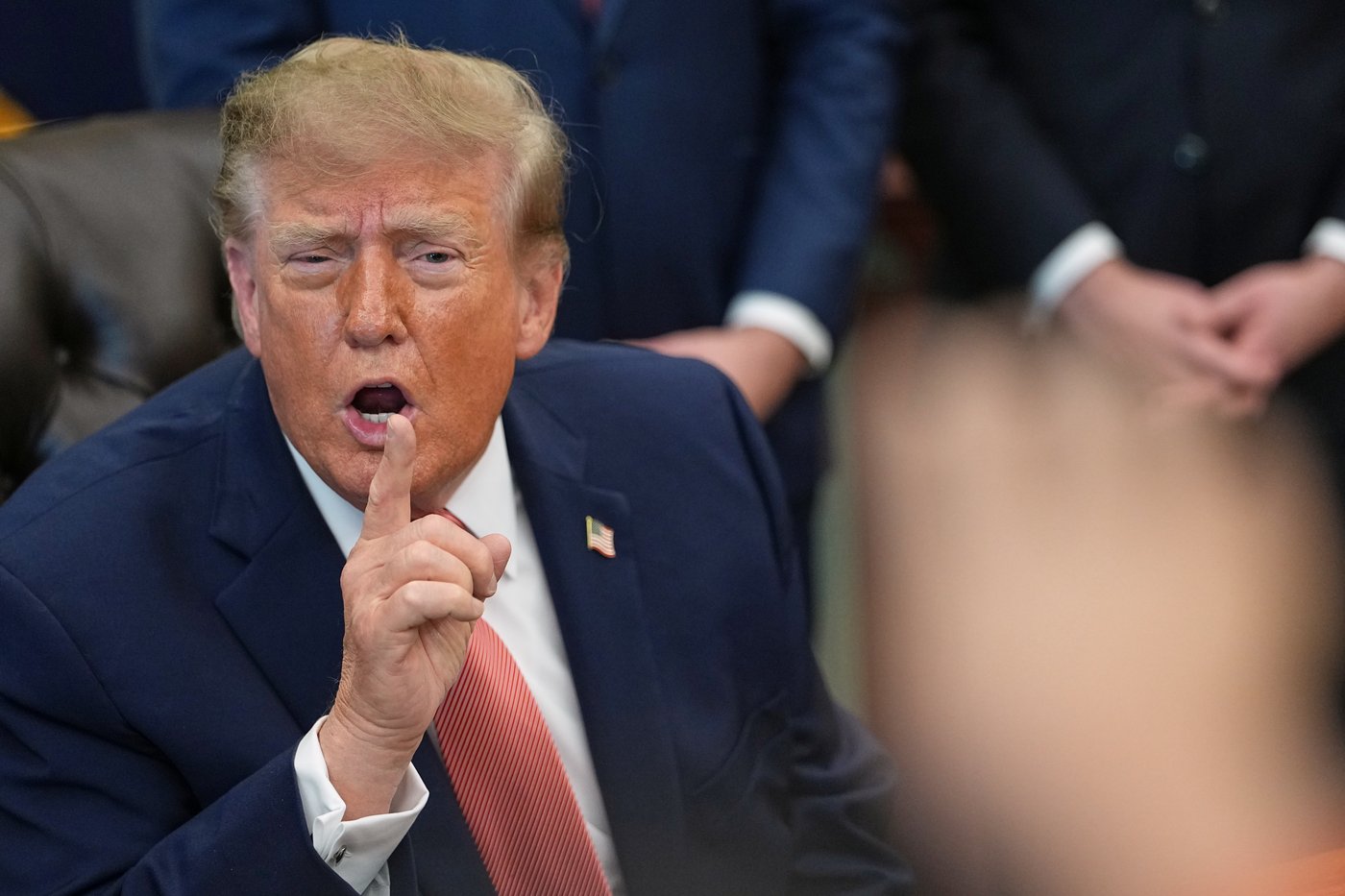
President Donald Trump speaks in the Oval Office of the White House on Tuesday, Oct. 20, 2026, in Washington. (AP Photo/Jacquelyn Martin)

New lawsuit filed challenging Trump’s tariffs on Canada

Oct 20, 2026 | 1:21 PM

A U.S. food importer has filed a lawsuit in the United States Court of International Trade challenging U.S. President Donald Trump’s tariffs targeting Canada.

The lawsuit, filed Tuesday by the non-profit Liberty Justice Center on behalf of Gellert Global Group in the New York-based court, argued Trump’s use of a Depression-era trade statute exceeds his power as president.

“No president should have the power to pull a dormant statute off the shelf and use it to impose sweeping tariffs or import bans without the limits Congress required,” Liberty Justice Center CEO Sara Albrecht said in a news release.

Trump used Section 338 of the Tariff Act of 1930 to slap an array of Canadian goods with a 50 per cent levy after trade talks broke down in August.

The same statute was used the following month to ban imports of other Canadian goods, including motorcycles and some alcohol and dairy products.

The White House has said Section 338 empowers the president to impose tariffs when a country puts U.S. exporters at a disadvantage relative to exporters in other countries — even though the law had never been used for that purpose.

U.S. officials have said the latest duties are a response to provincial bans on U.S. liquor, Canada’s supply managed dairy system and quotas on certain U.S. vehicles.

Tuesday’s lawsuit said the Canadian policies don’t justify the sweeping tariffs imposed by the Trump administration.

It notes two of the measures — auto quotas and liquor bans — were actually a response to Trump’s own tariff measures. The lawsuit also said Canada’s dairy supply management involves policies agreed to under the Canada-U.S.-Mexico Agreement on trade, known as CUSMA, which was negotiated during the first Trump administration.

A Trump administration official, commenting on background, said the president’s actions will be vigorously defended in court. The official added that Tuesday’s lawsuit won’t deter the president’s commitment to levelling the playing field for American workers, farmers and firms.

U.S. Ambassador to Canada Pete Hoekstra said Tuesday that in the Trump administration’s view, Canada and the United States are not in a trade war.

“We are negotiating some tariffs,” Hoekstra said at a conference in Gatineau, Que.

“From our perspective, we don’t view the relationship as ruptured. I know that the Canadians look at it differently.”

But the Trump administration’s actions are leading to consequences for American businesses.

Thomas Gellert, co-chief executive officer of New Jersey-based Gellert Global Group, said the company has “spent generations building trusted relationships with suppliers, customers and partners across the food industry.”

“These tariffs disrupt those relationships overnight and create costs and uncertainty that ripple through the entire supply chain,” Gellert said in the news release.

The company is being hit by the trade war on all sides, the news release said. It pays a 50 per cent tariff on imports of Canadian cheese but is also slammed by Ottawa’s retaliatory tariffs on American-made cheeses its Canadian division sells in Canada.

The company cites the experience of one of its Canadian cheese suppliers to show how the integrated North American market is being disrupted by the tariff dispute. It gets milk from dairy farmers in Upstate New York, which is processed into brie in Canada, which is then sent back to the United States.

“The tariffs hit American farmers and businesses on both sides of that transaction,” the news release said.

The case raises concerns beyond Canada, the news release added. If the duties remain unchecked, any president could use Section 338 to impose tariffs and trade restrictions without meaningful congressional control.

The Liberty Justice Center was previously involved in the legal challenge against Trump’s use of the International Economic Emergency Powers Act of 1977 for the so-called “Liberation Day” and fentanyl-related tariffs on Canada, Mexico and China.

In February, America’s top court concluded it was not legal for Trump to use the statute, known as IEEPA, because the U.S. Constitution very clearly gives Congress power over taxes and tariffs.

The president replaced those duties with a stopgap tariff statute — which also faced a legal challenge — before putting in place levies of 10 to 12.5 per cent on most nations around the world, citing forced labour in supply chains.

A coalition of U.S. states is challenging the use of Section 301 of the Trade Act of 1974 to hit the world with the forced-labour duties.

Tuesday’s lawsuit argues that Section 338 is defunct and has been superseded by other laws, including Section 301. It also says Trump’s tariffs don’t meet various requirements for invoking the law, such as a 30-day waiting period.

“Congress already gave the executive branch a tool for responding to unfair foreign trade practices: Section 301, which requires an investigation, public comment and other safeguards,” Liberty Justice Center Senior Counsel Jeffrey M. Schwab said in the news release.

“The administration cannot skip those protections by reaching for a 1930 statute that no president had ever used to impose a tariff.”

The lawsuit asks the court to declare the tariffs unlawful and order a refund.

This report by The Canadian Press was first published Oct. 20, 2026.

Kelly Geraldine Malone, The Canadian Press