Subscribe to the 100% free rdnewsNOW daily newsletter!

Eby says B.C. could fight lumber tariffs in U.S. courts

Feb 20, 2026 | 4:04 PM

VICTORIA — British Columbia Premier David Eby said a ruling by the United States Supreme Court that strikes down far-reaching global tariffs opens the door to challenge other tariffs that currently hurt his province’s softwood lumber industry.

While Friday’s ruling does not lift long-standing American anti-dumping levies on B.C. softwood, Eby says it “opens up the possibility” of the province mounting a legal challenge in U.S. courts to the additional 10-per-cent tariff imposed last fall on national security grounds.

“The Supreme Court of the United States said very clearly that they would read carefully the authorities that are given to the president and Congress in determining whether or not tariffs are justified, and that careful reading, in my opinion, would not find that B.C. wood products are a national security threat to the United States,” he said.

Eby added that the additional 10 per cent tariff “has been quite devastating” for the softwood lumber sector.

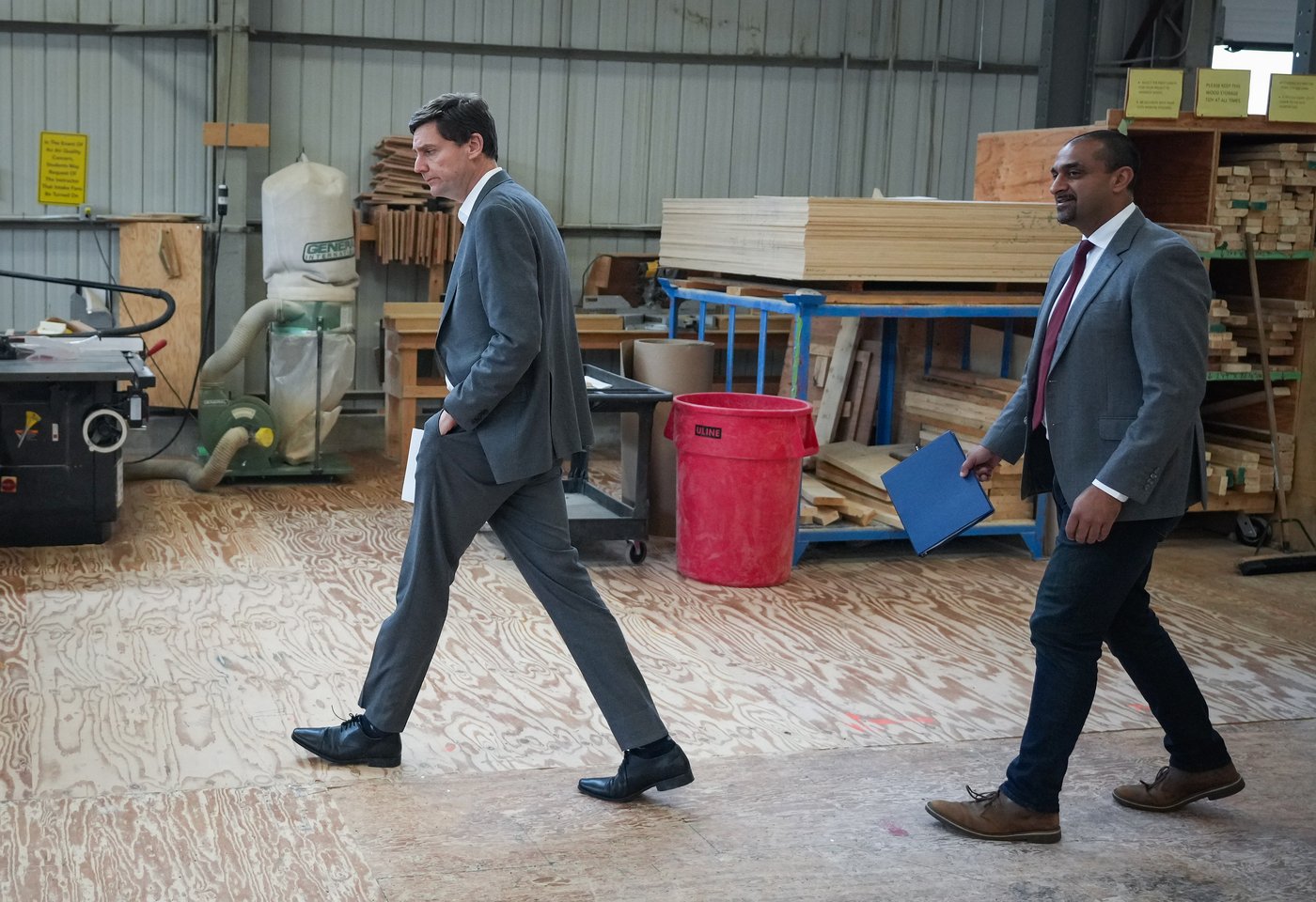
The premier, speaking at a press conference in Vancouver with Jobs Minister Ravi Kahlon, said the province would reach out to the U.S.-based law firm it retained as part of B.C.’s response to the American tariffs to see what options might be available following Friday’s landmark ruling.

Eby said that while a future legal challenge falls “pretty squarely” within federal responsibility, B.C. might take a direct run at it.

If the option of direct legal action is available “we will pursue it,” he said. “We will do what is necessary to defend our softwood lumber industry.”

U.S. President Donald Trump’s administration has responded to Friday’s ruling by planning to impose a global tariff of 10 per cent over and above existing levies, but Eby said he took “some heart in the fact that the Supreme Court was willing to draw a line around the president’s authority.”

A coalition of fifteen states and private companies launched the legal challenge against the tariffs, and Eby said their legal victory showed the willingness of some to stand up for the relationship between Canada and the United States.

He called it an “important decision, even just to restore some of our confidence in one of our closest friends and allies and trading partners.”

Various countervailing duties and tariffs on B.C.’s softwood lumber industry currently add up to 45 per cent.

About 40 per cent of Canadian lumber exports to the U.S. come from B.C., where the industry is dealing with low harvest levels and mill closures leading to hundreds of job losses.

The B.C. Conservative Party said in a statement that Friday’s ruling is welcome news, although the plan for an additional 10 per cent global tariff increases uncertainty.

Interim party leader Trevor Halford said the NDP “can’t keep using global turmoil and Donald Trump as a blanket excuse for deficits that are driven by their own habit of irresponsible spending. B.C. needs a plan for growth.”

That was a reference to B.C.’s budget that was released on Tuesday, forecasting a record $13.1 billion deficit next fiscal year.

This report by The Canadian Press was first published Feb. 20, 2026.

Wolfgang Depner, The Canadian Press