Subscribe to the 100% free rdnewsNOW daily newsletter!
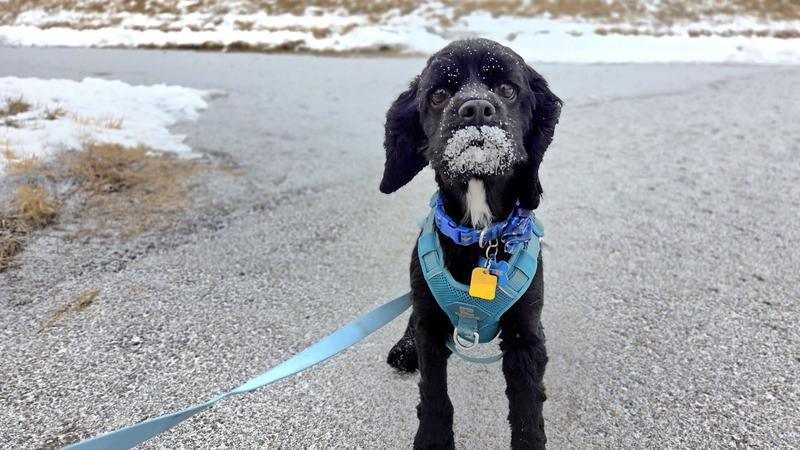
A dog plays in the snow in late November 2025. (rdnewsNOW file photo)
wet and cold, then cold and wet

Normal November, wetter December recorded around Alberta

Jan 5, 2026 | 4:23 PM

It was an up-and-down start to the cold season for central Alberta, but it seems La Niña has finally taken a firm hold.

The climate pattern which is characterized by its cool conditions certainly wasn’t fully felt in November, according to Danielle Desjardins, warning preparedness meteorologist with Environment and Climate Change Canada.

Red Deer saw slightly warmer than normal conditions that month, averaging a day-time high of -4.1 degrees Celsius, 0.6 degrees above normal.

The city also received just 63 per cent of its regular precipitation at about 10.3 mm.

As Desjardins explains, the snow to water equivalent is typically a ratio of 10:1, but it can vary depending on how moist the snow is.

December was a different story, however.

Red Deer’s average was -12.2, which is 1.9 degrees cooler than normal.

Residents also experienced 18.9 mm of precipitation, higher than the usual 14.1.

Again, those precipitation numbers do not take into account the actual centimetres of snow, which was likely much more than that before melting down.

Desjardins says the last two months of the year were pretty close to what was forecast.

“One of the big indicators that we use to predict seasonal forecasts and seasonal outcomes is whether we’re in an El Niño or La Niña phase, or a neutral phase. We’re experiencing La Niña conditions right now, and that typically means colder and wetter over the Prairies,” she says.

“Realizing November was a little warmer, considering the La Niña conditions that have developed, but December, definitely was more typical La Niña pattern with the colder and snowier overall trend over not just Alberta, but lots of the Prairies.”

In December, the B.C. coast also experienced another atmospheric river, which does have an impact on weather once it clears the Rockies.

Where it hits depends on where the jet stream takes it, says Desjardins.

“When we do see a lot of moisture hitting the B.C. coast, that moisture does track over the Rockies and it does provide moisture and energy to the Prairies. It definitely does play a role in how much precipitation we see there,” she says. “It’s just a matter of where exactly that energy ends up on the other side of the Rockies; the jet stream dictates the paths of the low pressure systems we see developing over the Prairies.”

As reported by rdnewsNOW, Red Deer also hit record high daytime temps on Nov. 13 and Dec. 15.

There were some noteworthy weather stats that piled up around the province.

Edmonton was 4.6 degrees colder than normal in December, with an average of -13.6.

Fort Chipewyan had an average of -25.9 in December, which was eight degrees colder than usual. That made it the sixth coldest winter on record in Fort Chip.

Calgary, meanwhile, was much closer to normal in December, at just 1.1 degrees below the average of -6.3.

On the precipitation side, Calgary had 102 per cent of its regular precipitation in November at 16.7 mm, while Edmonton hit 94 per cent with 16.5 mm.

For December, Calgary received 81 per cent of normal, at 10.1 mm, and Edmonton had an astounding 50.2 mm, with the average being 11.8, making it the fifth wettest December in the capital’s history.

Elsewhere, Fort Vermilion had its wettest ever December, and Grande Prairie had their second wettest December on record.