Get the free daily rdnewsNOW newsletter by subscribing here!
ID 5858271 © Nancy Dressel | Dreamstime.com
Conditions As Of Sept. 23, 2025

Central Region harvest turns attention to oat and canola crops

Sep 26, 2025 | 3:25 PM

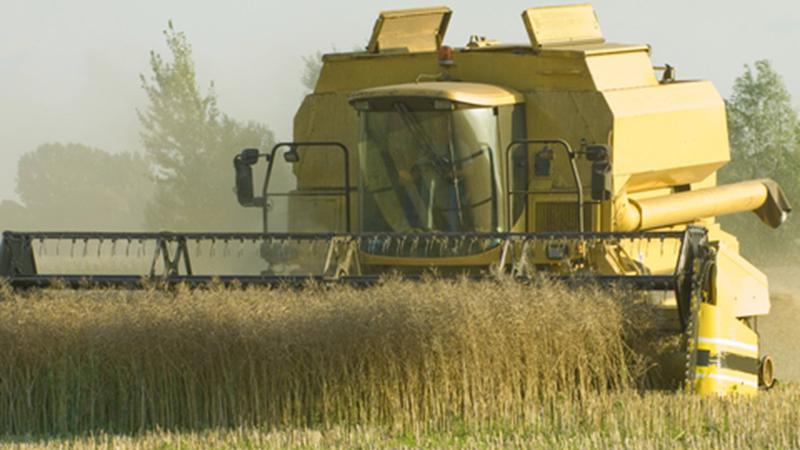
Harvest in the Central Region continues uninterrupted with attention turning to oat and canola crops.

That according to the latest Alberta Crop Report from Agriculture Financial Services Corporation (AFSC) and the Government of Alberta.

According to the report, current estimates for Central Region yields of all crops combined are 66 per cent above the 5-year average.

Nearly 99 per cent of hard red spring wheat, 100 per cent of durum wheat, 55 per cent of oats, and 99 per cent of dry peas are estimated to grade within the top two categories.

For barley, 50 per cent of malt varieties and 47 per cent of feed varieties are grading as 1 C.W. Canola estimates have 98 per cent grading as Canada #1.

Province-wide, harvest across the province continued to advance this past week, with isolated showers in many areas having minimal impact on field operations. Warm and dry conditions remained, allowing producers to make substantial progress and bringing the provincial harvest of major crops to 77 per cent complete. This represents an 18 per cent increase over the previous week, positioning the current pace well ahead of the 5-year average of 68 per cent and the 10-year average of 54 per cent.

Harvest progress for all crops varies by region, with the South leading at 84 per cent, followed by the North West at 80 per cent, the Peace region at 78 per cent, the North East at 77 per cent and the Central region at 72 per cent.

With the harvest now in its advanced phase, producers note the importance of receiving significant precipitation to restore soil moisture reserves for the next growing season before the ground begins to freeze.

Harvest of winter wheat, fall rye, dry peas, and lentil crops are now virtually complete, while 92 per cent of durum crops has been harvested. Most other spring-seeded cereals are nearing completion, with 89 per cent of spring wheat, 87 per cent of barley, and 82 per cent of oats now in the bin. Chickpea combining is advancing at a modest pace with 71 per cent harvested.

For oilseed crops, mustard leads with 85 per cent harvested and producers continue to focus on the canola harvest which is 56 per cent complete. Flax harvest is notably behind average, with progress currently at 35 per cent.

As harvest progresses, the estimated crop quality ratings continue to be updated.

The proportion of the provincial crop estimated by grade (5- year average) for hard red spring wheat is 78 (58) per cent 1 C.W., 18 (33) per cent 2 C.W., and 3 (7) per cent 3 C.W.; for durum wheat is 48 (58) per cent 1 C.W., 24 (28) per cent 2 C.W., and 13 (9) per cent 3 C.W.; for barley 31 (32) per cent malt (malt describes a 1 C.W. grade malting variety barley), 61 (54) per cent 1 C.W., and 8 (12) per cent 2 C.W.; for oats 22 (36) per cent 1 C.W, 28 (31) per cent 2 C.W., and 48 (32) per cent 3 C.W.; for canola 93 (87) per cent 1 Can., 6 (9) per cent 2 Can., and 1 (3) per cent 3 Can.; and for dry peas 10 (25) per cent 1 Can., 80 (62) per cent 2 Can., and 9 (11) per cent 3 Can.

Dryland yield estimates for most major crops have increased this week, with only dry pea yield estimates slightly decreasing.

Provincial yield estimates in bushels per acre for major crops changed by +0.7 for spring wheat, +2.6 for barley, +0.9 for oats, +0.8 for canola, and -0.6 for dry peas. This upward trend has raised the provincial major crops yield index to 25.2 per cent above the 5-year average and 17.0 per cent above the 10-year average.

These changes represent an increase of 2.1 per cent in the 5-year yield index and 2.0 per cent in the 10-year yield index over the last provided update.

While scattered and isolated showers were reported in localized areas across the province, these rains were insufficient to improve overall moisture conditions with widespread dryness continuing to be the dominant weather pattern.

Surface soil moisture conditions rated good to excellent now sit at 25 per cent provincially, a 4 per cent decline from last week and lower than the 5-year average of 45 per cent and the 10-year average of 55 per cent.

Regionally, good to excellent surface soil moisture declined across all areas, with week-over-week changes reported in the South at 25 (-3) per cent, Central at 31 (-9) per cent, North East at 13 (-1) per cent, North West at 23 (-2) per cent, and Peace at 31 (-2) per cent.

Sub-surface moisture conditions show a similar drying trend this week, with the percentage of the province rated as having good to excellent moisture falling by 3 per cent to 28 per cent overall. While the North West and Peace regions saw minor improvements, these were insufficient to offset the reductions in the South, Central, and North East regions.

Regionally, good to excellent ratings (weekly change) are reported at 28 (-2) per cent in the South, 40 (-9) per cent in the Central region, 12 (-2) per cent in the North East, 22 (+1) per cent in the North West, and 34 (+2) per cent in the Peace.

Provincial pasture growth rated as good to excellent is currently 28 per cent, down 4 per cent from the previous report. This remains below the 5-year average of 32 per cent and the 10-year average of 36 per cent.

Fall-seeded crops are rated 40 per cent in good to excellent condition, below the 5-year average of 57 per cent and the 10-year average of 61 per cent.

Provincial dryland hay yields (5-year average) are estimated at 1.3 (1.4) tons per acre for the first cut and 1.0 (1.0) tons per acre for the second cut, indicating that current dryland hay yields are in line with long-term averages.

Provincial irrigated hay yields (5-year average) are only reported for the South Region and are estimated at 2.5 (2.3) tons per acre for the first cut and 2.3 (1.7) tons per acre for the second cut.