Subscribe to the 100% free rdnewsNOW daily newsletter!
(rdnewsNOW/ Ian Gustafson)
removing stigma

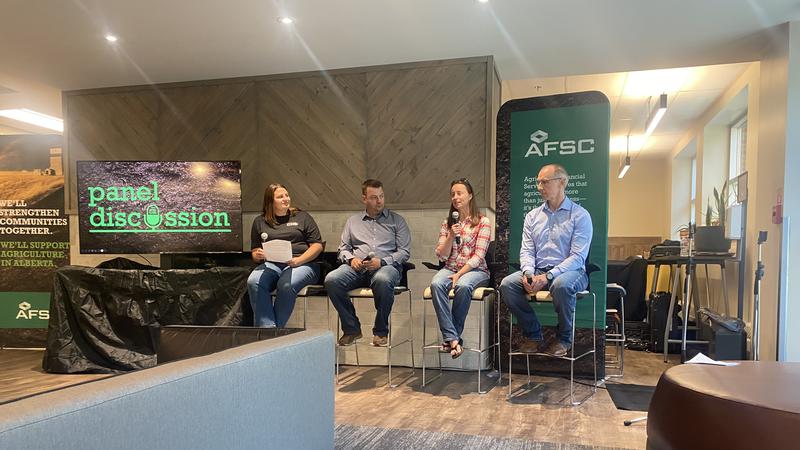
Panel speaks on challenges of mental health in agriculture industry at AgSmart Expo

Jul 30, 2025 | 10:35 AM

When it came to his mental health Sean Stanford didn’t realize he needed help until one day it hit him.

He explained he didn’t realize anything was wrong with him before one day in 2017 that changed his life forever.

At that time he didn’t know what was wrong or what had happened but he said it felt like he was having a heart attack.

After spending a week in hospital and going through multiple tests, it was determined he had an anxiety attack.

Working with his family doctor, a treatment plan was created and he also started talking with a therapist at his local hospital who recommended a psychologist.

Since then he said he feels like he’s in a good place mentally and uses his experience to help others in their mental health journey.

“I feel like I can help others and I can look back and reflect on the earlier years of my life and realize I wasn’t well then either. But I had no idea, I thought that’s how everyone was,” he said. “It was a hard pill to swallow to look back and realize I had missed out on so many good things and had struggles I didn’t need to have.”

He was just one of three panel members who discussed mental health in Canadian agriculture on Tuesday at the AgSmart Educational Expo in Olds.

The Dish: Deep Rooted event was put on by Agriculture Financial Services (AFSC) in partnership with The Do More Agriculture Foundation, which also included a screening of Deep Rooted, a documentary that showcases producers who’ve battled depression, anxiety, stigma, and the weight of legacy.

The film can’t be viewed online but screening requests can be made on the movie’s website.

Stanford, who farms just south of Lethbridge, also serves as a mental health advocate and speaks at events across the province.

He explained that discussions around mental health in agriculture have progressed leaps and bounds over the last 10 years.

“I’ve been telling my story for the past eight years now and in that time, it went from basically being something nobody ever talked about, to being the most brought up topic in agriculture nowadays,” Stanford said.

“We have a long ways to go yet to get more people onboard. There’s some people who still think there is a stigma who say they don’t need help but deep down there’s more farmers than you think that are struggling with something. Whether it’s anxiety, depression, or financial struggles, everybody could use a little help.”

Alongside moderator Kaitlyn Kitzan from the Do More Agriculture Foundation, she was also joined by panelists Linda Hunt, Kevin Chanut, and Sean Stanford.

Hunt, who’s a farmer and agrologist in Alberta, also serves on the Agknow initiative aimed to increase resiliency in farming communities and remove stigma around mental health.

She said the initiative has done a deep dive over the last three years to figure out the things that are really causing stress in Alberta for farmers and what kind of response is needed.

For western Canadian farmers, she said there’s a lot of stress around federal government regulations in some of the changes being made such as what pesticides are allowed.

Weather is also an ongoing stressor as well as the high cost of land.

Finally, she added the transition in Alberta in how the province produces energy has also caused distress because a lot of farmers have secondary jobs to cover the risk. Many of those are in the oil and gas industry, which has gone through plenty of ups and downs.

“There’s just a lot of change going on in Alberta right now and a lot of uncertainty, which is adding to the concerns,” she said.

Hunt added, Agknow created a network of farm counsellors who understand agriculture and the challenges of living in rural Alberta and are available as a resource. They’ve also piloted a variety of different workshops just to see what works and resonates with local farmers.

On the Agknow website she said farmers and those who work in agriculture can access counseling. It’s also designed to be a hub of information for resources and services that align with the needs they’re hearing from local farmers.

Kevin Chanut, vice-president of lending at AFSC, said the organization advocates for mental health across the agriculture industry.

He explained, the biggest struggle he’s found that people in agriculture have is managing priorities and the complexity across the industry.

“I think it’s moving very fast and I think people feel like they need to be able to bear all of that responsibility,” he said. “What we’re trying to do is encourage that you can create a team around you so you don’t have to carry that full burden on your own shoulders.”

Chanut added, it’s encouraging to see people show up to mental health related events like the one they held on Tuesday. To be able to share that message further is valuable because when attendees leave the event they’re going to share it with their friends and family.

“It’s important to create even more awareness around it because it’s definitely still a challenge that exists in our industry.”

If you or someone you know is struggling, help is available 24/7 through the National Farmer Crisis Line: 1-866-327-6701 (1-866-FARMS01).