Get the free daily rdnewsNOW newsletter by subscribing here!
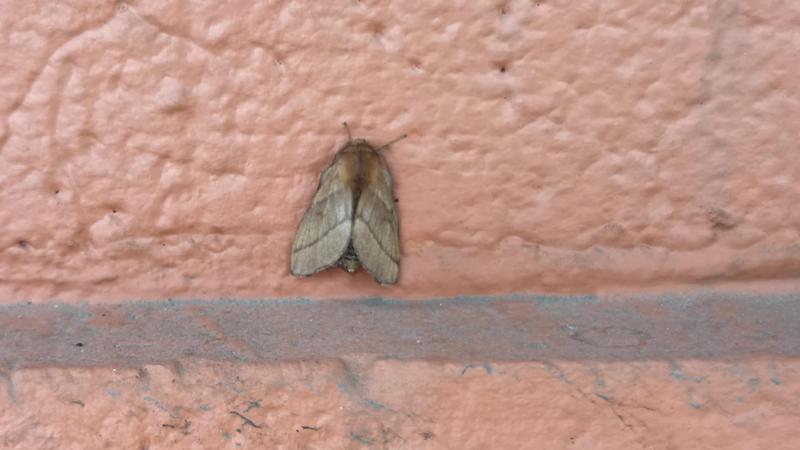
A forest tent moth seen in Red Deer. (rdnewsNOW/Josh Hall)
they come in peace

Attack of the moths? Not such a big deal, says Red Deer Parks dep’t facilitator

Jul 11, 2025 | 5:00 AM

The next week or two, and hopefully not longer, may include a few run-ins with forest tent moths, especially if you live in Red Deer.

The fuzzy-faced critters have proliferated in the city over the last few days, and people are noticing.

Ken Lehman, Community & Program Facilitator with the City of Red Deer’s Parks department, urges residents and visitors to not be overly alarmed, explaining that its lifespan once becoming a moth is brief — as short as a week or two.

They lay their eggs in bands, typically on trees, then they die, he says, and that’s only if they don’t get picked off by a hungry bird first.

The eggs hatch into caterpillars — the forest tent caterpillar — and they’ll re-emerge as moths for a similarly brief period next summer.

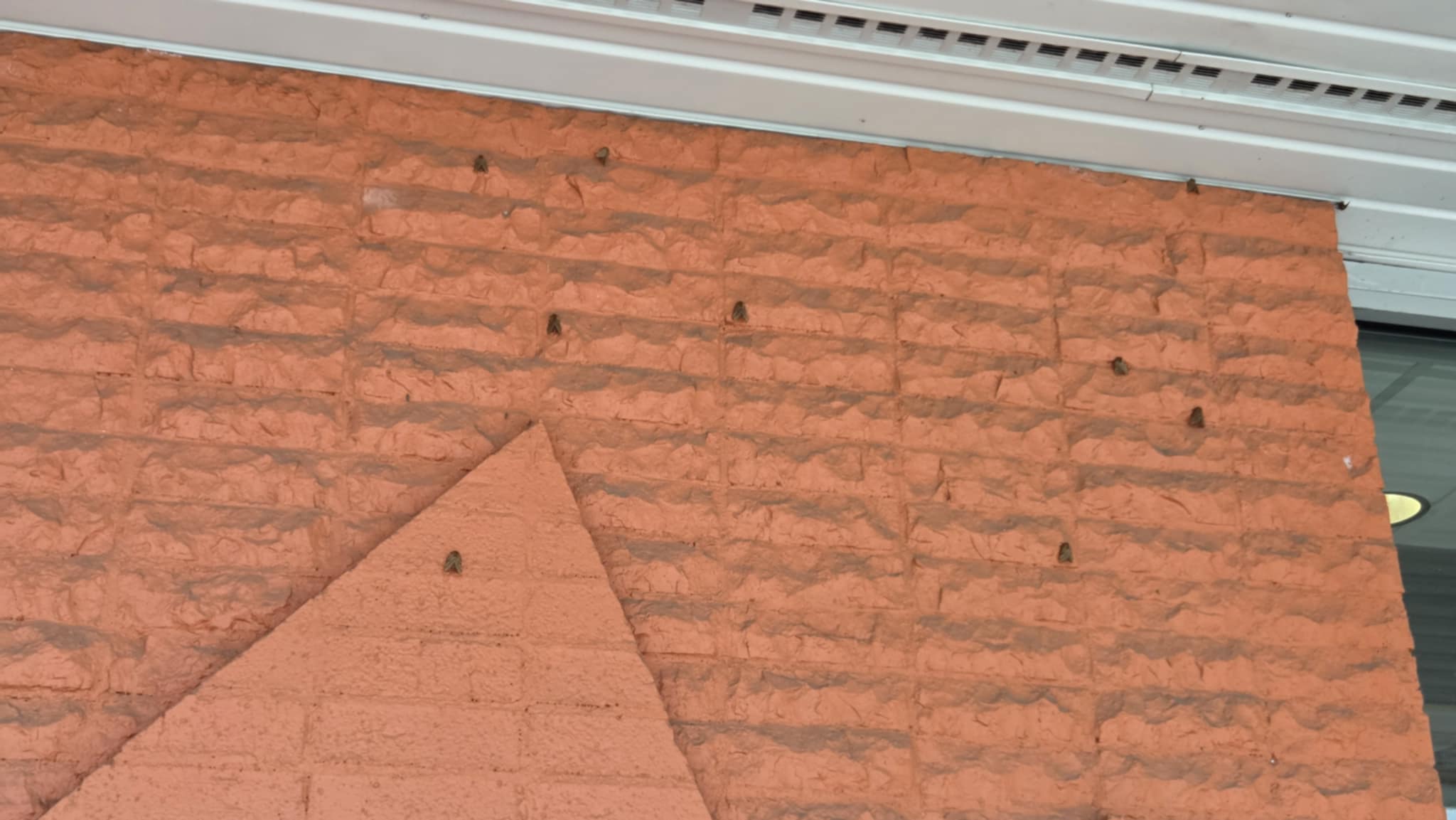
Forest tent moths can be seen congregating like this on walls and on the ground near entranceways to buildings. (rdnewsNOW/Josh Hall)

But is this new for Red Deer and why does it seem like there are more than usual?

“It’s mission right now is to lay eggs. We’re seeing them congregated in high numbers around doorways and windows, and people are stepping on them going in. It’s higher than we would typically see, but it’s part of the somewhat predictable cyclical nature of this creature,” explains Lehman.

“Every decade or so, it’s going to have a higher point in its population cycle, and that’s what we’re seeing in Red Deer.”

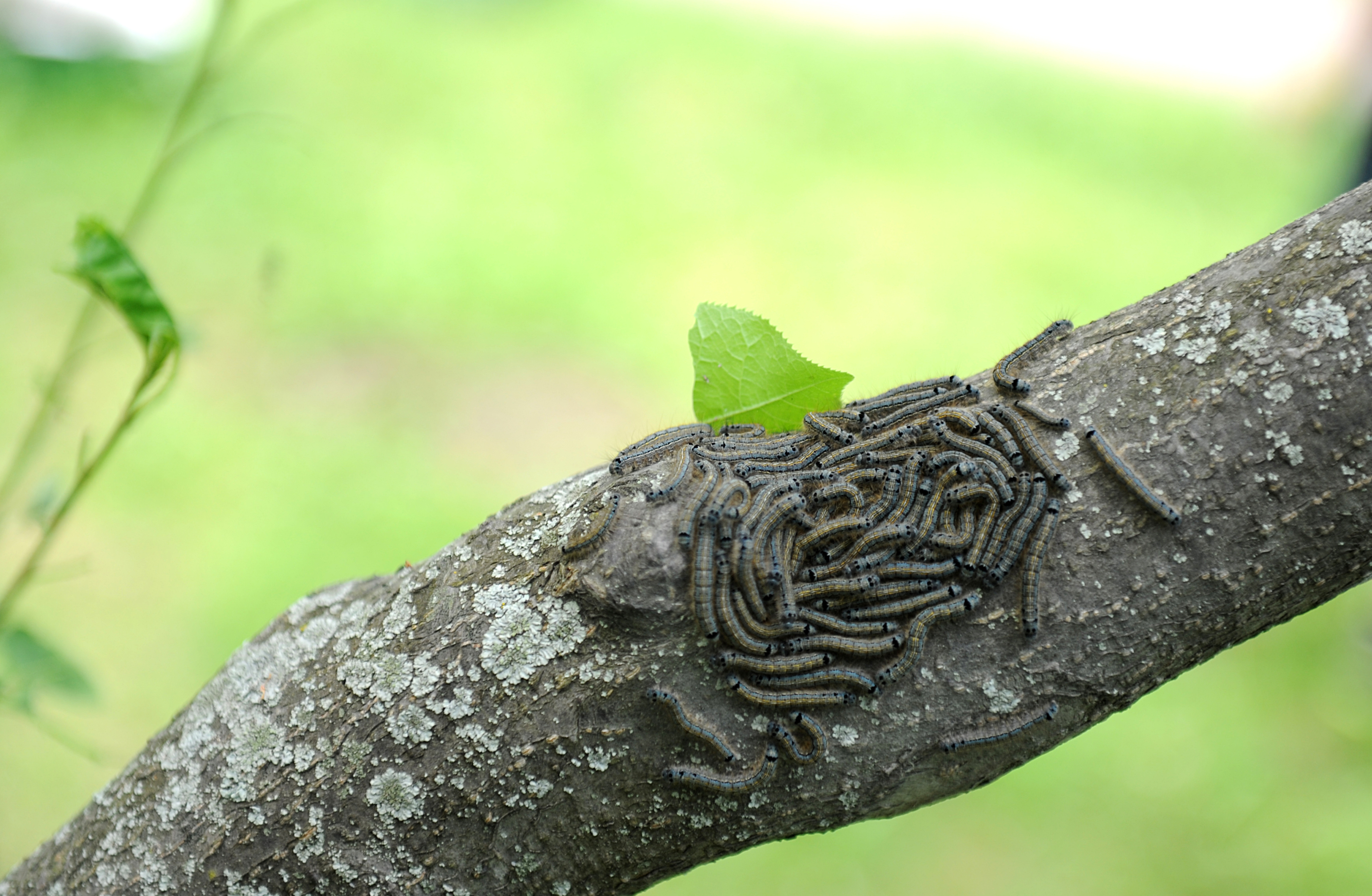
How a cluster of forest tent caterpillars may look on a tree branch. (ID 74535366 © Georgy Iliin | Dreamstime.com)

As noted, the moths do provide a food source for birds, and for the time they’re alive, they do act as a secondary, if not tertiary-level pollinator, says Lehman.

Unfortunately, while in the caterpillar or larvae stage, they do cause defoliation on trees, but that’s the extent of the harm.

Lehman says if you see bands of eggs on a tree, likely an ash or aspen poplar, they can be easily scraped off.

“Right now, there’s nothing to indicate we are in the middle of an epidemic of any kind,” he adds.

According to the City of Red Deer’s Integrated Pest Management Manual, the larvae leave a trail of silk wherever they go, and when not feeding will cluster together in crotches of larger branches or on the trunk of a tree, then spinning a yellowish-white cocoon.

They yield one generation per year, and outbreaks typically last four or five years.