Subscribe to the 100% free rdnewsNOW daily newsletter!
(ID 135091406 © Designer491 | Dreamstime.com)
RESERVES STRUGGLING

Annual Financial Report paints challenging picture of Red Deer’s fiscal health

Apr 30, 2025 | 4:44 PM

Although Red Deer outperformed its budgeted plan for 2024, the Annual Financial Report shows its reserve position remains under pressure and work needs to be done to secure the city’s financial future.

In a special meeting April 29, city council accepted the 2024 Financial Reports, which included the 2024 audited financial statements, CFO report and third-party auditor reports. Preparing and submitting these documents to the province is a legislative requirement as outlined in the Municipal Government Act (MGA).

A report prepared by Mike Olesen, interim CFO, summarized the City of Red Deer’s current financial position.

In 2024, operating revenues increased by $28.3 million (7.4 per cent), but still fell short of the budget by $6.1 million (1.5 per cent).

Operating expenses increased by $32.4 million (7.8 per cent), the largest contributors to which were increased salaries ($10.5 million) and grants to organizations ($11.2 million).

Olesen said some of the areas with the largest changes were general government services, including the unanticipated revaluation of the Westerner Exposition Association loan. RCMP contract increases, and Capstone and Buffalo marketing and demolition work were contributing factors as well.

Read more on the Westerner loan: Red Deer city council talks bylaw updates, new zoning, and community service planning

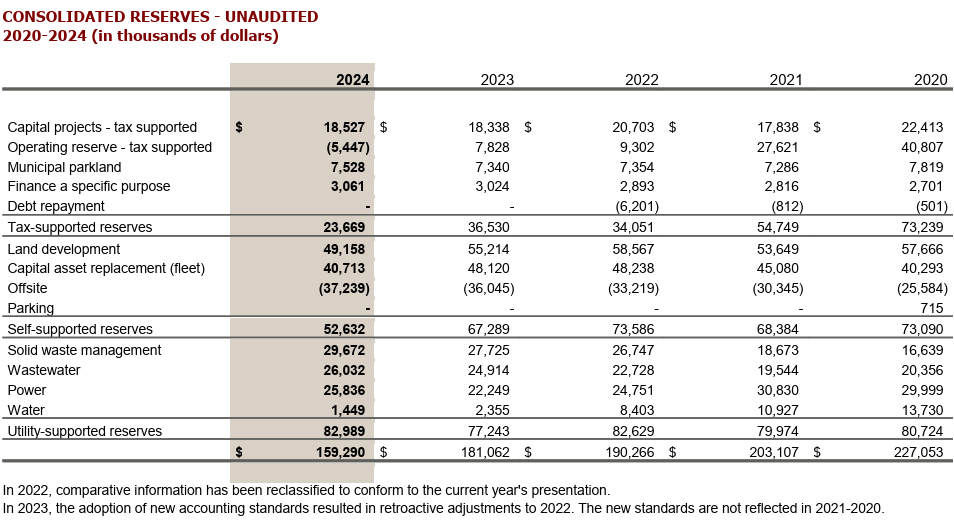
Expenses have been rising faster than revenues, putting pressure on the city’s reserves, Olesen indicated. Over 2023, the largest decreases occurred in the operating reserve-tax supported (ORTS) at $13.3 million (170 per cent) and the land development reserve at $6 million (10.9 per cent). A portion of the ORTS decrease was due to the $7.3 million revaluation of the grant portion of the Westerner loan, while about $6 million was prompted by general expense increases.

“Administration did some things to minimize the impact in 2024, but I think [this is] all the more evidence as to why the changes in Budget 2025 were really needed, because without that, the municipality is going to start to continue to fall further behind,” he said.

Looking beyond the last year’s withdrawals, Councillor Kraymer Barnstable noted that from 2020-2024, the ORTS balance decreased from $40.8 million to negative $5.4 million. When all reserves are considered, the city is down about $68 million overall, he added, while expenses have increased by 16 per cent since 2021.

(City of Red Deer)

“These are not good trends that we have in the City of Red Deer. You could go as far as to say we have a spending problem in the City of Red Deer,” he said. “And this doesn’t fall solely on administration; council is just as much to blame in this regard.”

Just in 2024, council approved over $7.5 million in one-time expenses to come out of ORTS, he added.

Moving forward, Olesen said council should be prudent in its decision making.

“Council really does need to be considerate about what is important,” he commented. “We’ve got to keep an eye on our priorities, because if everything’s important, nothing is.”

On the capital side, recognized grant revenue was $30.6 million, $20.1 million less than last year. While there are unspent grants deferred in 2024, the amount of grant revenue received was still lower than the previous year.

Making up for the shortfall in grant revenue, capital reserves increased by $13.6 million (31.1 per cent). Meantime, the proportion of capital projects funded by borrowing or other external sources has remained the same.

While the use of reserves to fund capital projects has increased, Olesen said, the capital reserves have not declined due to increased tax and user fee revenue.

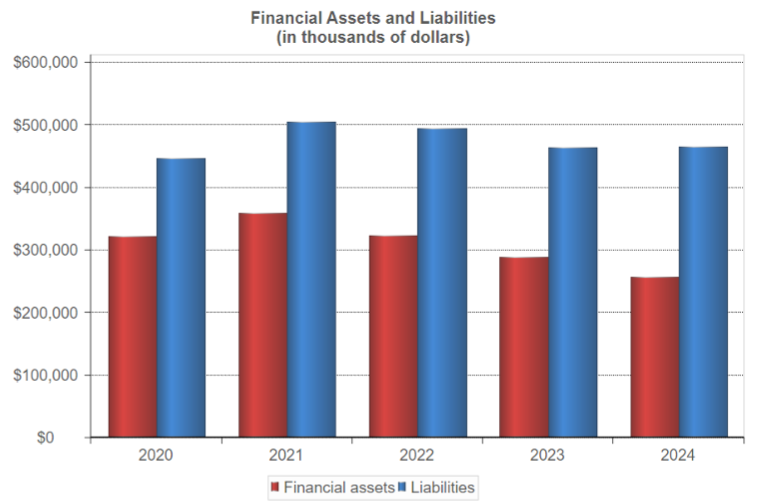
When it comes to assets, the city saw a large decrease in its financial assets, resulting in an increase in net debt of $33.4 million over 2023. Olesen said such a large decrease in assets relative to liabilities is concerning.

“It calls into question the city’s ability to fulfil its obligations in the future,” Olesen said in the report. “Ideally, there should be enough cash and short-term investments to at least cover deferred revenue balances and long-term investments to cover the reserves, as both represent current funds set aside for future use. This has been a factor identified in previous forecasts that requires a course correction to reposition our financial health in a better state.”

(City of Red Deer)

Reflecting on the financial position of the city, Vesna Higham noted that decreases to provincial grant funding amidst increased responsibilities to cities as social challenges rise have negatively contributed to this picture.

Mayor Ken Johnston concluded the discussion on a lighter note, stating “It’s been an approach that council has chosen to finance through reserves rather than debt.”

In this sense, Johnston said, while the city is struggling, it is not out of line with similar municipalities and the challenges they face.

As part of the legislated process, an independent auditor was hired and found the city’s audit documents to be a fair representation of its position.

Moving forward, a Financial Road Map, expected to be prepared by June, should help guide the city and its council’s financial decisions in the coming years.

Olesen explained, the document would outline what position the municipality should be in in relation to the actual numbers, such as the revenue increments needed to get reserves to a desired point. The plan will also point to systemic changes that would help create the right environment for Red Deer’s finances to thrive by looking at elements like structure and process, systems, policies and comparisons against other cities.

Similarly, planning for Budget 2026 is already well underway, with a focus on long-term financial health and navigating the pressures currently faced.

Since it was a success for this year’s budget process, the 2026 Utility Budget will be approved in advance of the operating and capital budgets; this is scheduled for Sept. 2. The tax and operating budgets will be brought forward Dec. 15-19.

“Budget 2025 marked an important step in strengthening our financial position by closing the operating deficit through increased revenues and service level adjustments,” said Mike Olesen, in his role as general manager of growth and finance. “As we look ahead to Budget 2026, our focus remains on protecting reserves, managing inflationary impacts, and maintaining core services in a balanced and thoughtful way.”

The city says Budget 2026 will see a continued focus on core services, minimizing tax rate increases where possible and avoiding reliance on reserves. Capital planning will prioritize maintaining current infrastructure rather than developing new amenities.