Get the free daily rdnewsNOW newsletter by subscribing here!
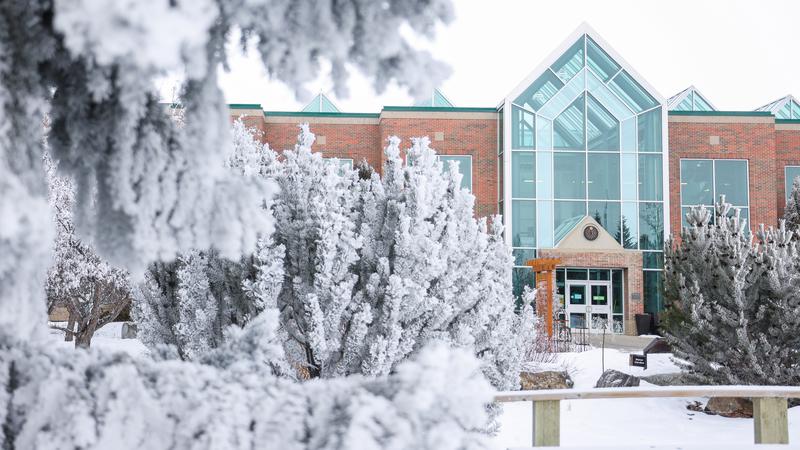
A photo of Olds College. (Sergei Belski)
a "Fluid" situation

Olds College and Red Deer Polytechnic concerned about impact of federal cap on international students

Jan 25, 2024 | 7:27 PM

Red Deer Polytechnic (RDP) and Olds College of Agriculture & Technology remain committed to international education despite concerns about this week’s federal announcement that puts a temporary cap on the number of international students allowed to come into Canada.

The cap is for two years, announced Marc Miller, Minister of Immigration, Refugees and Citizenship (IRCC), this past Monday in a direct response to the national housing crunch.

With the cap, an estimated 360,000 undergraduate study permits will be approved in 2024, down 35 per cent from 2023. Miller said provincial and territorial caps have been established, but they are yet to be revealed.

He also said the measure will better protect international students from bad actors.

“International students are vital to Canada and enrich our communities. As such, we have an obligation to ensure that they have access to the resources they need for an enriching academic experience,” said Miller.

“In Canada, today, this isn’t always the case. Today, we are announcing additional measures to protect a system that has become so lucrative that it has opened a path for its abuse. Enough is enough. Through the decisive measures announced today, we are striking the right balance for Canada and ensuring the integrity of our immigration system while setting students up for the success they hope for.”

Karen Dancy, Director of Recruitment and International, at Olds College, says the cap could have a negative impact on Canada’s reputation as a world class education destination.

“Canada is known as a great study destination globally, but students experience significant barriers and delays when compared to other top study destinations like the U.K, Australia and the U.S.A., so this will hurt Canada’s brand,” she says.

“What I’m worried about with the immediate implementation of this is with the attestation letters they’re now requiring for study permit applications, the proper procedures are not currently in place. Our current admitted international learners who are looking to come for future intakes, so for September 2024, are currently unable to apply for a study permit since the Government of Alberta is not currently providing attestation letters.”

With this, Dancy says there’s potential for a very large backlog in study permit applications with IRCC.

On the Government of Alberta website, it says the province will establish a process for issuing attestation letters to students by March 31, 2024.

It also notes current students or those seeking study permit renewals, students enrolled in a master’s or doctoral program, and students enrolled in K-12 education are not affected.

“The situation is fluid and we have not yet seen the provincial and territorial numbers, but we are concerned about unintended consequences, especially for small rural colleges like ours,” Dancy adds. “We believe the solutions need to distinguish between different realities of colleges and universities, and of regions, including urban, rural and remote.”

She acknowledges too that the cap could have a financial impact given international students pay higher fees than domestic students.

Just under 20 per cent of Olds College’s student body is comprised of international students.

“Given the recent negative stories coming out of other provinces regarding public/private partnerships, the Students’ Association of Red Deer Polytechnic (SARDP) is not surprised by the federal announcement. We hope any existing public/private partnerships in our province have safeguards and a plan of action in place for the students who are currently enrolled in these programs,” says Erin Bast, President, SARDP.

“Our Association continues to advocate for more robust supports for international students – supports that would address food and housing insecurity, legislation that would guarantee credible recruitment practices, and affordable tuition.”

Bast suggests raising the cap on the number of hours international students can work would help ease the financial burden for those students.

“Reinstating the lower cap will not protect students from exploitation and mistreatment in the workforce.  The lower cap will encourage these situations as these students are forced to work under-the-table jobs to make ends meet,” she adds.

“We also encourage the Government of Alberta to sufficiently fund our post-secondary institutions; allowing colleges, universities, and polytechnics in our province to be less reliant on international students to balance their budgets.”

Werner Beylefeld, Dean, International Education at RDP, says the institution continues to see a high demand from international students.

“By continuing to offer an industry-relevant education and practical experiences in more than 80 programs, we anticipate that our student population, both domestic and international students, will continue to grow,” says Beylefeld.

“As we engage with authorized agents to recruit international students and we expand our reach into different markets, such as Asia and Latin America, we anticipate that demand from international students to attend RDP will continue to increase.”

There are about 1,000 international students from 35 different countries currently at RDP. That’s about double compared to last year, and up from 200 in 2019-2020. In 2014-2015, RDP had just 90 international students.