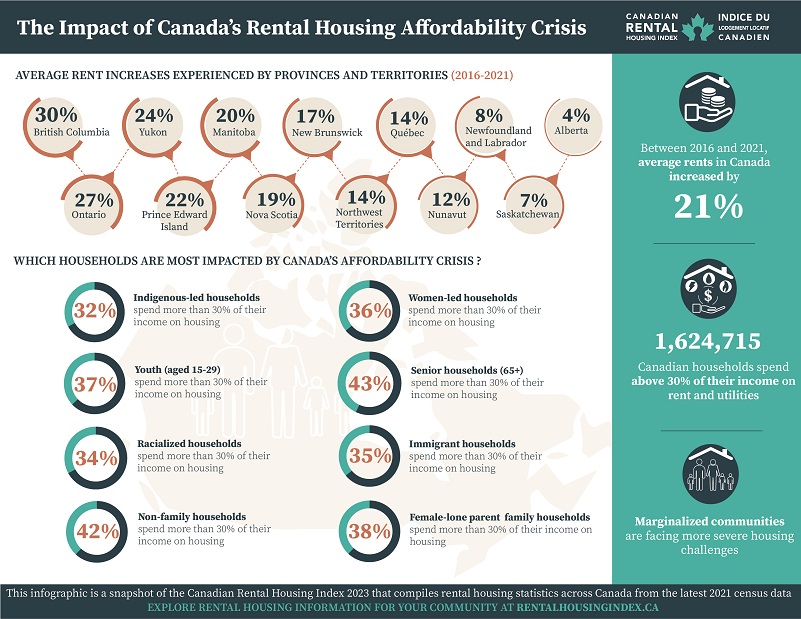
New national data shows alarming increase in rental costs and housing affordability in Canada
-
Share on Facebook
-
Share on Bluesky
-
Share on X
- Copy Link
The Canadian Rental Housing Index (the Index) has released its latest findings, revealing what it describes as a staggering increase in rental costs and significant housing challenges faced by renter households across the country between 2016 – 2021, along with a number of other worrying affordability trends.
The Index is described as a critical tool for understanding the state of rental housing in the country, analyzing important data from the latest long-form census in 2021. It is said to be unique in its comparison of rents, incomes, overcrowding, and housing quality across demographics – considerations not otherwise available when reviewing rent figures alone, say officials.
One of the most concerning trends identified by the Index is said to be the substantial surge in rental costs, particularly in provinces and regions that were already expensive. Between 2016 and 2021, the largest increases in average rents were in British Columbia (30%) and Ontario (27%). Both provinces also lead the country in the highest proportion of renters spending unaffordable or crisis amounts on rent and utilities.
The impact of soaring rental costs in Canadian households remains dire, says the organization, with one in three (33%) of renters paying an unaffordable amount of their income on housing costs. Within this group of renters, 13 per cent are paying crisis-level amounts at over 50 per cent of their income and placing them at an increased risk of homelessness.