
Get the free daily rdnewsNOW newsletter by subscribing here!
Josh Hall, Local Honorary Chair of Red Deer's Gutsy Walk and rdnewsNOW reporter. (Paige Koster Photography)
It Takes Guts

rdnewsNOW’s Josh Hall promoting IBD awareness as Gutsy Walk’s Local Honorary Chair

May 8, 2022 | 8:00 AM

You’re on a plane and the seatbelt light flashes, out for your first date with someone special, or in the middle of a career-changing job interview…

Those sound exciting, but what if at any moment, terrible gut pain could arise and you need a bathroom immediately?

What if this was a daily occurrence, asks rdnewsNOW’s Josh Hall, who’s had Inflammatory Bowel Disease (IBD) since 2007, and is the Local Honorary Chair of the 2022 Red Deer Gutsy Walk.

For 300,000 Canadians like Josh, or 1-in-140, that’s the reality of living with Crohn’s or ulcerative colitis, IBD’s two forms.

IBD chronically attacks the gastrointestinal tract which can become inflamed, causing abdominal pain, fatigue, frequent washroom trips and internal bleeding. Crohn’s typically impacts the entire digestive tract, while colitis is limited to the colon and lower. It can lead to fistulas, colon resections or needing a j-pouch.

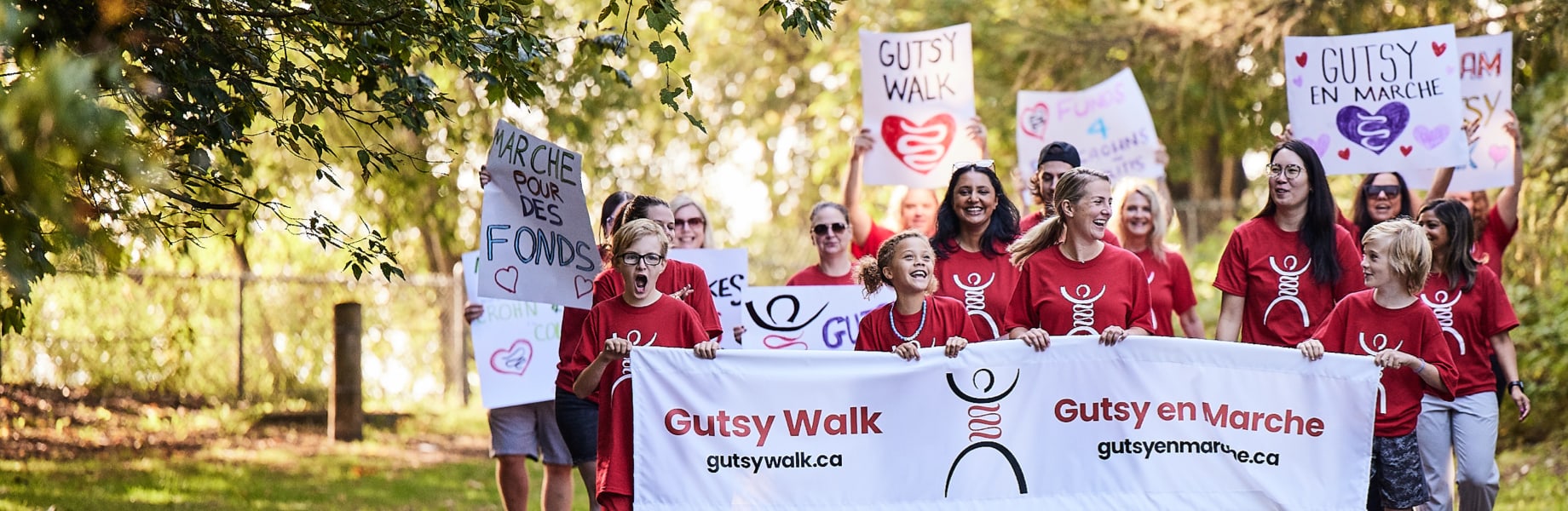
Across Canada, the Gutsy Walk is organized by Crohn’s and Colitis Canada, and locally takes place June 5 at McKenzie Trails. Registration is at 10, with warm-up at 11, the walk at 11:30 and BBQ at 12.

According to the organization, Canada has one of the highest rates of IBD in the world, with 400,000 Canadians, or one per cent of the population, expected to have it by 2030.

There’s no known cure — only treatments to help manage, says Hall, whose team is called Josh’s Bowel Buddies, and has a goal of raising $2,000. Red Deer’s goal is $19,144, with the national target at $2.9 million.

Diagnosed with colitis 15 years ago, Hall’s been in partial or full remission since 2016, meaning limited inflammation, but that doesn’t mean his day-to-day life is just like yours and mine.

An athlete growing up, his initial symptoms the summer after high school ended were entirely unexpected. Extreme pain, increasing dietary restrictions, and excessive weight loss forced him to stop being active.

Since, Hall has worked to overcome some of his struggles with IBD, slowly returning to fitness and completing two Spartan races in 2016 and 2018. Visits with his specialist, a dietitian and anxiety counsellor have also become commonplace.

It hasn’t been easy, he says, explaining how anxiety and the gut-brain connection are a significant factor.

“IBD falls into a category referred to as invisible illnesses,” he says. “That means you likely wouldn’t be able to tell on the street that someone has this or another disease. Their clothes are baggy so you can’t see their weight loss, or that weight loss isn’t in the face, or you have no idea they got out of the hospital after a multi-day stay, had blood in their stool, if they’re not eating properly, or can’t travel. These are all things that weigh heavily on the mind.”

Hall paints a picture of being at a hockey game: It’s intermission and a massive line has formed for the loo. With gut-wrenching pain and about a 30-second window, what is one to do?

“Do I shout out that I have IBD in front of everyone, hoping every single person will understand why I need to jump the queue? That would be humiliating,” he says. “It’s hard to maintain your dignity when you have to do something like that.”

While awareness and education would help, the best solution outside of a cure, Hall believes, is greater focus on increasing public washroom access — and he’s calling on both businesses and municipalities to step up their game.

“Usually for someone with IBD, when they need a bathroom, they need it now,” he says. “People like myself drive the same route to work every morning because we know where every single publicly accessible washroom is along the way. But look at our parks and downtown: there clearly aren’t enough.”

One aid is Crohn’s and Colitis Canada’s GoHere Washroom Access Program. The program is multipronged, and starts with a mobile app which displays a map of nearby GoHere partner businesses, meaning they have open-washroom policies. These businesses typically have a GoHere decal on the front door. The app also contains a digital card showing proof of a medical need to use the washroom.

But not every business owner is quick to understand the urgency, he says.

Hall explains that washroom access is not only beneficial to those with IBD and other gut issues like IBS and diverticulitis, but for those experiencing homelessness, seniors, and every civilian who has to handle that basic human function.

As for the Gutsy Walk, he says if you can’t donate, the next best way to show support is by registering and showing up day of.

“As with just about any disease, sometimes what keeps someone going is knowing our friends, family and acquaintances have our back during tough times,” Hall concludes. “Please come out to the Gutsy Walk and so you can see the resilience on the faces of people battling IBD every day, and be inspired by their determination.”

Crohn’s and Colitis Canada is the world’s second-largest health charity funder of Crohn’s and colitis research.

Check out the beginnings of Josh’s Gutsy Walk TikTok series below…

@vancan19 #GutsyWalkTikTok Volume 2: Did you know that 300,000 #Canadians have #IBD (#Crohns/#colitis)? It's true, and that's one of the highest rates in the world. Message me on Twitter (same name) for details, or find 'Josh's Bowel Buddies' at GutsyWalk.ca to donate. #HappyBirthdayToMe #SpreadTheWord #GutsyWalk #RedDeer #Alberta #HonoraryChair @getgutsycanada ♬ original sound – Josh Hall