Get the free daily rdnewsNOW newsletter by subscribing here!
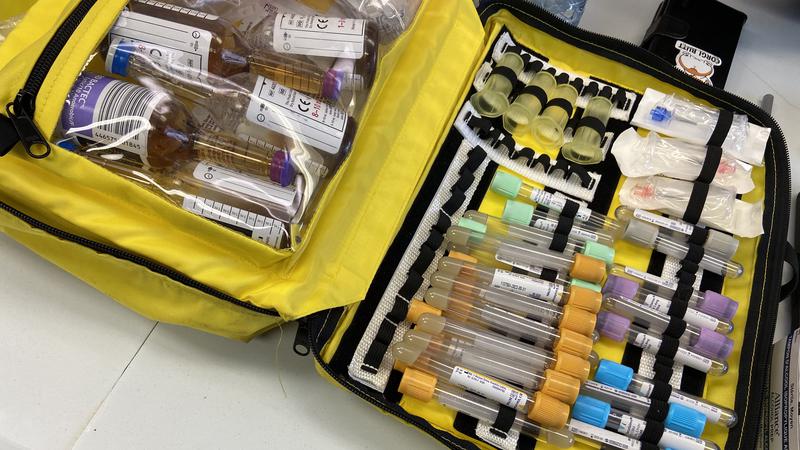
An STBBI testing kit used during a recent community testing event put on by Turning Point. (Turning Point Society)
world aids day

Report: Alberta STBBI cases declined in 2020, more testing awareness needed

Dec 1, 2021 | 2:01 PM

Published on World AIDS Day, a new report shows 23,029 new cases of Sexually Transmitted Blood-Borne Infections (STBBIs) were identified in Alberta last year.

They included:

-14,110 of chlamydia
-4,893 of gonorrhea
-2,509 of syphilis
-190 of HIV
-1,327 of HCV (Hepatitis C)

The report, from the Alberta Community Council on HIV (ACCH), shows an 11 per cent drop in cases from 2019.

However, community agencies such as Red Deer’s Turning Point Society, say significant work is still needed to fill public health gaps and increase awareness.

“Priority populations, such as young people, those who use drugs, and those experiencing homelessness, typically have greater difficulty accessing STBBI education, support, and medication, putting them at greater risk of infection,” said Mitchell Danser, Turning Point outreach worker.

“Agencies like ours are uniquely positioned to bridge these gaps through experience building relationships with these populations and expertise implementing evidence-based STBBI programming and services.”

The report also shows that of 143,000+ unique STBBI-related interactions around the province in 2020, more than 34,000 were with Turning Point. The only agency that had more was Streetworks in Edmonton.

“We recognize that some individuals don’t have the awareness or capacity to pursue STBBI supports on their own accord,” says Danser. “We’re continuously seeking new and inventive opportunities to engage clients and our community regarding their sexual wellbeing, providing resources and referrals as needed.”

Meantime, syphilis continues to be an issue in Alberta. Alberta Health Services issued an outbreak in 2019, with cases the highest they’ve been in several decades and amid a slew of recorded stillbirths.

From 2019 to 2020, there was a nine per cent increase in cases with 2,509. In Central Zone, the number of cases from one year to the next grew an astonishing 57 per cent.

The report says 34 syphilitic stillbirths and 141 congenital cases were also reported between 2017 and the second quarter of 2021.

Danser says one of the biggest factors prolonging the STBBI crisis is that most STBBI-positive individuals are unaware of their status.

It’s estimated that about 13 per cent of Canadians living with HIV, and nearly half of those with Hepatitis C, are unaware.

“People can live for years before any symptoms for Hepatitis C materialize, so our goal is for our community to get tested as soon as possible and to do so regularly so they’re aware of their STI/HIV status,” says Danser. “If they’re positive, we can help them explore different options to reduce their viral load and the risk of transmission.”

Key Turning Point and the Central Zone outputs from the one-year reporting period include:

· 6,482 peer-to-peer contacts to an estimated 599 people who would not otherwise be reached were reported by Turning Point (Central Zone)

· 34,012 total client contacts related to STBBIs from office visits (24,584), outreach (1,526), education and support (1,420), and peer activities (6,482)

· 72,547 free condoms distributed to priority populations within the Central Zone

· 75 related training events were conducted by Turning Point, with a total of 876 service providers trained.

· 14 satellite sites are set up within the Central Zone.

Key overall outputs from the one-year reporting period include:

· 143,241 client contacts related to STBBIs from office visits (76,667), outreach (24,556), education and support (29,763), and peer activities (12,255)

· 939,272 free condoms distributed to priority populations

· 143 new clients living with HIV were supported

· 510 organizational partnerships with community agencies, schools, health services, Indigenous groups, government, business, committees, and public events

· 3,653 service providers provided STBBI education

· 2,982 client referrals to STBBI testing, treatment, and services

· 218 satellite sites trained to distribute prevention supplies and educate clients

Read the entire report below: