Subscribe to the 100% free rdnewsNOW daily newsletter!
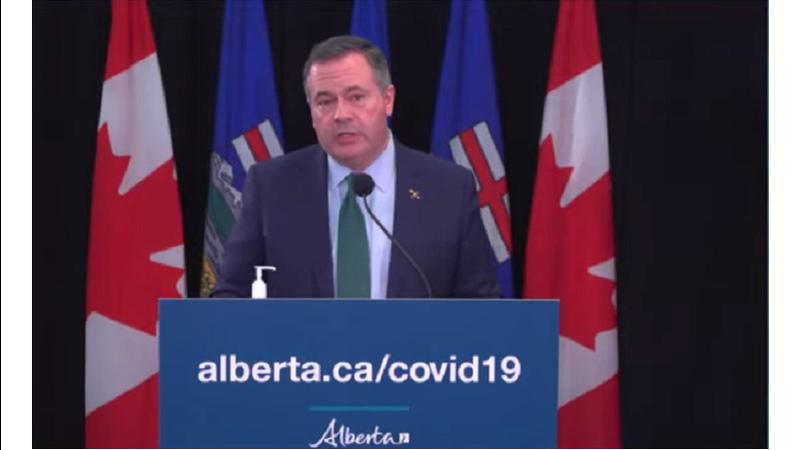
Jason Kenney, Premier of Alberta (Government of Alberta)
NO CASES OF OMICRON IN ALBERTA SO FAR

Province to ramp up case investigations for international travellers amid new variant concerns

Nov 29, 2021 | 4:29 PM

There are no confirmed cases of the Omicron variant of COVID-19 in Alberta but the province is taking steps to stop any potential spread of it from occurring.

Premier Jason Kenney said 156 Albertans have been identified as having returned in the past two weeks from one of the countries identified in Canada’s enhanced border measures.

Those travellers have been contacted and reminded about current health protocols and testing and isolation requirements. They and their households have been offered household rapid testing kits and PCR tests.

“To be clear, no one has tested positive here but we’re working with these individuals to reduce any chance of spread,” said the premier.

Kenney said measures will be implemented for all COVID-19 cases identified in returning international travellers.

“Full case investigations and contact notification, PCR testing for all close contacts and rapid testing for households and specific settings like schools and child care settings,” said Kenney.

For all confirmed Omicron cases in people who did not travel, all close contacts will be investigated and asked about symptoms 14 days following exposure, said Kenney. He added anyone with symptoms will be treated as a probable case.

Kenney said Albertans can help the province prepare for the eventual arrival of Omicron by getting vaccinated and following public health measures.

The fourth wave of COVID-19 that overtook the province in the summer was driven by the Delta variant.

Meantime, the Alberta Health Services (AHS) immunization policy will now allow proof of negative COVID-19 tests in some communities to protect high-quality health care for Albertans.

Alberta’s government is directing AHS to introduce, temporarily, frequent and targeted COVID-19 testing as part of the organization’s Immunization of Workers for COVID-19 Policy. Only sites considered at significant risk of service disruptions resulting from staffing shortages due to unimmunized employees will be part of the testing program.

Under AHS’ current policy, employees who chose not to be fully immunized and have not been granted an accommodation would be put on an unpaid leave of absence.

“I’ve heard from many Albertans, especially in smaller communities, who are worried this policy will impact patient care. We fully support AHS’ immunization policy, and I appreciate the tens of thousands of health-care workers who have made the right choice to get vaccinated. This directive is about protecting patient care – primarily in rural areas – which will always be my top priority,” said Jason Copping, Minister of Health.

The proof of negative COVID-19 testing program begins on Dec. 13. AHS’ immunization policy deadline will also be adjusted to Dec. 13 to accommodate the introduction of testing. The testing addition will be reviewed by March 2022.

To date, 96 per cent of AHS full-time and part-time employees and more than 99 per cent of physicians have submitted proof of immunization. Ninety-nine per cent of intensive care unit staff are fully immunized.

Officials say AHS will continue to evaluate its staffing needs and provide a full list of sites where testing is taking place by the Dec. 13 deadline.

Officials with Alberta’s NDP Opposition say the party is proposing a series of measures that could help rebuild public trust and mount an effective response to the Omicron variant, including an independent science table and a risk index for families and businesses.

“Alberta needs an independent science table just as Ontario has,” said NDP Leader Rachel Notley. “Albertans know they can’t trust Jason Kenney and the UCP. This is a quickly evolving situation where the stakes are high. Critical decisions will have to be made and they must be underpinned by high levels of public trust.

“If the UCP is going to ask the people of Alberta to change their behaviour or make sacrifices yet again we need complete transparency. We need to know these decisions are being made in the best interests of public health, not UCP politics. We need to see the modelling. We need to see the advice. We need to see the recommendations.”

The NDP says a risk index for families, schools and business would clearly describe what conditions would trigger changes in public health measures.

“This is a critical planning resource for families, for schools, and for small businesses,” Notley said. “In the second wave, the third wave, and the current fourth wave we saw the same pattern from the UCP. They refuse to act for weeks, then grudgingly take some inadequate steps, and then eventually take meaningful action with very little notice. Acting last and acting least is a failed approach.

“I am especially concerned for families and small businesses heading into this holiday season. They need to know what the risk is so they can plan accordingly.”