Subscribe to the 100% free rdnewsNOW daily newsletter!
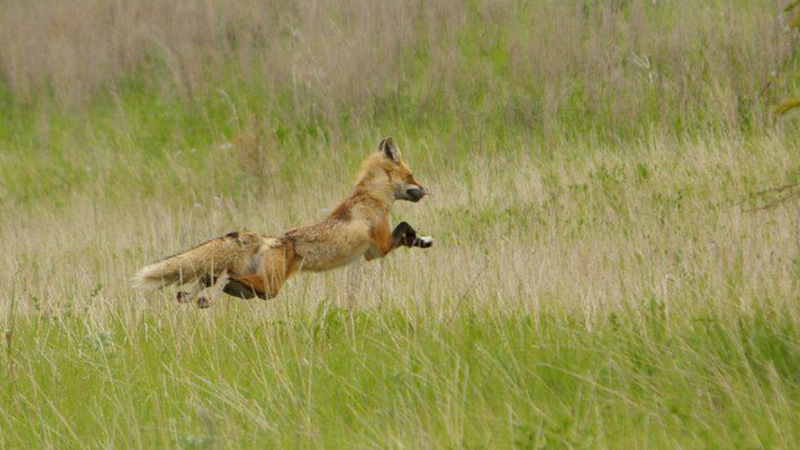
A red fox bounds through the grass near the Gaetz Lakes Sanctuary in Red Deer. (Todd Nivens)
keep an eye on your pets

Mindfulness of urban wildlife key as seasons change

Nov 15, 2020 | 11:18 AM

Don’t be complacent when it comes to your pet’s safety this fall and winter, says one local wildlife expert.

Foxes and coyotes are known to be in the Red Deer area, says Todd Nivens, executive director at the Kerry Wood Nature Centre.

“Your best bet is to take a live and let live approach,” Nivens says of those two species, as well as moose, deer and minks.

“Dogs, being off-leash, can lead them into trouble. Foxes generally go after an easy kill though, not dogs which can be barky and jumpy.”

Dead foxes and others, however, can carry mange, which is the likelier hazard for your dog or cat if it’s sniffing around, he points out.

“Coyotes, they’re more solitary pack animals, and they’ll cooperative hunt. I’ve seen one coyote lure a dog away from its owner so that the dog and owner weren’t paying attention to another coyote, which came out of left field and took out the dog before running off with it.”

As for house cats, Nivens can’t stress enough that they shouldn’t be out and about, particularly at night.

“Small house pets are definitely part of a coyote’s diet if they can get them,” Nivens says.

A fox heard crying/screaming in Red Deer. (Barb Giesbrecht)

Garbage and other things that smell good are also attractants of urban wildlife, which may include raccoons, and Nivens notes unconfirmed reports in recent years of cougars in Red Deer.

“The big thing with pet safety with either of these animals is keep your dogs on a leash, keep your cats inside, and if you’re in an off-leash dog park, especially by yourself, keep your eyes open,” says Nivens.

“Foxes are not looking to engage in a lengthy confrontation over a meal, and they’re also happy to feed on fruit. They’ll even eat fungus and mushrooms.”

According to Alberta Fish and Wildlife, there has not been an increase in fox or coyote concerns, but that doesn’t mean it’s ever a bad time to refresh yourself on what to do should you encounter one.

“Make the experience unpleasant for the animal. Make it feel unwelcome in your neighbourhood,” says Carla Jones, communications advisor, Justice and Solicitor General. “Even if you are not concerned about problems with coyotes, they should not feel comfortable around us or our homes.”

Tips include making yourself appear as large as possible, throwing rocks or sticks at the animal, shouting in a deep voice and maintaining eye contact.

If a coyote continues to approach, back away slowly, and if possible toward a building or human activity. Do not turn away or run, Jones adds.

If you see a coyote or other animal that is so sick or injured it cannot move, or if an animal is behaving aggressively towards people, call the Report-A-Poacher line at 1-800-642-3800.