Subscribe to the 100% free rdnewsNOW daily newsletter!
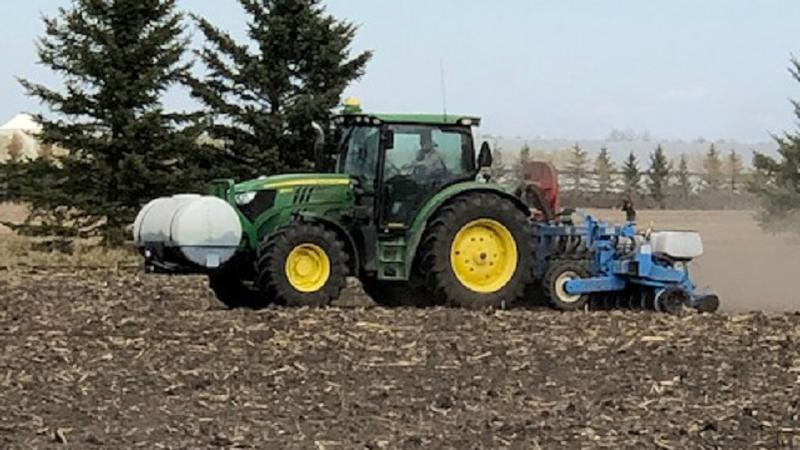
A 120-acre crop of canola was planted west of Blackfalds over the May long weekend as part of the 25th annual Central Alberta Foodgrains Growing Project. (Supplied)
Feeding The Hungry

Central Alberta Foodgrains Growing Project helping those abroad and at home

May 21, 2020 | 6:45 PM

Local farmers and Ag-related businesses have once again teamed up to help provide food for those less fortunate throughout the world.

Seeds are now in the ground for the 25th annual Central Alberta Foodgrains Growing Project – an initiative led by the Winnipeg-based Canadian Foodgrains Bank whose mission is to see a world without hunger.

Local committee member Doug Mass says this year’s crop to help feed the hungry was seeded over the May long weekend in Lacombe County.

“We had a great team effort of agribusinesses and farmers in the Woody Nook – Aspelund area that came forward and helped us to get the 120 acres of canola seed in the ground,” says Maas. “We have a different field every year in Lacombe County. Sometimes it’s west of Highway 2, sometimes it’s east of Highway 2, wherever land is available.”

Different area landowners come forward each year to offer their land for the charitable project.

“The landowner tells us what crop we are to grow, just to make sure it fits with the rotation for that field,” he explains. “This year it’s five miles west of Blackfalds.”

Weather permitting, Maas anticipates the canola to be harvested this fall. Once harvested, the crop is sold to Richardson Pioneer near Lacombe.

“We get a cheque for the crop sale and we send that to the Canadian Foodgrains Bank in Winnipeg,” says Maas. “They then use the money for wherever the greatest need is in the world. Usually it’s in Africa or Asian countries or refugee camps in Lebanon and Syria.”

In its early days, Maas says the crops used to be shipped to the countries in need. Now, however, Maas notes it’s much more efficient to just send the money.

“This also helps their economy. When we’re so blessed, I think we have a responsibility to help those that aren’t as fortunate.”

For every dollar raised through the Foodgrains Growing Project, the federal government adds another four dollars.

“We follow what we do in these countries very closely,” says Maas. “We make sure with our partners overseas that the food gets to the people that need it.”

Maas says he’s proud of the passion shown by central Alberta farmers and businesses that get involved each year.

“We still have three of the founding committee members,” he points out. “So that can attest to how caring and compassionate these people are.”

If someone wants to help, it’s fairly simple.

“You can make a cash donation to our project to cover some costs, and get a charitable tax receipt from the Canadian Foodgrains Bank,” he says. “This brings urban and rural people together into a great community project. We always say we’re supporting other communities around the world, but we’re also helping build our own community within Alberta by doing these projects.”