Subscribe to the 100% free rdnewsNOW daily newsletter!
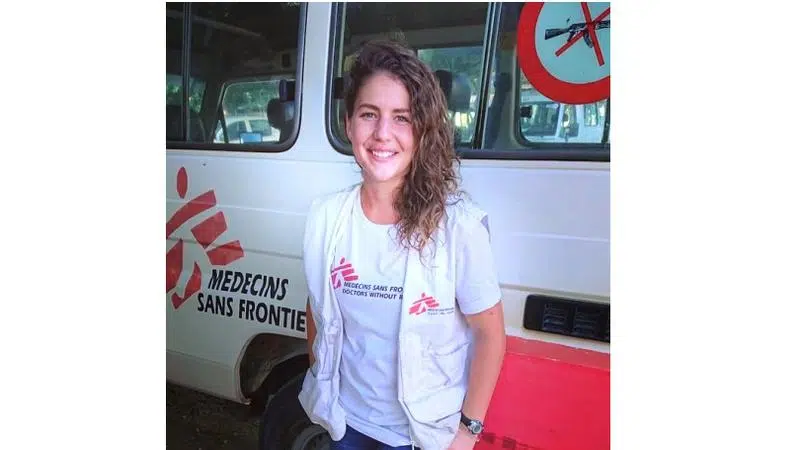
Surgical nurse Leah Kennedy of Red Deer recently returned from a mission to the Republic of Chad where she worked with young children suffering from malnutrition and other chronic health issues in the African nation.(Supplied)
Doctors Without Borders

Red Deer nurse returns from four-month mission to Chad

Dec 9, 2019 | 3:56 PM

Leah Kennedy helped families and small children deal with malnutrition and other chronic health issues facing the African nation.

Leah Kennedy is a surgical nurse who normally works out of Unit 24 at Red Deer Regional Hospital.

This year, however, the 27-year-old had the opportunity of a lifetime to go on a four-month mission to the Republic of Chad.

Kennedy went to Chad working with Doctors Without Borders – an independent, neutral organization that provides life-saving medical care to the people that need it most in more than 70 countries.

Her role included support for nine different health posts during the country’s “Hunger Gap” season – a period from roughly June and July or October to November where heavy rains make many roads unusable and health care difficult to access.

Kennedy became eligible for the opportunity after recently earning her Diploma in Tropical Nursing in Liverpool, England.

“That’s where I gained more skills really to work in this line of care,” she explains. “After that, I graduated and had the confidence to apply to Doctors Without Borders since the beginning of this year and was successful. I had put my availability date for August, and so in the summer when I was in Tofino, I got a call from Doctors Without Borders.”

Kennedy says a language barrier made it difficult getting started upon arriving in Chad.

“It’s a French-speaking country, so luckily I have some French immersion background but people were great and helped me out,” says Kennedy. “It’s also Arabic as well, so there’s really no English, but I got through it.”

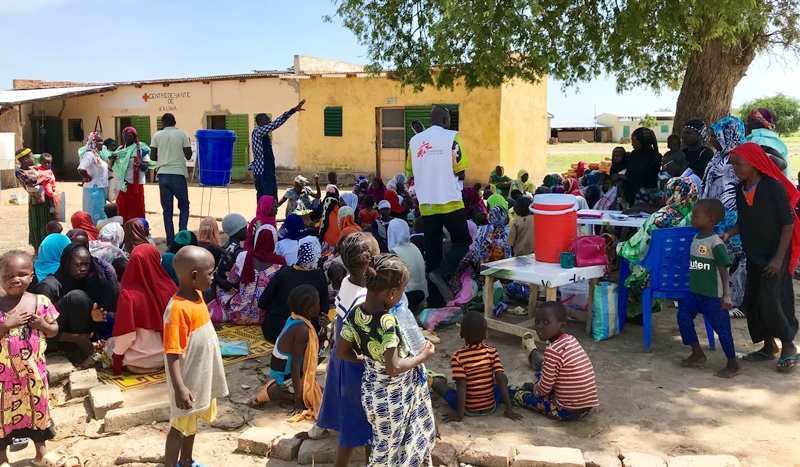
A health clinic set-up in Chad where children between the ages of six months and five years were treated in an emergency malnutrition project.

Kennedy worked 12-14 hour days, six days a week, on an emergency malnutrition project while dealing with malaria and a measles epidemic.

“I was working with children that are severely malnourished between the ages of six months and five-years-old,” she recalls. “I was in charge of a team of national staff and we were located in nine health centres within the capital. Altogether I think we admitted over 8,000 children to the program and we would weigh them, we would do an arm circumference and we would see if they were gaining weight or not.”

Kennedy says each child would also receive a health consultation, along with a “plumpy nut.”

“It’s a ready-to-use therapeutic food you give to the kids. You give them a week’s supply and if they eat it, they actually gain weight quite quickly. So you can see kids getting quite a bit healthier in a short period of time which is really great.”

However, for the kids in need of more than what the plumpy nut could offer, Kennedy says transportation to the hospital was necessary.

“We were hiring local taxi drivers with these motor bikes to take the mother and child to the hospital and back,” adds Kennedy. “It was all free. It’s free health care at the clinic and at the hospital, so that’s what my four months kind of looked like.”

Kennedy, who graduated in 2014 from the University of Alberta with a Bachelor of Science in Nursing Degree through Red Deer College, reveals it was a family member that inspired her career choice.

“I actually had an uncle that worked in the humanitarian-aid sector,” she explains. “Unfortunately, though, the same year that I was born, he passed away, he had contracted HIV – AIDS. It was my father that went to Africa to care for him when he was sick and when he passed away, my father came home and it was just a very open, honest conversation within my family, and I think it was just values that were instilled in me from a very young age that I wanted to help people.”

Kennedy says her experience in Chad was a good reminder that most of the world doesn’t live as well as we do here in Canada.

“We’re really lucky to have just the basic needs that we have, including health care,” she exclaims. “Sure, the weight times at the hospital are long and it can be really frustrating, but at least it’s there and it’s set up and it’s functioning right? I’m just really thankful for the system that we have in place, so many people in the world don’t have access to the basic needs like food, medication, vaccinations and other simple medical treatments.”