Subscribe to the 100% free rdnewsNOW daily newsletter!
Kerry Wood Nature Centre Executive Director Todd Nivens says the 470 goats on site will do as much work over one week as a human would in 18 months. (rdnewsNOW/Josh Hall)
no kidding around

Goats tackle invasive and noxious weeds at Gaetz Lakes Sanctuary

Jul 21, 2019 | 11:07 AM

Large swaths of weed-filled areas are breakfast, lunch and dinner for nearly 500 goats this weekend at the Kerry Wood Nature Centre and Gaetz Lakes Sanctuary.

Baah’d Plant Management and Reclamation has been hired on for a week this summer and again in the fall to stem the growth of invasive species and noxious weeds like Cicer Milkvetch and Canada Thistle.

The goats are far more cost-effective, says Todd Nivens, Executive Director at the Nature Centre, as they can complete as much work in a matter of days as a human weed-puller could over the course of 18 months.

“One of the things we would never do, especially in a place like this, is treat it with any sort of chemicals, so it leaves us with this really challenging problem of how do we remove invasive species?” he says of the sanctuary, which is federally protected land.

“Our typical management plan is to hire someone for 16 weeks and they spend that time pulling weeds. We’ve got some sophisticated mapping that goes along with that and they try to build on the work of last year’s person, but it’s 300 acres and one person.”

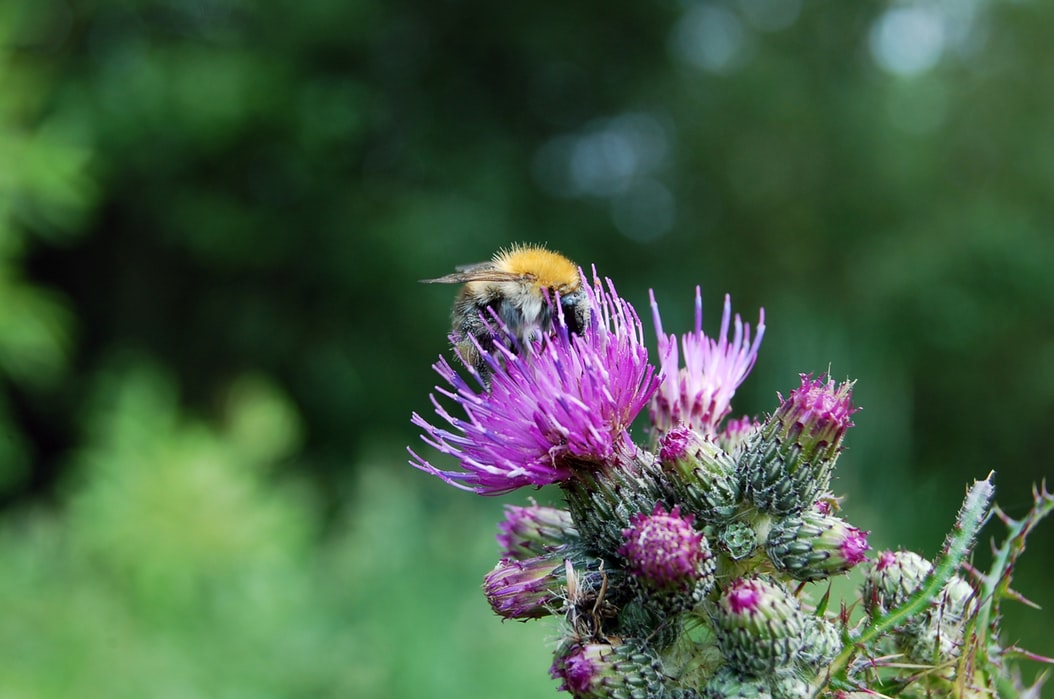
The invasive Canada Thistle, like the one flowering shown here, will be eaten happily by goats hired to clear out areas at the Gaetz Lakes Sanctuary.

Nivens says the proverbial light bulb went on a couple years ago when The City of Red Deer welcomed the same goats to help restore a smaller riparian area around Piper Creek.

The added benefit of having the goats do the job is that it should prevent the growth they’re eating from sprouting next year, plus it’s nutritious for them.

“Habitats work best when they’re varied and diverse, and in the case of plants, the more diverse the native plant crop is, the bigger variety of insects, birds, mammals, reptiles and amphibians there will be,” Nivens explains.

“The problem with thistle and milkvetch is they start going into what we call monoculturing. Milkvetch will climb trees and choke out poplar trees, and it out-competes the native plants. If you’re a goat or a cow, milkvetch is awesome, but if you are any of the insects depending on the bunchgrasses, or birds depending on grass for nesting, milkvetch is terrible.”

The goats will likely be back annually for the next three to five years to tackle the more persistent areas, according to Nivens.

The Nature Centre has previously done public education on this subject, as well as groundwater and soil sustainability, in the Clearview neighbourhood, which backs onto the sanctuary.

While the goats are at the Nature Centre, an interpreter is on site to explain to visitors what’s going on and offer helpful tips on how residents can incorporate similar measures in their own backyard.

The goats will be available for viewing until the noon hour on Tuesday, July 23.