Subscribe to the 100% free rdnewsNOW daily newsletter!
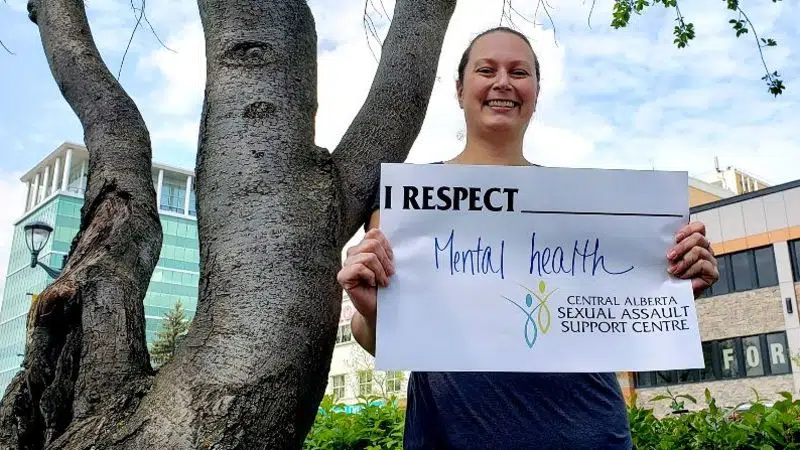
Dr. Jamie Prowse Turner with the Central Alberta Sexual Assault Support Centre says there's no typical reaction to being a victim of a sexual assault. (rdnewsNOW/Josh Hall)
MENTAL HEALTH AWARENESS MONTH

Path to recovery difficult for sexual assault victims

May 31, 2019 | 12:00 AM

A local woman sexually assaulted 13 years ago says her mental health is still impacted to this day.

The woman, who we’ll refer to as Rosa, eventually found herself at Red Deer’s Central Alberta Sexual Assault Support Centre (CASASC) and on a healthier path.

Going down that path wasn’t easy, however.

“It was pretty scary walking in there for the first time knowing I needed someone to talk to, but not knowing what to expect,” Rosa says.

“I was experiencing a lot of after-effects of trauma, nightmares, difficulty sleeping, increased depression, feeling like everything was overwhelming in life, and frankly, feeling suicidal as a result, not feeling like life is worth continuing on. It was tough at the time to see that would subside as time went on.”

Rosa, who is now 39, still periodically sees a counsellor at the centre. Typically it’s when something triggers a memory of the assault.

Painting done by Rosa, who says artwork has helped her cope with the effects of being sexually assaulted. (Supplied)

“I think what helped initially was having that therapeutic outlet and somebody to talk to about it,” she says.

“Otherwise, I was pretty isolated in my life, I didn’t really have anybody I could talk to, no close friends, and my family wasn’t aware because I didn’t really feel like they would be very supportive.”

Rosa, who later was sexually assaulted a second time, has also healed her mind and body through art.

“I’m an artist and a pretty creative person, so part of my therapy has been using art, writing, a lot of journaling, and reading on the subject to get more understanding and more validation of my experiences,” she explains. “Those have been some big coping tools for me, both for mental illness and healing from the trauma.”

One of the people making a difference in patients’ lives at CASASC is Dr. Jamie Prowse Turner, a registered provisional psychologist and psychology instructor at Red Deer College.

Prowse Turner says part of her job is to ensure victims and survivors of sexual assault don’t begin using negative coping mechanisms such as numbing with substances, or developing eating disorders.

“One thing we see is this idea that people should have a very typical response to a sexual assault in a mental health capacity,” she says. “Some people become very passionate and justice-based, and want to pursue charges, while some become more focused on wanting to cope, moving on and forgetting.”

This concept is also representative of the #MeToo movement, she adds.

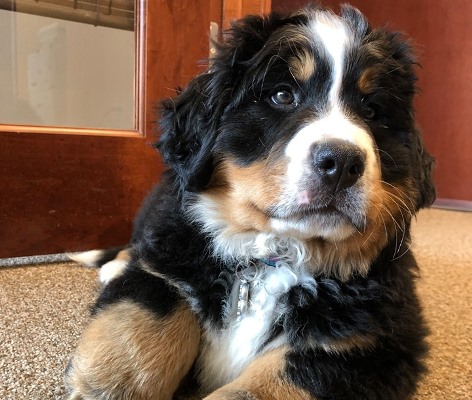
Sylvie, one of two therapy dogs available to offer assistance to clients at the Central Alberta Sexual Assault Support Centre. (Supplied)

At the Central Alberta Sexual Assault Support Centre, clients can receive, among other things, immediate crisis support, short-term or longer-term counselling, court prep, court accompaniment, and visits with therapy dogs Sylvie and Jake.

“Every day you move forward is another day you’ve succeeded. A lot of people sometimes don’t realize they’ve actually made it through 100 per cent of their worst days,” adds Prowse Turner, who’s been at CASASC since 2014. “We formulate a plan around what they need. We believe them and want to help in whatever way we possibly can.”

CASASC saw approximately 500 new cases in 2018. If you or someone you know needs assistance related to sexual assault, CASASC offers a 24/7 text and phone line at 1-866-956-1099.

The Canadian Mental Health Association (CMHA) also offers a Mental Health Helpline at 1-877-303-2642, as well as an Addiction Help Line at 1-866-332-2322.

To close Mental Health Awareness Month, Christine Stewart, Executive Director of CMHA’s Central Alberta branch, says we have to make our mental health a priority.

“If you don’t take care of your physical health, it will decline,” she says. “It’s the same with your mental health, if you don’t take care of that, and don’t reach out for help when you need it, it’s no different than when you have a physical ailment and you know you need help, but you don’t go get it. It doesn’t get better on its own.”

The Health Quality Council of Alberta is currently conducting a mental health survey for Albertan families who have accessed mental health services for their child in five communities, including Red Deer. It can be accessed here.

RELATED – MENTAL HEALTH AWARENESS MONTH STORIES

Mental health and autism: The tale of a grade five student able to be himself

Mental health and suicide: Seeking help most important, say local advocates

COLUMN: Winning the mental battle with colitis